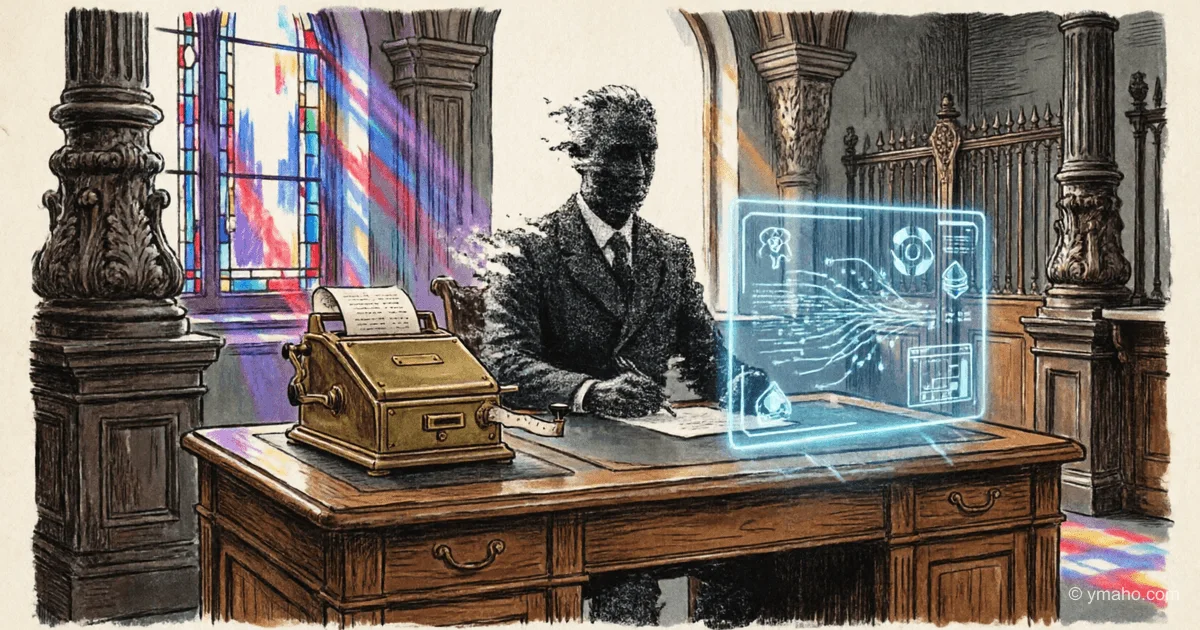
Standard Chartered Announces Job Cuts Due to AI Transition
The British bank plans to reduce corporate functions to scale up the use of artificial intelligence, while simultaneously unveiling targets to boost medium-term profitability.
Standard Chartered may seem like just another cost-cutting story, but in reality, it's the first time a CEO of a G-SIB (Global Systemically Important Bank) has publicly and without diplomatic euphemisms labeled part of their workforce as "low-value human capital." This marks a tectonic shift in corporate culture and labor economics.
The Gist: What's Really Happening
Let's look at the numbers. The bank plans to cut 15% of staff in corporate functions—roughly 7,800 of the 52,000 back-office employees—by 2030. But the key point is that these cuts go hand in hand with raising Return on Tangible Equity (RoTE) targets to 18% by 2030. This means the freed-up capital—and human resources on the bank's balance sheet are indeed capital—is not just flowing into profits but being reinvested in technological infrastructure. Winters explicitly states: "This is not cost-cutting; it's replacing, in some cases, low-value human capital with financial and investment capital." The market has already taken this news positively: the bank's shares rose 2.3% over two days from May 18 to 19, though they later corrected.
Timeline and Context
On May 19 in Hong Kong, at an investor briefing, Bill Winters unveiled the new medium-term strategy. The occasion was the early achievement of 2026 goals in 2025. Now the bar is raised: revenue growth of 5–7% per year through 2028, earnings per share (EPS) growth in the high teens, and revenue per employee up about 20% by 2028. Concurrently, corporate roles are being cut, primarily in India, China, Poland, Singapore, and Hong Kong.
The very next day, May 20, Winters sent a memo to staff trying to soften the blow. The text is in corporate style: "some roles will be reduced, some will change, new opportunities will emerge," with promises of retraining and redeployment. But that doesn't change the essence: machines are taking people's jobs.
Who Wins and Who Loses
The main beneficiary is Standard Chartered shareholders. Raising RoTE from current levels to 18% by 2030 while maintaining a dividend policy (payout ratio of at least 30%) means capital will work much more efficiently. The bank also accelerated its net new money targets in the wealth segment to $200 billion by 2028. Tech vendors—Microsoft, Salesforce, possibly ServiceNow—will land multi-million dollar contracts for AI solutions.
The losers are back-office employees in the listed regions. 7,800 jobs is not just a number; it's career trajectories being cut short. The education system, geared toward training for roles that algorithms can perform faster and error-free, also loses. Governments lose: lower employment means lower tax revenues and greater strain on social programs.
What the Media Isn't Saying
The main non-obvious insight relates to the architecture of the bank's balance sheet itself. When a bank cuts 7,800 employees at an average annual cost per FTE of $50,000–$70,000, the savings amount to $390–$546 million per year. But let's look at RoTE. Standard Chartered's 2025 profit is around $5 billion. Cutting costs by half a billion directly translates into a RoTE increase of about 2–3 percentage points. However, the market is pricing in RoTE growth to 18%—that's 5–7 percentage points above current levels. Where does the rest come from? The rest is the AI multiplier. Algorithms don't just replace people; they increase transaction processing speed, reduce operational risk, and—critically for a bank focused on emerging markets—allow scaling without proportional headcount growth. That's the real efficiency edge.
Second, the domino effect. Standard Chartered isn't the largest, but it's a highly respected bank in Asia and the Middle East. When such a player publicly states that people are "low-value capital," other CEOs get carte blanche for similar moves. Previously, it was tech giants like Meta and Amazon, but the banking sector has traditionally been conservative. Now the dam has broken.
Forecast: Next 30 Days and 90 Days
30 days (by June 21, 2026). Investors will start revaluing competitors. HSBC, Citigroup, JP Morgan—all are under pressure to show similar AI transformation programs. Standard Chartered will become a "beacon" for analysts writing about the future of banking labor. A short-term stock rise of 3–5% is possible on positive analyst reports, followed by a correction as some investors take profits. Sector volatility will increase.
90 days (by end of August 2026). The first leaks will emerge about which specific divisions and cities are hit by the first wave of cuts. Unions in India and Singapore will launch resistance campaigns, creating reputational risks. However, fundamentally, the bank will continue moving toward its goal. RoTE for the first half of 2026 will show improvement, supporting the stock price. If Standard Chartered indeed achieves 18% RoTE by 2030, its P/E ratio could re-rate from the current 12.7 to 15–16, implying a 25–30% increase in market cap over the long term. But that assumes AI investments don't face regulatory hurdles.
Editorial Forecast
Asset: Standard Chartered shares (ticker STAN on LSE). Direction: up 1–2% in the next 24–48 hours.
Key levels: support at 1,860 GBP, resistance at 1,930 GBP. Confidence level: medium.
The market will continue to price in aggressive RoTE targets and accelerated wealth business. The main risk is a public scandal from Winters' poor communication about "low-value capital," which could trigger political pressure and temporarily cool investor interest. This is an editorial opinion, not investment advice.
— Editorial Team









