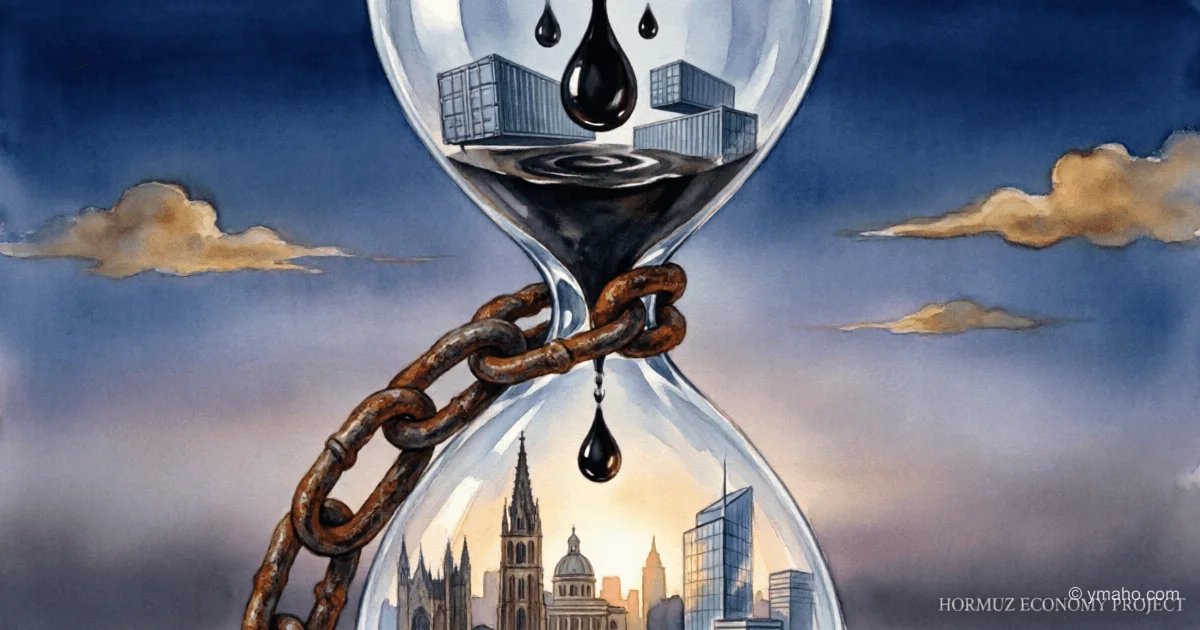
Global Markets on Pause: How the Strait of Hormuz Standoff and Gazprom Asset Privatization Are Changing the Game
When the world’s key maritime oil route suddenly grinds to a halt, and European governments begin auctioning off seized energy companies, it’s not just diplomats who feel the impact. These events directly affect fuel prices at gas stations, the cost of goods in stores, and the stability of global markets. Let’s examine how April 20 news is reshaping the economic landscape beyond Ukraine.
Strait of Hormuz: Why disrupted shipping hits everyone’s wallet
Commercial vessels have nearly stopped passing through the Strait of Hormuz after the U.S. detained an Iranian ship. This narrow waterway acts as the main artery for global oil—roughly one-fifth of all worldwide crude shipments pass through it. When such a critical "pipeline" gets blocked, markets instantly react with fears of shortages.
Imagine the only road leading to a major supermarket suddenly closed due to an accident. Even if shelves are still stocked, shoppers start panic-buying, anticipating price hikes. Traders behave the same way—they factor in the risk of fuel scarcity into current pricing. As long as tensions persist, every new update from the region will keep energy prices volatile.
Energy assets in Europe: The changing ownership of Germany’s Gazprom unit
Meanwhile, Germany is preparing the first steps toward privatizing the local subsidiary of Gazprom, which was seized back in 2022. Privatization means transferring state-controlled or confiscated assets into private hands. For the European market, this signals that temporary management measures are becoming permanent, and the entire gas supply structure is being fundamentally restructured.
It’s like a landlord changing the locks and deciding to sell an apartment to new owners because the previous tenant violated the lease. For businesses, this means new rules, long-term contracts with alternative suppliers, and a gradual reduction in reliance on old supply routes. Markets interpret these moves as confirmation that sanctions and the redrawing of Europe’s energy map are here to stay.
Technology and currencies: Global outages and local records
Amid the geopolitical backdrop, users across several countries faced widespread disruptions in popular AI models: Gemini, Claude, Copilot, and ChatGPT experienced temporary outages. This serves as a reminder that the digital infrastructure underpinning offices, startups, and even logistics remains vulnerable. At the same time, banks hit a historic high selling euros to the public at 52.30 UAH. While this is a local currency benchmark, it reflects the broader pressure wartime economies exert on regional financial systems. Meanwhile, domestic diesel prices briefly dropped by 1–2 UAH per liter, offering short-term relief for drivers and transporters.
Key takeaways
• Shipping disruptions in the Strait of Hormuz create an immediate risk of rising global oil and gas prices.
• The privatization of Gazprom’s assets in Germany solidifies a new energy order in Europe.
• Widespread outages in leading AI models highlight the fragility of global digital infrastructure.
• Currency milestones and fuel price fluctuations remain indicators of how economies adapt to external shocks.
What does this mean for ordinary people?
When global logistics routes tighten, the rising cost of transporting goods and fuel gradually seeps into retail prices—even if you live far from conflict zones. The reliability of digital services we use daily depends directly on the technical resilience of major providers, so it’s always wise to have offline backups for critical tasks. In the long run, the restructuring of energy markets means heating and transportation costs will be shaped by new, more transparent—but still unfamiliar—rules.
— Editorial Team









