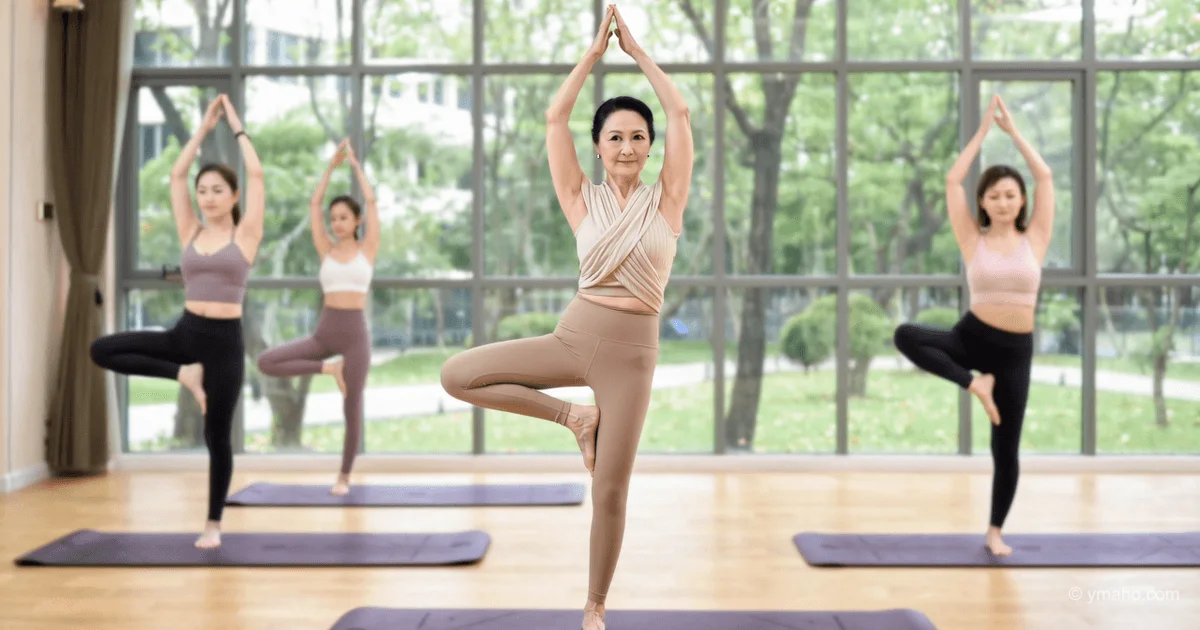
Stretching and Pilates for Adults: Russia's Fitness Industry Turns to Women 35+
New research shows that women aged 35-44 are becoming the core audience for healthy lifestyles, preferring short 15-30 minute practices for back health, joints, and mental recovery over intense sports.
There is too much naive optimism in the news that "the fitness industry is turning to women 35+". I see in this not so much concern for the nation's health as the fitness industry's capitulation to demographics and anatomy. While some report a shift toward women 35+, I note that the industry has simply hit the "glass ceiling" of high-intensity methods (HIIT and CrossFit), which were sold to young people for decades, and now must urgently repackage good old Pilates and stretching into a new "wellness for adults" to retain the most solvent audience, whose joints can no longer handle burpees.
The Essence: What's Really Happening
We are dealing with the "aging" of fitness, driven not by fashion but by biomechanics and economics. Research, including the latest White Paper by Sophie Lawler, is relentless: 67% of women aged 25-34 go to the gym, but by ages 45-54, that figure drops to 29%. This is not just a gap; it's a chasm. Women leave not because they lose interest, but because the standard fitness model—with its hammer equipment, lack of privacy, and emphasis on "killer" workouts—ceases to be physiologically suitable for them.
Instead of waiting for clients to leave forever, the industry is reinventing "gentle fitness." The 89% year-over-year growth in searches for Pilates and stretching (according to Liberty) is not organic but an administrative retraining of coaching staff who previously sold "six-pack abs." Now the slogan "faster, higher, stronger" is toxic for the 35+ audience, and clubs are hastily rebranding.
Timeline and Context
The events of the past three days (May 9-11, 2026) are merely a facade for a long-standing structural crisis. As early as January 2026, experts from the Association of Fitness Operators (AFO) directly stated: "wear-and-tear" workouts are gone, replaced by yoga and Pilates as tools for conscious health preservation. The March "Total Fitness" report confirmed that 64% of women are not members of fitness clubs at all, and 81% of current female clients have interrupted their memberships, with the peak loss occurring precisely at ages 35-40 due to household pressures, work, and menopausal changes.
In April 2026, the American Council on Exercise (ACE) included "Recovery as Required" and "Menopause & Women's Health" in the top trends, thereby cementing the shift from aesthetics to longevity. And now, on May 11, 2026, a "sensational" news item is spreading in the Russian and global wellness business that the core audience is women aged 35-44 who need short 15-30 minute classes. In reality, this is not a discovery but a public admission of the failure of the old business model.
Who Wins and Who Loses
Winners:
- Hybrid format studios (barre, Pilates-yoga, sculpt-stretching). These areas are booming as they promise "long muscles without bulk" and "royal posture" without impact on joints. The price for such a class in Moscow reaches $32 (about 2,800 rubles), which is 20% higher than a regular unlimited group class.
- "Women's Health and Menopause" programs. Trainers specializing in hormonally-aware programming are selling out. In the US and Europe, entire niche clubs like "The Women's Gym" are launching, where 48% of new clients have never been members of a fitness club before. This is a new, previously untapped market.
- Consumers with "medical" needs (post-rehabilitation). Gentle practices open doors for those who were afraid to enter the gym after injuries or with arthritis.
Losers:
- Old-school CrossFit boxes and HIIT studios. Their core—youth under 30—is not infinite. The adult audience is leaking to low-impact fitness, forcing "hardcore" gyms to lower prices and dump.
- Standard chain giants without a women's facelift. Clubs where 90% of equipment is still male power racks and dumbbell rows without private zones are losing women. 39% of female clients complain about overcrowding, and 62% prioritize cleanliness over "sophisticated" machines. If a club has no "women's corner," it's dead.
- Financial models based on "eternal memberships." Women 35+ do not want to pay a year in advance; their lives are cyclical and require breaks. They choose short packages and pay 55.8% more per single session (on average) than men. This kills cash flow built on "dead souls."
What the Media Leaves Out
The media miss the most acute process—the "creatine upgrade." While the fitness industry turns to adult women, the chemical and nutraceutical industries have begun hunting the same audience. The growing popularity of strength training among women (in Russia, women's participation in strength classes reached 73.5% by the end of 2025) has led to sports nutrition being urgently repainted from black to pastel.
We are seeing the launch of "women's" creatine lines—without bloating and with anti-inflammatory effects. This is a quiet revolution: adult women are being sold supplements not for "gains" but for brain health, bone density, and combating sarcopenia. Global chains like GNC report that the gender balance in sports nutrition sales is approaching 50/50. This means margins are shifting from trainers' pockets to pharmacists' pockets.
Forecast: Next 30 Days and 90 Days
Next 30 days (until June 10, 2026):
The summer season will trigger a wave of women's pop-up outdoor classes—"Mindful Muscle" in parks. Prices for single Pilates and stretching sessions by the sea will soar by 25%.
90 days (August 2026):
By autumn, expect the launch of "menopause lines" on major home fitness video platforms (Peloton, Centr). Expect integration of sleep and stress level trackers (HRV) with load recommendations for women 40+. If your trainer in three months still offers you "kill your legs with hack squats," know that they are hopelessly outdated, and their business will go bankrupt by 2027.
— Editorial Team









