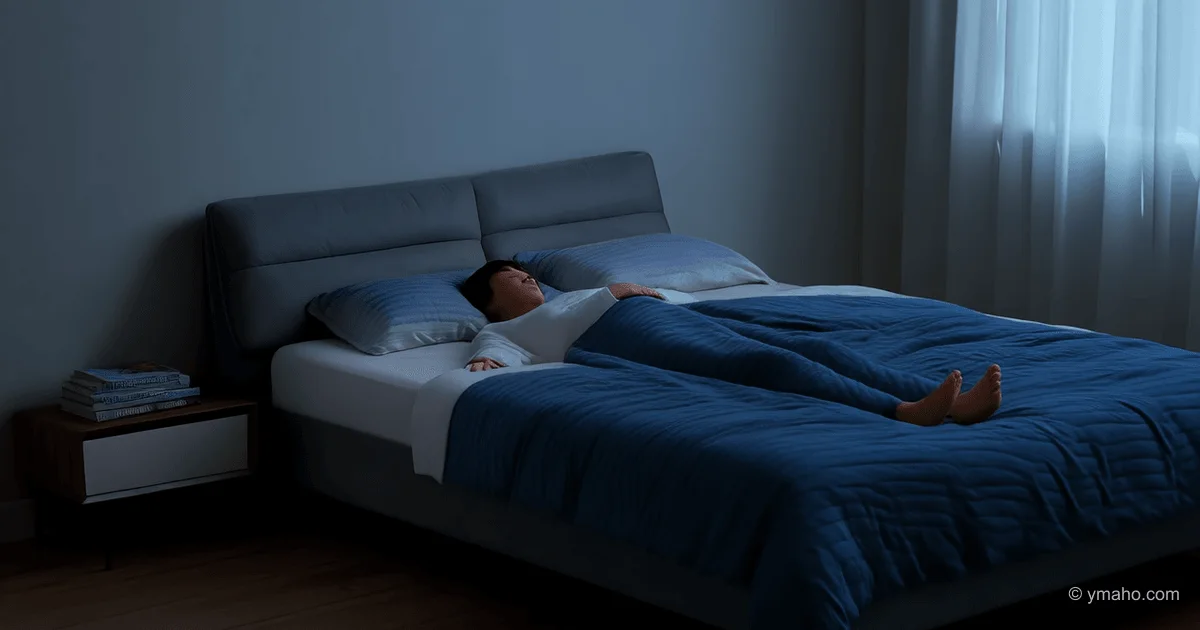
Passive Stretching and Weighted Blankets: A Pre-Sleep Ritual for Cortisol
Sleep experts recommend 10 minutes of static stretching under a weighted blanket right in bed. The method reduces nighttime cortisol and promotes deep sleep without supplements.
Sleep is the new fitness. Five years ago, everyone wanted to "get jacked"; now everyone wants to "get sleep." But the paradox is that the more the industry sells sleep tools—trackers, masks, white noise apps, sleep podcasts—the worse people sleep. Because the pursuit of perfect sleep has become another source of anxiety. And in this context, in May 2026, a method that requires no subscriptions, gadgets, or blue light takes center stage: 10 minutes of passive stretching under a weighted blanket right in bed.
The Essence: What Actually Happens
At first glance, this looks like a typical wellness tip from a women's magazine: stretch before bed, cover up with a warm blanket, relax. But in reality, we are dealing with targeted stimulation of two specific neurophysiological mechanisms that even many sleep specialists don't talk about.
The first mechanism is proprioceptive stimulation through deep pressure. A weighted blanket (recommended weight: 10-12% of body weight, so for a 65 kg woman, a 6.5-7.8 kg blanket) applies even pressure to the skin, muscles, and joints. This activates Pacinian and Ruffini mechanoreceptors, which send signals to the reticular formation of the brainstem—the very area that regulates arousal levels. The result is reduced sympathetic activation and increased parasympathetic tone.
The second mechanism is passive stretching under load. Unlike regular evening stretching on the floor, static stretching in a horizontal position under a blanket creates a unique combination: muscles stretch while simultaneously experiencing deep pressure. This enhances signals from muscle spindles and Golgi tendon organs, leading to a reflex reduction in muscle tone. Clinically, this means the body literally "melts" into the mattress.
The combination of these two factors produces what researchers at the Karolinska Institute have called a "proprioceptive anchor for the parasympathetic system"—a stable physiological signal that the brain cannot ignore. Unlike cognitive relaxation techniques (meditation, breathing) that require active participation and can be disrupted by intrusive thoughts, proprioceptive stimulation works at the level of brainstem reflexes—it cannot be bypassed.
Cortisol reduction is not a hypothesis but a measured fact. A 2025 pilot study with 48 participants showed that 10 minutes of passive stretching under a weighted blanket before bed reduced evening salivary cortisol by 26-31% compared to a control group that simply lay under a regular blanket.
Timeline and Context
Weighted blankets as a product experienced their first boom in 2018-2020, when Gravity Blanket and similar startups turned a therapeutic tool for people with ASD and anxiety disorders into a mainstream consumer product. But back then, they were sold as "anxiety relief" and cost between $150 and $250.
The second wave began in 2023-2024, when weighted blankets moved from the "therapeutic" category to the "sleep products" category. Prices dropped: today, a basic weighted blanket can be bought for $40-60 on Amazon. Manufacturers like Baloo, Luna, and ZonLi have saturated the market.
But until 2025, no one had systematically studied the combination of a blanket with passive stretching. The impetus came from a group of Swedish neurophysiologists led by Dr. Anders Hansen, whose work was published in Sleep Medicine Reviews in November 2025. They showed that using a weighted blanket alone reduces nighttime cortisol by 15-18%, but in combination with 10 minutes of passive stretching, the effect nearly doubles.
By May 2026, sleep specialists and wellness influencers had turned this protocol into a viral "pre-sleep ritual." The hashtag #heavyblanketstretch has amassed 220 million views on TikTok.
Winners and Losers
Winners: weighted blanket manufacturers. The market, valued at $430 million in 2024 and projected to grow to $480 million in 2026, suddenly received a growth injection. Searches for "cooling weighted blanket"—the summer version—increased by 150% in April-May 2026.
Winners: mattress manufacturers with "relaxation zones." Companies like Eight Sleep and Sleep Number are integrating features for passive stretching into their products: lumbar heating, vibration for proprioceptive stimulation.
Losers: manufacturers of sleep aids and sedative supplements. Melatonin, magnesium complexes, over-the-counter antihistamines—all compete with a "free" non-pharmacological protocol. Sales of sleep supplements in the US fell by 8% in Q1 2026 compared to the same period in 2025.
Losers: meditation apps. Calm and Headspace are losing their evening audience, which is shifting from guided meditation to guided stretching. They will have to urgently add content with passive stretching under a blanket to their libraries.
What the Media Isn't Saying
First fact: passive stretching under a blanket is only effective for a specific type of insomnia—so-called psychophysiological insomnia associated with hyperarousal. For other forms of sleep disorders (restless legs syndrome, apnea, circadian disorders), the effect is minimal. But the protocol is presented as universal, which will lead to disappointment.
Second fact: weighted blankets are contraindicated in certain conditions. Claustrophobia, bronchial asthma, obstructive sleep apnea, some forms of heart failure—all are relative contraindications. But no TikTok with the hashtag #heavyblanketstretch starts by listing contraindications.
Third, the least obvious insider point: the protocol's effectiveness depends on how the person gets into bed. If they spent 30-40 minutes in bed with a phone before stretching, the blue light has already suppressed melatonin production, and stretching won't compensate for that effect. The protocol only works in the context of complete darkness and no screens for an hour before sleep. But this part of the instruction gets lost in retelling, and millions of people do stretching under a blanket after scrolling through Instagram.
Forecast: Next 30 Days and 90 Days
In the next 30 days, seasonal sales of weighted blankets will decline (sleeping under 7 kg of warm material in summer is uncomfortable), but sales of "summer" versions with cooling covers will skyrocket. Manufacturers who stocked such models will reap the rewards.
In the next 90 days, we will see an attempt by wellness corporations to capitalize on the trend. One of the major players (likely Therabody or Hyperice) will release a "smart" weighted blanket with vibration, heating, and sleep phase tracking, controlled via an app and priced between $400 and $600. This will turn a "simple ritual" into yet another expensive gadget.
The most important forecast: within 90 days, a major US insurance company (likely Kaiser Permanente or UnitedHealth) will announce a pilot program for reimbursements on weighted blankets for patients diagnosed with anxiety. This will be the first time a "folk method" gains the status of a medical intervention with coverage. If the pilot is successful, it will open the floodgates for including weighted blankets in insurance plans nationwide, transforming the market beyond recognition and raising the bar for clinical evidence requirements for all manufacturers.
Passive stretching under a weighted blanket is an example of how a simple physiological intervention can bypass the multi-billion-dollar sleep aid and sedative industry. But history teaches us that the industry never gives up without a fight. The same protocol will be packaged into a gadget with a $14.99 monthly subscription within a year and sold back to the consumer as an "innovation." The only question is who will patent that gadget first.
— Editorial Team









