Strike on a Farm in Chernihiv Region: How War Destroys Ukraine's Agricultural Sector and Threatens Global Food Security
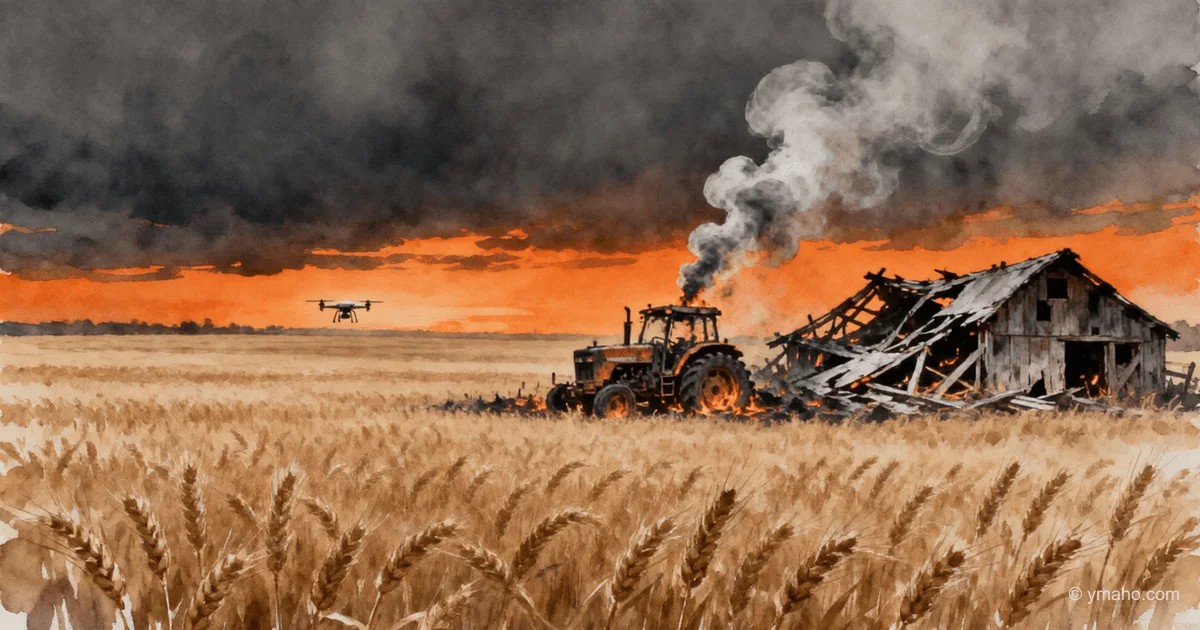
On the night of April 21, Russian drones attacked a farm in the village of Avdiivka, Chernihiv region. Five explosions, a destroyed hangar, burned machinery and fertilizers — this is not just a local tragedy. It is a link in the chain that stretches from Ukrainian fields to global food markets.
How War Destroys Agriculture
Ukraine is one of the world's largest exporters of grain and oilseeds. Before the war, it supplied about 10% of the global wheat market, 15% of corn, and nearly half of sunflower oil. Now, every such strike on a farm is a direct blow to global supplies.
In the Chernihiv region, bordering Russia and Belarus, the agricultural sector is especially vulnerable. Farmers work under constant threat: Shahed kamikaze drones, FPV drones, artillery. This time, a farm in Avdiivka was hit — a hangar, machinery, and fertilizers were destroyed. The fire was extinguished for hours, with the risk of a secondary strike.
But this is just one episode. In a single day, the region suffered 37 strikes and 46 explosions. Residential buildings in border villages, a children's health resort (fortunately not in operation), and dry grass over an area of nearly 3 hectares were set ablaze.
Why This Matters to Everyone
When a Ukrainian farmer loses a harvest or equipment, it is not just their personal problem. It means less grain reaches the global market. Consequently, prices for bread, pasta, and vegetable oil may rise for consumers in Africa, Asia, and Europe.
Developing countries that depend on food imports feel this most acutely. For example, countries in the Middle East and North Africa receive a significant portion of their wheat from Ukraine. Every burned combine or destroyed field is a step toward a new wave of food crisis.
Key Points
- Direct threat to exports: Ukraine is a key player in the grain and oilseed market. Destruction of infrastructure reduces export potential.
- Risk to global prices: Reduced supply on the world market leads to higher food prices, hitting the most vulnerable.
- Farmers' resilience: Farmers continue to work at the risk of their lives, but each such strike undermines their capabilities.
- Chain reaction: Destruction of logistics, fertilizer shortages, loss of machinery — all accumulate and worsen the situation.
- Not just Ukraine: Food security is a global issue. Attacks on Ukrainian agriculture affect everyone.
How This Connects to Global Markets
Agriculture is not the only sector suffering from the war. But it has the most direct and immediate effect on global prices. When Russia blocked Ukrainian ports in 2022, grain prices soared to historic highs. Now, despite the "grain corridor," strikes on infrastructure continue.
Every destroyed warehouse, every burned tractor is an irreplaceable loss for the harvest. Farmers are forced to work under constant danger, reducing their productivity and forcing many to scale down operations.
What This Means for Ordinary People
For the average consumer in Europe, Asia, or Africa, this means that prices for bread, cereals, and oil may remain high or even rise. For Ukrainian farmers, it is a fight for survival. For the global community, it is a signal that food security remains under threat as long as the war continues.
— Editorial Team









