FDA Grants Priority Review to Subcutaneous Form of Lecanemab for Alzheimer's Disease Treatment
The U.S. Food and Drug Administration (FDA) has accepted the application and set a decision date of May 24, 2026, for the subcutaneous form of LEQEMBI (lecanemab) for initiation of therapy. This auto-injector form could simplify and make treatment more accessible for early-stage Alzheimer's disease.
Lecanemab on the Verge of a New Era: What Lies Behind FDA's Priority Review Status
May 24, 2026 — a date that could reshape the anti-amyloid therapy market. The FDA has accepted the application from Eisai and Biogen for the subcutaneous form of LEQEMBI IQLIK for therapy initiation and granted it Priority Review status. It seems like a routine regulatory event. But the devil is in the details that remain outside the press releases.
The Core: What's Really Happening
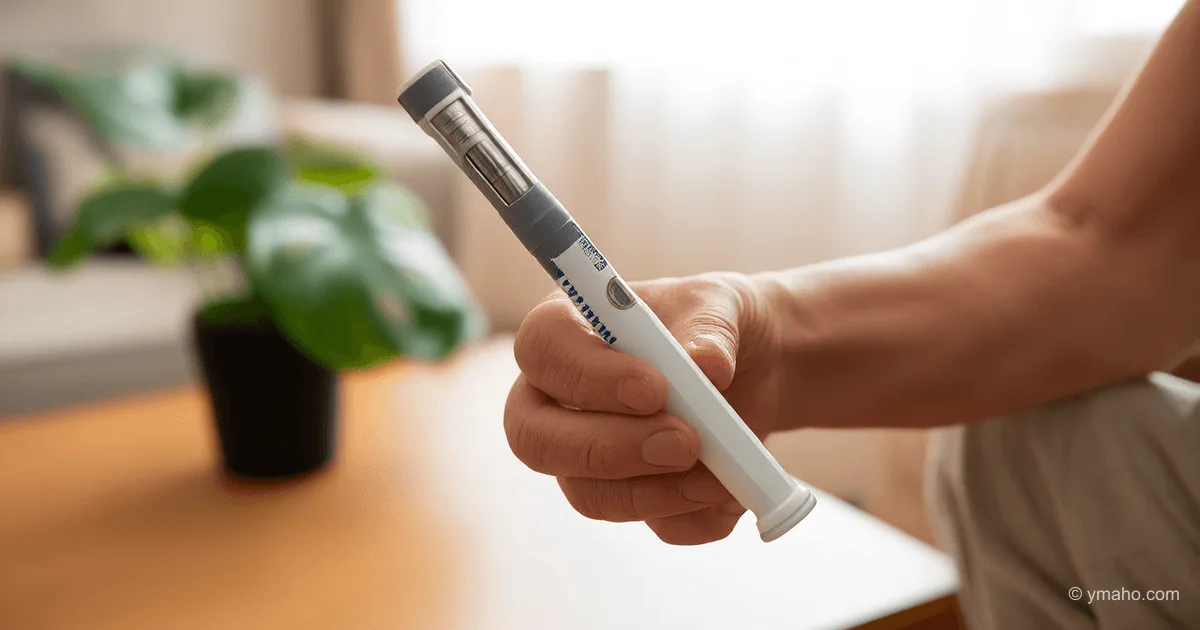
Priority Review is not just an acceleration of the bureaucratic process. It's a signal: the FDA sees the subcutaneous lecanemab not as "just another dosage form" but as a potential new standard of care. The subcutaneous auto-injector transforms therapy from a hospital procedure into a home routine. Two injections of 250 mg each take about 15 seconds. This means patients and caregivers are no longer tied to an infusion center every two weeks.
The stakes are higher than they seem. In August 2025, the FDA already approved the subcutaneous form for maintenance therapy — after 18 months of intravenous infusions. Now the question is different: can treatment start directly with subcutaneous administration? If the answer is yes, lecanemab will become the first and only anti-amyloid drug to provide a full home cycle — from start to maintenance.
Timeline and Context
The story developed rapidly. October 2025 — LEQEMBI IQLIK became available in the US as maintenance therapy. January 2026 — the application for initiation with Priority Review was submitted. May 2026 — the final regulatory decision was expected.
However, a not-so-obvious but highly telling plot twist occurred. On May 8, 2026, Eisai and Biogen announced that the FDA had extended the review period by three months. The new PDUFA date is August 24, 2026. The agency requested additional information and classified it as a "major amendment" to the application. At the same time, the FDA specifically emphasized that it had not expressed concerns about the drug's approvability at this point. This is a classic regulatory maneuver: formally a request for information, but essentially buying time amid growing pressure from patient organizations and investors.
Who Wins and Who Loses
Winners:
Eisai gains a strategic advantage. The company is systematically building an ecosystem around lecanemab: intravenous form, maintenance subcutaneous, now starting subcutaneous. Each line extension increases the addressable market. In the fourth quarter of 2025, global sales of LEQEMBI grew by 54% to $134 million, with $78 million from the US. This is without full subcutaneous initiation. For patients and caregivers, the win is obvious: fewer clinic visits, less logistical burden, more autonomy.
Losers:
Infusion centers and clinics that bet on the model of regular visits for administering anti-amyloid drugs. The subcutaneous auto-injector reduces the need for infusion infrastructure, nursing monitoring, and patient transportation. In the long term, this could reshape the economics of Alzheimer's treatment.
Competitors should not be overlooked. Eli Lilly with its donanemab (Kisunla) has not yet presented a comparable subcutaneous form for initiation. Every month of delay means loss of market share in the rapidly expanding anti-amyloid market.
What the Media Isn't Saying
First unspoken fact: the FDA's three-month delay coincided with the publication of long-term treatment adherence data. According to real-world clinical practice, 78.4% of patients remain on therapy at 18 months, 71.7% at 20 months, and 67.3% at 24 months. This is a high rate for chronic neurodegenerative disease therapy. The FDA is likely analyzing not clinical efficacy but the pharmacoeconomic and infrastructural consequences of a mass shift to home-based administration.
Second non-obvious point: the delay gives time to prepare insurance protocols. Medicare and private insurers need to adapt coverage criteria for home initiation of therapy. The three-month pause may be partially coordinated with payers.
Third: no one says it out loud, but the delay may reflect FDA concerns about the safety of home use, including ARIA (amyloid-related imaging abnormalities). With intravenous administration, the patient is under observation; at home, monitoring falls on caregivers. Data show that systemic reactions occurred in less than 2% of patients on the subcutaneous form. But the regulator prefers to err on the side of caution.
Forecast: Next 30 Days and 90 Days
30 days (by mid-June 2026):
The FDA will continue analyzing the additional materials. No public statements are expected — the regulator goes into a quiet period. However, analysts will begin revising sales forecasts for LEQEMBI for fiscal year 2026. The market had priced in approval in May; now consensus will shift to $140–150 million in quarterly sales by year-end, factoring in the three-month delay in launch.
90 days (by mid-August 2026):
The key event is the PDUFA date of August 24. I assess the probability of approval as very high (above 80%). Rationale: first, the FDA is already familiar with the safety profile of the subcutaneous form from maintenance therapy; second, pharmacokinetic equivalence data between 500 mg weekly subcutaneous and the intravenous regimen have already been presented in the Clarity AD OLE; third, the FDA did not raise approvability concerns — only requested additional information.
After approval, commercial expansion will begin. Eisai and Biogen have the infrastructure for rapid deployment — LEQEMBI is already approved in 53 countries and under review in 7 more jurisdictions. Subcutaneous initiation could add $500–800 million to global drug sales within two years of launch.
However, the most important effect will be not financial but structural. Subcutaneous lecanemab could become the first anti-amyloid drug that truly brings Alzheimer's treatment closer to the chronic disease management model — similar to insulin therapy for diabetes. This is the analogy drawn by experts at the Alzheimer's Drug Discovery Foundation. If this happens, we will witness not just the approval of a new dosage form but a paradigm shift in neurodegenerative therapy.
— Editorial Team









