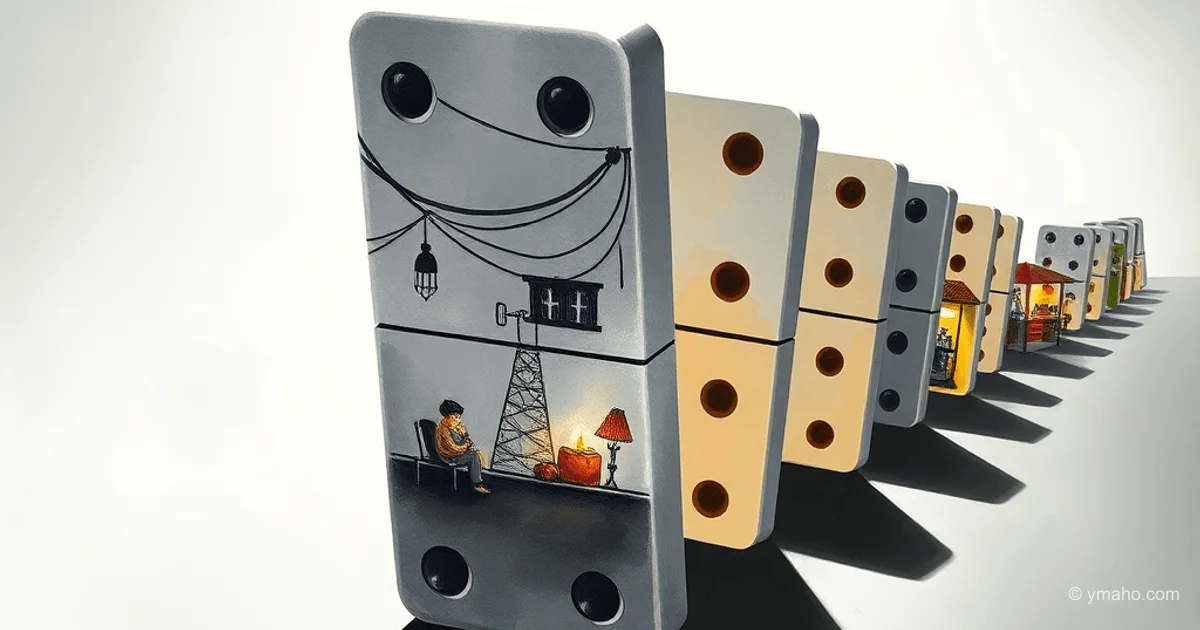
Sudan's Power Grid Collapse Turns Daily Life Into a Struggle
A severe electricity crisis in Sudan is forcing families to study by candlelight and spend hours waiting for fuel, showing how a broken infrastructure can unravel everyday life. This matters because it reveals how war and global energy shocks can cripple a nation's basic functions, pushing prices for food and transport beyond what people can afford.
Sudan's electrical grid, already fragile, has collapsed under the strain of a prolonged internal war and disruptions to global fuel supplies. The country relies heavily on imported fuel, and when those shipments are disrupted, the entire system fails. Imagine a city's power grid like a delicate chain of dominoes; when one piece is knocked out by conflict or a shortage, the whole chain falls down.
The Immediate Impact on Homes and Work
For families, the loss of electricity isn't just about darkness. It means no refrigeration, so food must be cooked and eaten immediately. It means no electric water pumps, so people carry heavy jugs from shared pipes. For students, it means preparing for crucial exams under the dim, flickering light of a candle, which doesn't provide a proper environment for concentration.
For workers, the crisis halts livelihoods. Mechanics can't run their equipment. Bus drivers, whose income depends on making trips, now measure their days by the hours spent waiting in line at gas stations, not by passengers transported. The cost of running a backup generator has become too high, so when the power cuts happen, work simply stops.
How Prices Skyrocket When the Grid Fails
The breakdown creates a vicious cycle that drives up the cost of everything.
- Fuel Prices Spike: Petrol prices jumped over 40% in a few weeks.
- Food Costs Soar: A bag of sugar rose 25% in a single week. Flour and cooking oil prices followed.
- Transport Becomes Expensive: As fuel costs rise, the price of moving goods between cities skyrockets.
- Businesses Struggle: Merchants raise prices to cover their higher operating costs, or simply stop selling while they wait to see what happens.
An economist explains that Sudan's economy is especially vulnerable because it depends heavily on land transport and power for production. A break in energy supply sends shockwaves through the entire chain, from the factory to the market stall, and the final burden lands on the consumer.
Why the System Can't Handle the Strain
The roots of the crisis are deep. Much of Sudan's electricity network was built informally, with makeshift poles and wires never designed to carry the current demand. As temperatures rise and people need more power, these wires overheat and fail. In many areas, a single shared generator is trying to power an entire neighborhood, which is like using a small garden hose to put out a large building fire—it's not enough.
When this informal infrastructure breaks, there is no backup plan. The burden falls completely on residents to find their own solutions.
What People Are Doing to Survive
Neighborhoods are improvising with local solutions, but they are fragile and uneven.
- Switching to Solar: Some communities and merchants are investing in solar panels to run water pumps or keep shops open. This is only possible for those who can afford the high upfront cost.
- Rationing and Sharing: Families pool resources to run a shared generator for a few hours, or rotate who gets to charge devices. These arrangements depend on goodwill and collective money, both of which are under severe strain.
- Simply Going Without: For street vendors and daily-wage workers with no financial buffer, each price increase is a direct hit. They have no way to adapt and must often simply go without essentials.
Key Takeaways
- Sudan's electricity collapse is a compound crisis: damaged by war, stressed by rising temperatures, and shattered by global fuel supply disruptions.
- The failure of basic infrastructure has a domino effect, making fuel, transport, and food dramatically more expensive for everyone.
- Local solutions like solar power or shared generators are temporary and only help those who can afford them, leaving the poorest most exposed.
- The crisis shows how little margin for error existed in Sudan's system, as households already struggling with war and currency collapse now have no room left to adapt.
What Does This Mean for Regular People?
This situation shows how fundamental a reliable power grid is to modern life—it's not just about lights, but about food, work, education, and health. When it fails, the cost of living can spiral out of control in weeks. It also highlights that in times of crisis, community cooperation becomes essential, but also fragile, as shared resources run dry.
— Editorial Team









