Summer 2026 Trends: Transparency, Low-Rise Waists, and Bold Colors
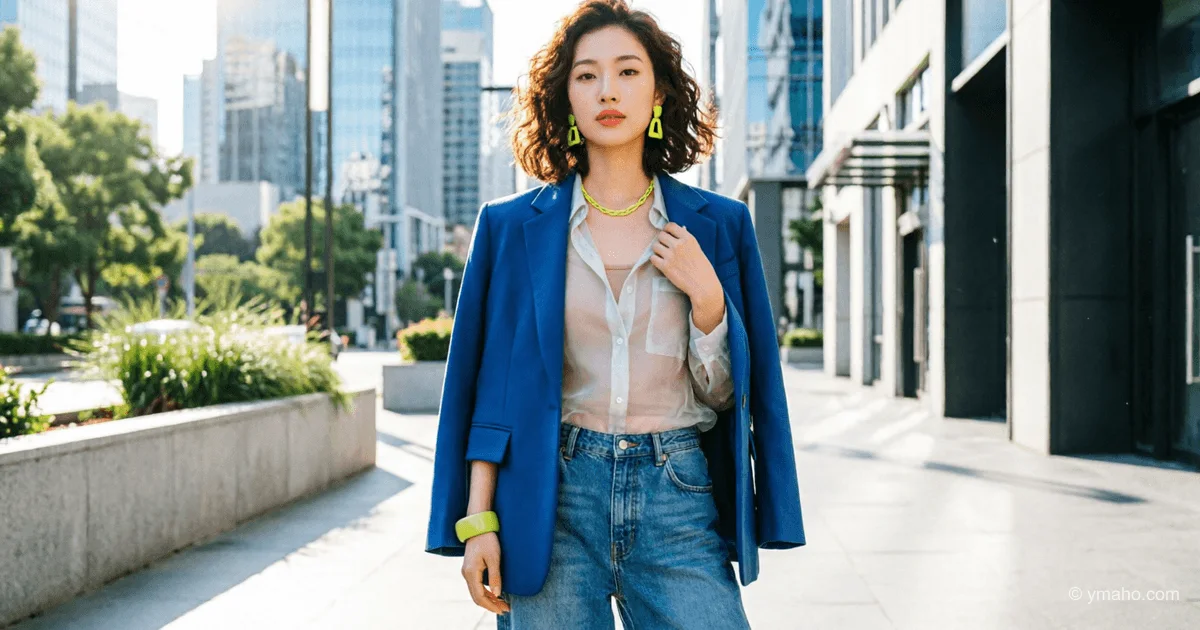
Stylists have identified the key fashion trends of the season, including layered looks with sheer fabrics, the return of low-rise waists, statement jackets, and the use of bold colors: cobalt, scarlet, and lime.
The Essence: What's Really Happening
The summer 2026 trends that stylists present as a breath of freedom are actually the result of a complex equation combining economic pressure, fatigue with "quiet luxury," and the total commercialization of Y2K nostalgia. We're not just seeing a shift in silhouettes but a tectonic move from minimalism to "conscious maximalism." This isn't a chaotic jumble of items but a carefully crafted industry strategy to boost sales in a context where the global fashion market is entering a phase of "low growth and high polarization."
Transparency, low-rise waists, statement jackets, and neon-bright colors are not a designer whim. They are a surgically precise response to consumer demand, which, according to the BoF-McKinsey report, is becoming increasingly "emotional, short-term, and unpredictable" in purchasing decisions. People no longer want to "invest in a basic wardrobe for years"—they want spectacle here and now to compensate for macroeconomic anxiety.
Timeline and Context: From "Uncertainty" to "New Sincerity"
The chain of events leading to the current summer season is perfectly logical.
Fall 2024 – Spring 2025: The market peaks with "quiet luxury" and old money aesthetic. Consumers tire of endless beige cashmere sweaters. As a counter-reaction, the maximalism trend emerges.
August 2025: Sales of low-rise jeans in mass market surge 763% year-over-year (Lucky Brand). This signals to the entire industry: consumers are ready for a radical silhouette change. Around the same time, Diesel and Alexander McQueen showcase their ultra-low-rise versions.
February 2026: Milan and New York Fashion Weeks cement the return of Y2K aesthetics. 40% of shows feature light, sheer fabrics like chiffon, and the color palette goes wild: tomato red, cobalt, fuchsia, and yellow.
May 2026: Stylist Lana Ulanova formulates the season's manifesto for the Russian market. Transparency ("playing with layers, where organza and chiffon sit over a base"), low-rise waists in an intelligent version (with a covered top), and new tailoring (power shoulder jacket + relaxed bottom). The industry finally buries "quiet luxury" and enters the era of conscious maximalism.
Who Wins and Who Loses
Winners:
Denim brands betting on low-rise. Citizens of Humanity reports that 4 out of 10 best-selling models are low-rise, accounting for 35% of the company's bottom business. Reformation sees low-rise denim sales grow 500% in 2025, and the trend is only accelerating. This is a goldmine for anyone working with denim.
Producers of chiffon and lightweight fabrics. The global chiffon market is projected to grow from $1.43 billion in 2026 to $2.50 billion by 2032, CAGR 8.3%. The transparency trend directly converts into production volumes: chiffon output in India and China has already increased 15% year-over-year.
Fast fashion giants. Zara, H&M, and their peers can instantly respond to the demand for "bright colors and sheer textures," offering trendy items for $20-40. Consumers seeking an "emotional purchase" without long-term commitment flock to them.
Millennial consumers. For the generation that experienced the original Y2K era, low-rise and bright colors are a time machine to youth. 30% of low-rise denim sales at Reformation come from millennials.
Losers:
Luxury brands stuck in "quiet luxury." The Row, Loro Piana, Brunello Cucinelli—their restrained neutral palette aesthetic loses out when consumers demand brightness and tactility. According to a McKinsey report, luxury will have to undergo a "painful recalibration" from price dictation to product value.
Consumers 40+ not ready for radical proportion shifts. Low-rise, sheer layers, bright cobalt—this aesthetic requires either youth or a very conscious approach to styling. Those who invested in high-rise jeans and neutral wardrobes over the past 5 years find themselves "morally obsolete."
Retailers who bought too many "quiet" collections. If a buyer bet on beige and minimalism, by summer 2026 that stock risks sitting dead—consumers have switched to bright, and quickly.
What the Media Isn't Saying
The main non-obvious insight: the transparency trend is less about aesthetics and more about the economics of the textile industry. Producing chiffon is cheaper than dense fabrics, and margins are higher due to the "designer" markup on air. Brands can sell less material for the same (or more) money, masking it as "sensuality" and "new sincerity." It's a brilliant business move: you pay $120 for a top made of 40 grams of polyester and feel like a trendsetter.
Second blind spot: the low-rise waist of 2026 is not a return to Britney Spears' traumatic micro-pants. The season's keyword is "intelligent version": skirts on the hips with elongated proportions, relaxed-leg jeans, always paired with a covered top. The industry has learned from the early 2000s mistakes: low-rise is now "for everyone" because it's not about exposure but about playing with proportions.
Third unspoken point: behind the aggressive color palette lies a psychological need. Consumers living in an era of geopolitical tension and inflationary anxiety use clothing as an antidepressant. Cobalt, scarlet, lime—these aren't colors, they're a statement: "I refuse to be beige in the face of uncertainty." Bright color becomes a form of resistance—and brands understand this perfectly.
Forecast: Next 30 and 90 Days
30 days (until June 20, 2026):
First wave of mass purchases. Consumers will actively update their wardrobes with summer trends—low-rise denim, chiffon blouses, bright statement jackets. Sales in the "sheer" category will grow at least 20-25% compared to May. Zara, H&M, and Mango will release second drops of summer collections, strengthening these trend items.
Social media will see viral content on "how to wear transparency in real life"—the main style challenge of June. Bloggers will explain how to pair organza with basic lingerie or tops to look "expensive" rather than "naked."
90 days (until August 20, 2026):
By the end of summer, it will be clear that low-rise has firmly taken hold. According to Citizens of Humanity CEO Amy Williams, "the next decade will belong to low-rise." Brands will start preparing fall collections with this silhouette—low-rise denim will cease to be a "summer experiment" and enter the basic wardrobe.
Simultaneously, a wave of "maximalism fatigue" will begin. Consumers who bought bright lime and sheer dresses in June will want a "break" by August. This creates a window for minimalist brands offering "cleansing" after the riot of colors—luxurious knit basics, relaxed linen, monochrome looks.
Key forecast for fall 2026: ultra-low-rise (7.25 inches and below) will migrate from luxury (Diesel, McQueen) to mass market. Gap, Lucky, Zara will release their versions of "extremely low" jeans, and this will become the season's main battle—who offers the most wearable version of the most radical trend.
And most importantly: summer 2026 will go down in fashion history as the season when "quiet luxury" finally lost ground. Consumers chose color, texture, and emotion. Now the only question is how long this carnival will last—and who will first feel it's time to bring fashion back down to earth.
— Editorial Team









