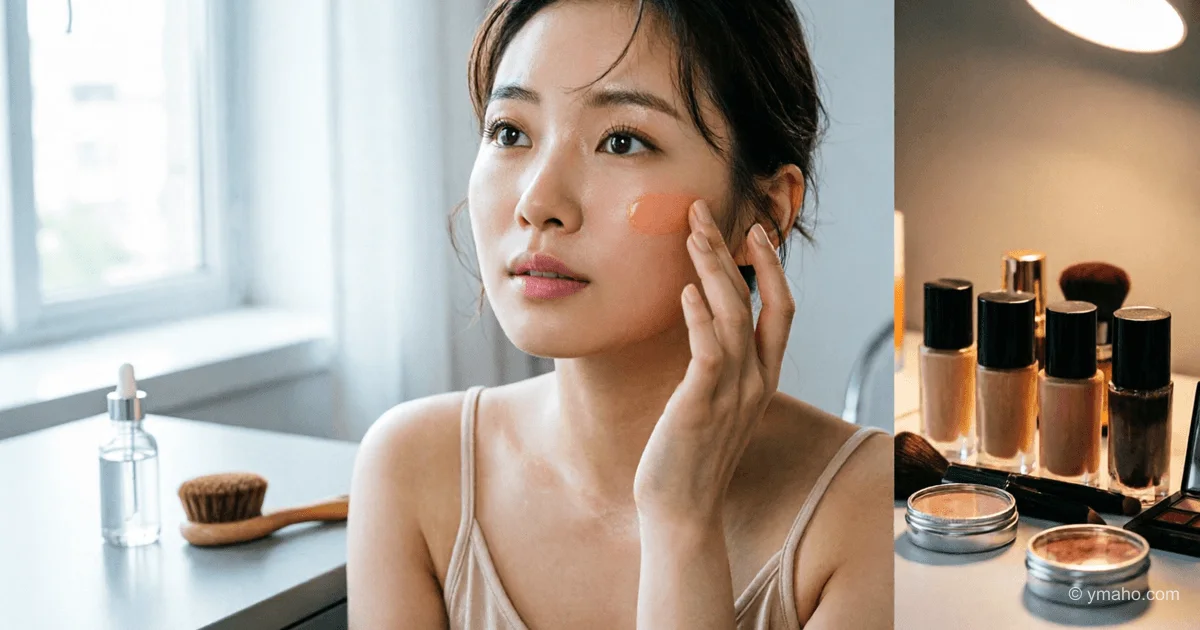
Summer Makeup 2026: Key Anti-Trends and the Bet on Naturalness
Makeup artists urge abandoning the "boyfriend blush" technique, which visually ages the face, and recommend light cream textures on the "apples" of the cheeks, emphasizing the trend toward individuality and the absence of a mask effect.
The Essence: What's Really Happening
What mass media present as a harmless seasonal tip from makeup artists ("apply blush to the apples of the cheeks, not the cheekbones") is actually the front of a much deeper tectonic war in the beauty industry. This is not a debate about makeup technique. It is the final battle between two business models: "skinimalism" (whose market is already valued at $3.72 billion in 2026, with a projected growth to $7.21 billion by 2034) and the returning makeup maximalism.
"Boyfriend blush" has been declared an anti-trend not because it objectively ages. But because the industry can no longer profit from selling one product (blush) for one technique when there is a chance to sell the consumer three different textures under the new guise of "naturalness." The essence of what's happening is planned obsolescence in action: first, you were sold cream blush for boyfriend blush, and now the same brands explain that this technique is outdated, and you urgently need to buy new blush (preferably a different shade and texture) for "correct" application on the "apples" of the cheeks.
Timeline and Context: How the Beauty Industry Ate Itself and Reinvented
The chain of events looks like a staged script. Throughout 2024–2025, blush was the main entry point into makeup for Gen Z: the boyfriend blush technique involved applying from the mid-cheek down to the jawline, mimicking a natural flush of blood. This was perfect for content, ease of execution, and, critically for brands, required highly pigmented cream formulas—more profitable than powder counterparts.
By May 2026, the market became saturated. Skinimalism as a concept of "fewer products, but expensive and multifunctional" reached maturity. Simultaneously, TikTok saw explosive growth in demand for "maximalist makeup"—up 96% year-over-year. The industry found itself in a trap: on one hand, consumers tired of multi-step routines; on the other, they wanted expressiveness. The solution became a hybrid: "clinical skincare underneath, creative makeup on top."
It is at this moment—May 2026—that experts and makeup artists (including Larisa Micallef, PhD in Philology, in Gazeta.Ru) unanimously declare boyfriend blush an anti-trend, and instead offer a "soft technique: light cream blush in dusty pink or peach shades, applied only to the apples of the cheeks." Note the synchronicity: some publications declare the clean girl dead and predict maximalism, others promote skinimalism, and still others try to sit on two chairs through "naturalness and individuality." This is not a coincidence but a coordinated PR cycle ahead of the summer season.
Who Wins and Who Loses
Winners:
Brands of cream blush with new textures—light fluids and tints. The consumer who was sold a dense cream blush for the boyfriend effect yesterday goes to buy "light cream blush" again today. Manufacturers win twice on the same client within 12 months.
Skinimalism-oriented brands (The Ordinary, Glossier, La Roche-Posay)—their market share grows by 9.7% annually, and the trend toward "naturalness without a mask" perfectly aligns with their philosophy of "fewer products—higher quality."
Niche skincare manufacturers—spot correction and BB creams instead of heavy foundation mean that consumers invest in skin health, replacing coverage with care. This raises the average ticket in the skincare segment by $15–$25 per unit sold.
Losers:
Brands that bet on dense textures and highly pigmented blush for boyfriend blush. Their warehouse stocks for the new "natural" technique may become irrelevant—too pigmented, too dense.
The consumer who fell for the trend. She bought boyfriend blush six months ago, spending $25–$40, and now she is told that this technique ages. Result: cognitive dissonance and decreased trust in beauty recommendations overall.
Manufacturers of classic full-coverage foundations—the market is shifting toward BB creams and spot correction, hitting the revenue of luxury brands specializing in "perfect coverage."
What the Media Leave Out
The main non-obvious insight: The dispute between boyfriend blush and "apples of the cheeks" is not an aesthetic discussion but a battle between two distribution models. Boyfriend blush is a TikTok trend born from organic content and sold through social media. The new "natural" technique with application on the apples of the cheeks is a return to control by professional makeup artists and offline retail, where a store consultant can physically show where to apply the product.
The industry loses control over the consumer when trends are born from the bottom up on TikTok. By declaring boyfriend blush an anti-trend, the professional community reclaims its role as arbiter of taste. This is an attempt to seize initiative from user-generated content and bring the consumer back into the funnel: "the expert said—I bought."
The second blind spot of the media: behind the criticism of boyfriend blush lies a specific commercial interest of BB cream and light fluid manufacturers. When makeup artists say "heavy foundation ages and creates a mask effect," they clear the market for a new wave of products—lightweight foundations with skincare ingredients, which are 30–40% more profitable than classic foundations due to the "skincare component."
The third point is gender. Boyfriend blush actively used a gender frame ("flush like a boy after playing"). The rejection of this technique coincides with the overall trend of moving away from gender stereotypes in beauty—and this opens the door for unisex marketing, where the product is sold not "for women" but "for skin."
Forecast: The Next 30 and 90 Days
30 days (until June 20, 2026):
The summer season will cement "apples of the cheeks" as the dominant technique in the content agenda. Brands will launch a wave of tutorial videos "how to apply blush correctly in 2026"—essentially repackaging old techniques under a new guise. Sales of BB creams and light fluids will grow by 15–20% compared to May—consumers will start replacing heavy foundations with summer textures.
Simultaneously, a counter-trend will go viral on TikTok: micro-bloggers will begin to mock "experts who rewrite makeup rules every six months," creating additional information noise.
90 days (until August 20, 2026):
By the end of summer, stabilization will occur: consumers will tire of contradictory recommendations and begin to ignore micro-prescriptions ("only on the apples" vs. "blend toward the temples"). The boyfriend blush technique will not die completely—it will migrate to the niche of maximalism and editorial shoots, remaining a tool for expressive looks rather than everyday makeup.
Skinimalism will continue to grow, reaching approximately $3.9–$4.0 billion in market volume by autumn. But within this trend, an important shift will occur: consumers will finally separate "skincare" (where effectiveness and science-backed ingredients are key) from "makeup" (where emotional expression is key). It is this hybrid approach—"clinical skincare, emotional makeup"—that will become the main consumer model for the next 2–3 years.
And the key forecast: by autumn 2026, the industry will launch a new cycle of planned obsolescence. The "apples of the cheeks" will be replaced by a new technique—most likely related to the return of sculpting, but in a "soft" version. The consumer will again be offered to buy a new product. The wheel is set in motion—and those who understand its mechanics will be able to invest in trends consciously, rather than at the dictation of PR departments of cosmetic corporations.
— Editorial Team









