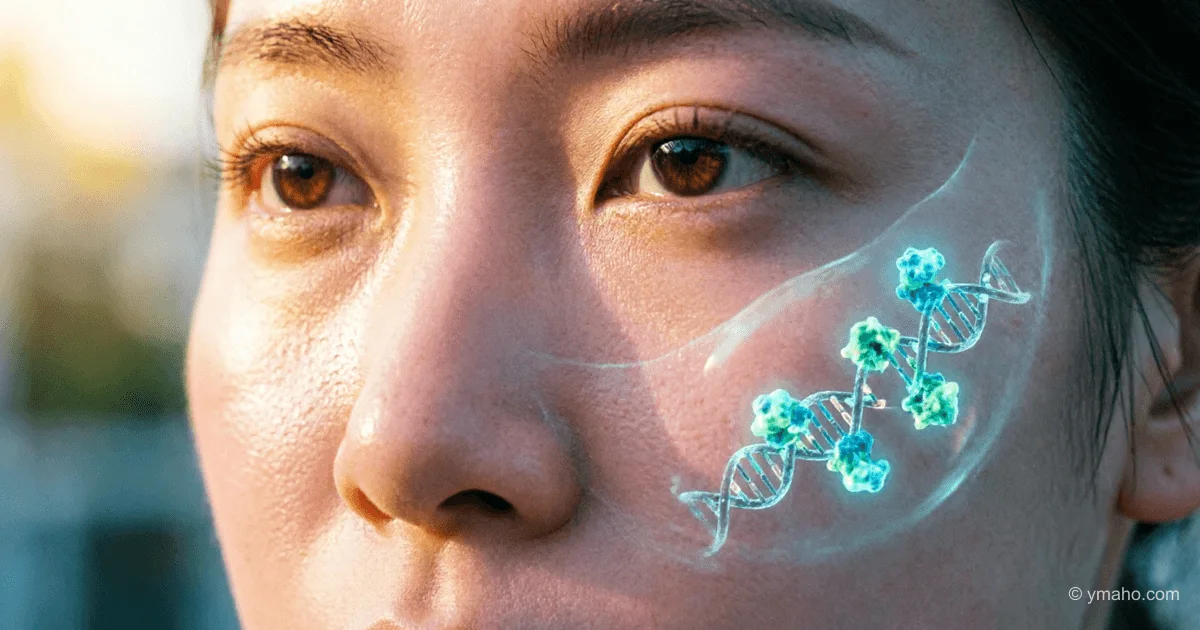
Next-Generation Sunscreens: The Trend of Skin Recovery After UV Damage
The beauty community is focusing on products that not only block UV rays but also actively repair skin after sun exposure. New formulas with enzymes and antioxidants are gaining popularity as an essential step in pre-summer skincare.
Next-Generation Sunscreens: From Barrier to "Smart" Skin Restoration
Introduction
The sunscreen market is undergoing a paradigm shift. While the primary goal used to be creating the most impenetrable shield between UV rays and the skin, the focus is now shifting toward active repair of existing damage. The new concept combines protection and "repair" in one bottle, transforming sunscreen from a passive filter into an active participant in cellular renewal. This shift is driven by consumer demand for multifunctional products and is backed by clinical data on the capabilities of DNA repair enzymes.
Event Details and Timeline
The foundation of this trend was laid gradually, but it crystallized into commercial solutions and scientific publications in 2026.
In January 2026, at the WCH conference, dermatologist Roger Ceilley presented the results of a 12-week study. The trial involved 20 adults with Fitzpatrick skin phototypes II–IV. They applied a tinted mineral SPF 50 cream daily, containing three active ingredients: photolyase (a DNA repair enzyme), antioxidants, and peptides. Results showed that by week 6, over half of the participants demonstrated visible skin improvement, and by week 12, over 80% did. Instrumental measurements recorded statistically significant increases in radiance, evening of skin tone, and overall facial aesthetics.
Concurrently, analytics companies reported explosive growth in adjacent markets. According to Fortune Business Insights as of March 2026, the global after-sun market was valued at USD 2.48 billion in 2025, with a projected growth to USD 3.64 billion by 2034 (CAGR 4.35%). Another report by TechSci Research cited USD 2.42 billion in 2025, with expected growth to USD 3.11 billion by 2031. Differences in methodology do not negate the main point: the UV recovery segment is no longer niche.
The trigger for mass adoption was the publication of industry reviews in February 2026. Azelis' material "Actives in sun care: why more than SPF matters" conceptualized the "triple line of defense" approach. The first line is the physical barrier (melanin, urocanic acid), the second is cellular defense (antioxidant systems), and the third is external blocking by filters. Modern formulas work to strengthen the second echelon: antioxidants like Bis-Ethylhexyl Hydroxydimethoxy Benzylmalonate not only neutralize free radicals but also trigger a cascade of restorative reactions in cells.
By April 2026, DNA-oriented cosmetics had formed an independent segment with a market volume of USD 8.2 billion (data from Research and Markets), with a forecast of USD 12 billion by 2030 at a CAGR of 6.5%. Peptides, repair enzymes, and next-generation antioxidants became differentiators separating premium care from mass market.
Impact and Significance
For the industry. The trend is reshaping an entire category. Sunscreens are no longer seasonal products; they are becoming daily anti-aging actives. As Azelis experts note, modern consumers expect sunscreens to feel like a day cream: lightweight, elegant, and enriched with additional benefits. This blurs the lines between protection, care, and treatment.
For the consumer. The key change is the shift from "future protection" to "past correction." Accumulated photodamage is no longer seen as irreversible. Formulas with photolyase activate natural DNA repair mechanisms that decline with age and aggressive sun exposure. This is especially important for older demographics: in 2024, half of Gen Z adults reported having had sunburns, and their cumulative effects will manifest decades later—new formulas offer tools to address existing damage.
For society. The trend enhances sun literacy culture. Despite growing awareness, the gap between knowledge of UV harm and actual use of protection remains significant. Products with repair functions may motivate more consistent use—they offer tangible immediate results like improved skin texture and tone, in addition to delayed prevention of cancer and photoaging.
Reactions of Key Players
Market reactions are segmented into three directions:
Scientific-dermatological segment relies on evidence-based data. Manufacturers of professional lines incorporate photolyase, antioxidants, and peptide complexes with proven efficacy in clinical trials. This segment sets standards for the entire industry.
Premium brands integrate the recovery concept into their positioning. For example, Advanced Day Ultimate Protect at EUR 78 combines protection against UV, blue light, and infrared rays with a DNA repair enzyme. The formulation "non-greasy, non-comedogenic, invisible on all skin tones" addresses key barriers to daily sunscreen use.
Natural cosmetics market seeks plant-based alternatives. The brand Phytomer uses marine extracts: the Helioprotect complex based on brown algae normalizes melanin synthesis, while D-Tox Microalgae restores cells damaged by UV rays. The price segment here is lower than laboratory counterparts, but the evidence base is more modest.
Analytical context. Notably, the DNA cosmetics market is already valued in billions of dollars. Analysts link growth to the spread of genetic testing: consumers learn about their predisposition to photoaging and seek targeted solutions to compensate for inherent risks. This trend is amplified by an aging population: according to UN forecasts, by 2050, the proportion of people over 60 will reach 22%.
Forecast and Conclusions
The trend of skin recovery after UV damage will deepen along several vectors.
Short-term (1–2 years). DNA repair enzymes will become standard in the premium sunscreen segment—similar to how hyaluronic acid became a basic component of moisturizers. Competition will shift to the evidence base: brands will begin publishing their own clinical studies rather than relying solely on in vitro lab tests.
Medium-term (3–5 years). There will be a convergence of several areas: genetic testing to determine individual photoaging risk, nutraceuticals to enhance internal protection, and topical products with targeted delivery of actives to damaged cells. The after-sun market, valued at over USD 3 billion, will integrate more closely with the preventive segment.
Long-term. The line between "sunscreen" and "anti-aging" care will disappear. Protection and recovery will be perceived not as sequential but as parallel processes within a single routine. This will fundamentally change both consumer habits and the structure of the beauty market.
The main takeaway: the industry is moving away from the "barrier" model established in the 20th century toward a paradigm of "smart" interaction with skin biology. Enzymes, antioxidants, and peptides are just the first wave. Next will come targeted delivery technologies and epigenetic activators capable of "awakening" the skin's own repair systems. The sunscreen of the future is not a shield but an intelligent interface between the environment and the skin's genetic program.
— Editorial Team









