Scientists Build a Synthetic Universe That Looks and Sounds Like the Real One
Imagine watching galaxies form like time-lapse flowers blooming in the dark—except this isn’t science fiction. For the first time, astronomers have created a synthetic universe so realistic that even experts struggle to tell it apart from actual telescope images. And now, you can not only see it but hear it too.
A Cosmic Time Machine Made of Math
This new simulation, called COLIBRE, runs on one of Europe’s most powerful supercomputers and models how galaxies evolved from just a few hundred million years after the Big Bang all the way to today. It’s built using the standard model of cosmology—the best scientific framework we have for how the universe works—and it includes something previous simulations missed: cold gas and dust.
Why does that matter? Because stars are born when clouds of cold gas collapse under their own gravity. If you ignore the cold stuff, your simulated galaxies end up looking nothing like real ones. Think of it like baking bread without yeast—you’ll get a flat, lifeless lump instead of something that rises and breathes.
COLIBRE fixes this by tracking tiny dust grains and how they help hydrogen molecules form, which lets gas cool down enough to spark star birth. The result? Galaxies that look eerily like those seen by the James Webb Space Telescope (JWST), with matching colors, sizes, brightness, and numbers.
Seeing—and Hearing—the Invisible
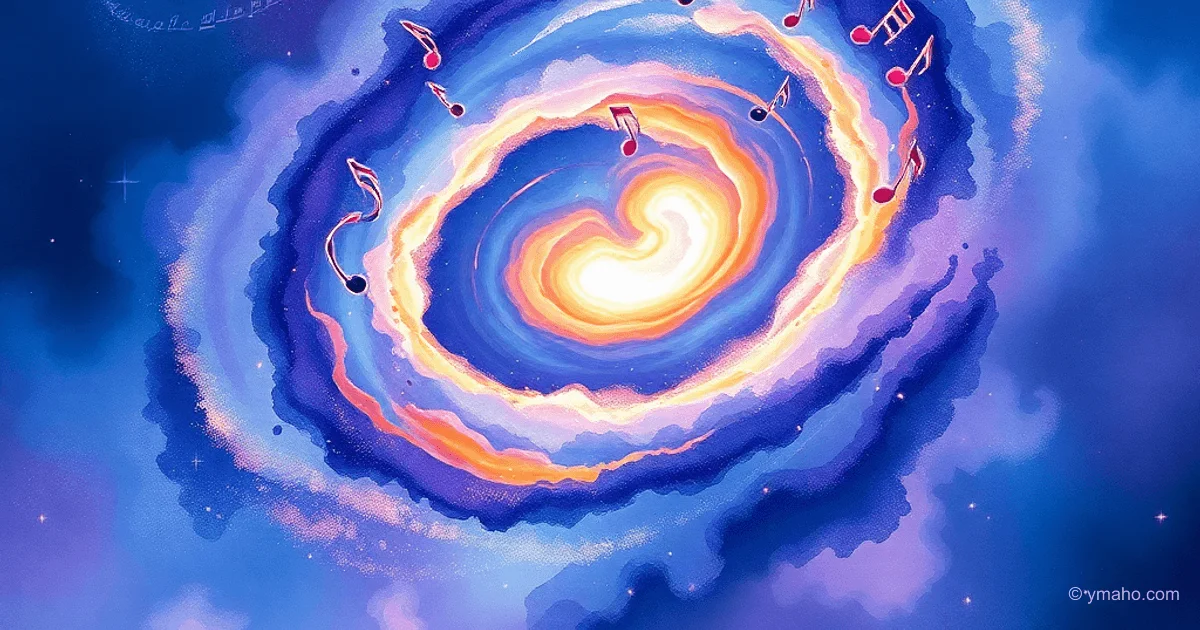
One of the most exciting parts of COLIBRE isn’t just visual—it’s auditory. Scientists have “sonified” the data, turning light patterns into sound. Brighter regions become higher pitches; denser areas produce deeper tones. This doesn’t mean space actually makes noise (it’s mostly a vacuum!), but translating visuals into sound helps researchers—and the public—experience cosmic structures in a whole new way.
“It’s exhilarating to see ‘galaxies’ come out of our computer that look indistinguishable from the real thing,” said Carlos Frenk, a team member. Some astronomers reportedly did double-takes when shown side-by-side comparisons.
What Still Doesn’t Add Up
Despite its realism, COLIBRE can’t explain everything. The James Webb Space Telescope recently spotted strange objects nicknamed “little red dots”—tiny, bright, red galaxies that appear in huge numbers about 600 million years after the Big Bang but vanish by the time the universe is 1.5 billion years old.
One theory? They might be heavy black hole seeds—early versions of the supermassive black holes we see at galaxy centers today. But COLIBRE’s current physics doesn’t produce them, suggesting either our models are incomplete or these objects are something entirely new.
Why This Matters to Everyone
You might wonder: why spend years building a fake universe? Because simulations like COLIBRE act as cosmic laboratories. We can’t rerun the Big Bang or speed up time in reality—but in code, we can test ideas, tweak physics, and see what breaks. Every match with real telescope data strengthens our confidence in the laws of nature. Every mismatch points to a mystery worth solving.
And by making these simulations visual—and even musical—they become tools not just for scientists but for students, artists, and curious minds everywhere.
Key takeaways:
- COLIBRE is the most realistic simulation yet of how galaxies form and evolve.
- It finally includes cold gas and dust, critical ingredients for star birth that older models ignored.
- Its visuals closely match James Webb Space Telescope observations, supporting our current understanding of the universe.
- “Little red dots” seen by JWST remain unexplained, hinting at gaps in our knowledge.
- Sonification turns cosmic data into sound, making the universe more accessible.
What does this mean for regular people? Even if you never look through a telescope, understanding how galaxies form helps us grasp our place in the cosmos. These simulations remind us that the same physics governing stardust also shaped Earth—and us. Plus, turning data into sound and images invites everyone to explore the universe, not just astronomers.
— Editorial Team









