Key Creative and Tactile Trends of 2026 Revealed
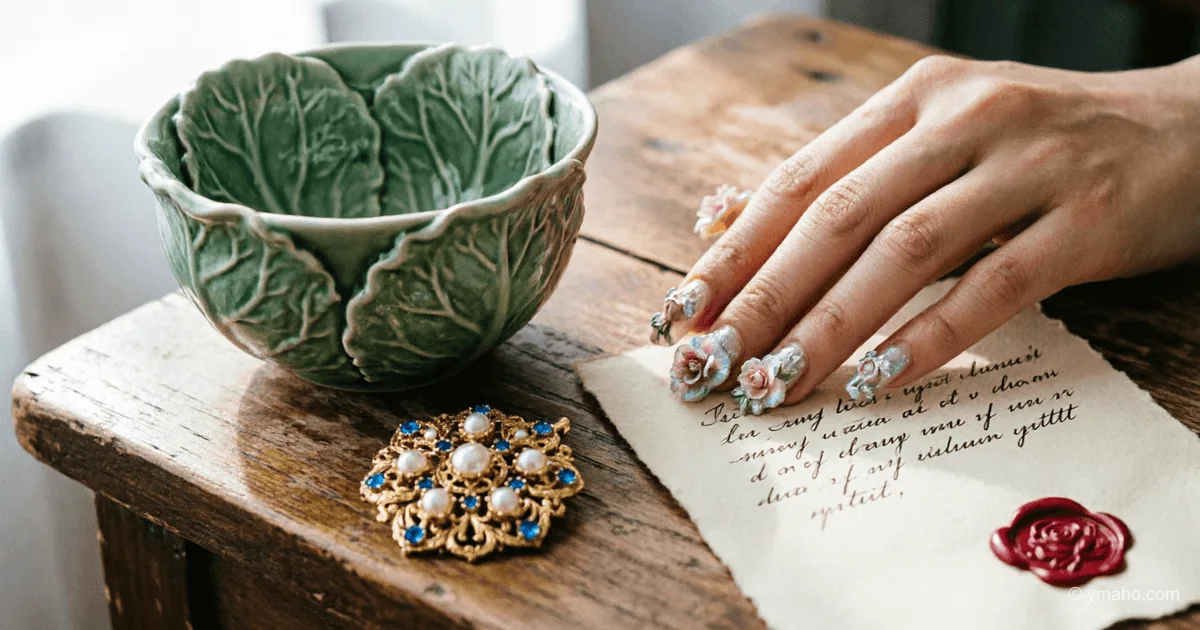
Pinterest predicts a wave of tactile pleasure: 3D nail art, powder blush, and 'cabbage aesthetic' in decor. Also trending: mindful offline creativity (calligraphy, letter writing) and the return of brooches as a form of self-expression.
Key Creative and Tactile Trends of 2026: From 3D Nail Art to the Return of Handwritten Letters
Introduction
In an era of digital oversaturation, where each day brings hundreds of notifications and visual noise, people are rediscovering physical reality. Tactile sensations, manual labor, and object aesthetics are returning not as a whim, but as a conscious response to virtual fatigue.
The main trends of 2026, according to Pinterest forecasts—the etymological barometer of the cultural Zeitgeist—lie in the realm of tactile pleasure and creative customization. We are seeing a return of tactility in the beauty sphere: from 3D nail art to powder blush. 'Cabbage aesthetic' is in vogue in decor, blending coziness with grotesque. And fast scrolling is being replaced by mindful offline creativity.
In this article, we break down the key directions of 2026: why imperfection is becoming glamorous, cabbage a symbol of chic, and handwritten letters a way to maintain mental health.
Event Details and Timeline
The timely forecast was presented by Pinterest Predicts 2026 in December 2025. The platform, with 600 million active users, analyzed search patterns from September 2023 to August 2025 and identified 21 major trends with 80% prediction accuracy.
Key shift noted by researchers: 91% of Gen Z officially considers 'mainstream' dead. People no longer copy looks mindlessly—they assemble them like puzzles, hence the explosive interest in customization, vintage, and unexpected materials.
In spring 2026, these forecasts began to actively materialize and spread across media and social networks. Nail art blogs are full of 3D compositions, Good Housekeeping and ELLE Decor report a boom in cabbageware (search for 'cabbageware' up 250%), and Associated Press and RT publish reports on the return of the epistolary genre, citing thousands of members in letter-writing clubs worldwide.
Impact and Significance (for the World / Industry / Society)
1. Tactile Renaissance: From Screen to Touch
The most powerful layer of change is the return to physical contact with objects.
- In the beauty industry, the focus has shifted from perfect smoothness to convex, textured forms. 3D nail art has become not just decoration but an art object. The trend includes 'Glitchy Glam'—deliberate asymmetry, different colors on each hand, disrupted 'blackout' makeup. This challenges filter perfectionism.
- Powder blush (Blush Nails), topping Korean style charts, caters to the demand for naturalness but with a tactile accent (a 'powdered' effect).
- Psychiatric aspect: As experts from MDPI note, interacting with 3D textures and vivid prints works as mild tactile therapy, reducing cortisol levels.
2. Rehabilitation of the Absurd: 'Cabbage Aesthetic'
The interior trend Cabbagecore has become one of the most discussed. Seemingly strange at first, it is an evolution of Cottagecore and Garden Girl. But if before we decorated homes with flowers, now we use ceramic lettuce heads.
This trend is interesting from a historical perspective. Designers at ELLE Decor remind us that cabbageware was a status symbol in late 19th-century Portugal (works by Rafael Bordalo Pinheiro) and a favorite of Palm Beach socialites in the 1960s. Today, it's a return to 'slow design'—objects that don't just sit on a shelf but provoke emotions, smiles, and a desire to touch the 'leaf' relief.
3. The Return of the Brooch as a Status Marker
When it comes to accessories, the main hero is the brooch. Fashion publications note its triumphant return to runways (Chanel, Valentino, Mugler) and red carpets (Met Gala 2025).
In the context of creative trends, the brooch is interesting as a canvas for personalization. It has become a way to tell a story, not just fasten fabric. This is a rejection of 'faceless luxury' in favor of one-of-a-kind, often vintage or handmade items. In 2026, the brooch is a 'signature' of personality, a detail that speaks louder than the entire outfit.
4. Mindful Offline Creativity
Finally, the most socially significant trend is the rejection of scrolling in favor of calligraphy and letter writing. Pen pal clubs are thriving worldwide. The 'Lucky Duck Mail Club' has over a thousand members from 36 countries.
The psychotherapeutic effect of handwriting is scientifically proven: slowing down the pace, structuring thoughts, and creating a 'safe space' on paper. Gen Z, raised digitally, uses correspondence as a form of meditation. DJs even organize 'analog parties' (CAYA) where instead of music, there is the scratch of pens and the noise of typewriters.
Reaction of Key Players
The market quickly adapted to new conditions.
- Brands and manufacturers: In the nail industry, specialized gels for sculpting 3D figures and palettes of 'powder' shades for nails have appeared. Williams-Sonoma and Target have re-released Bordallo Pinheiro cabbageware collections, and luxury brands (Dior, Hermès) are actively presenting new brooch collections.
- Media and marketing: Pinterest positions these trends as the basis for 2026 advertising campaigns. Retailers are betting on 'tactile marketing': stores now have areas where customers can touch fabric textures or ceramics before purchasing.
- Social entrepreneurship: Subscription services like 'Lucky Duck Mail Club' deliver creative and calligraphy kits to people.
Forecast and Conclusions
The creative trends of 2026 indicate a search for balance between high technology and high sensation.
- Hyper-individualism: We will see a rejection of mass-market in favor of upcycling and 'visible mending' (visible stitches, patches on clothing).
- Fusion of digital and material: AR technologies will allow trying on 3D nail art or brooches before purchase, but the product itself will remain a physical object.
- Growth of the Slow Craft market: A boom in sales of ink, sealing wax, and creative kits is expected. Calligraphy could become as mainstream a hobby as paint-by-numbers in the 2020s.
Conclusion: The main trend of the outgoing year is reality therapy. People are tired of promises in virtual space and want a result they can touch. A cabbage leaf on a plate, a three-dimensional flower on nails, or a heavy pen in hand—these are attempts to anchor oneself in the physical world, to make life 'weighty.' 2026 is the year of tactility triumphing over pixels, meaningful uniqueness over faceless uniformity.
— Editorial Team









