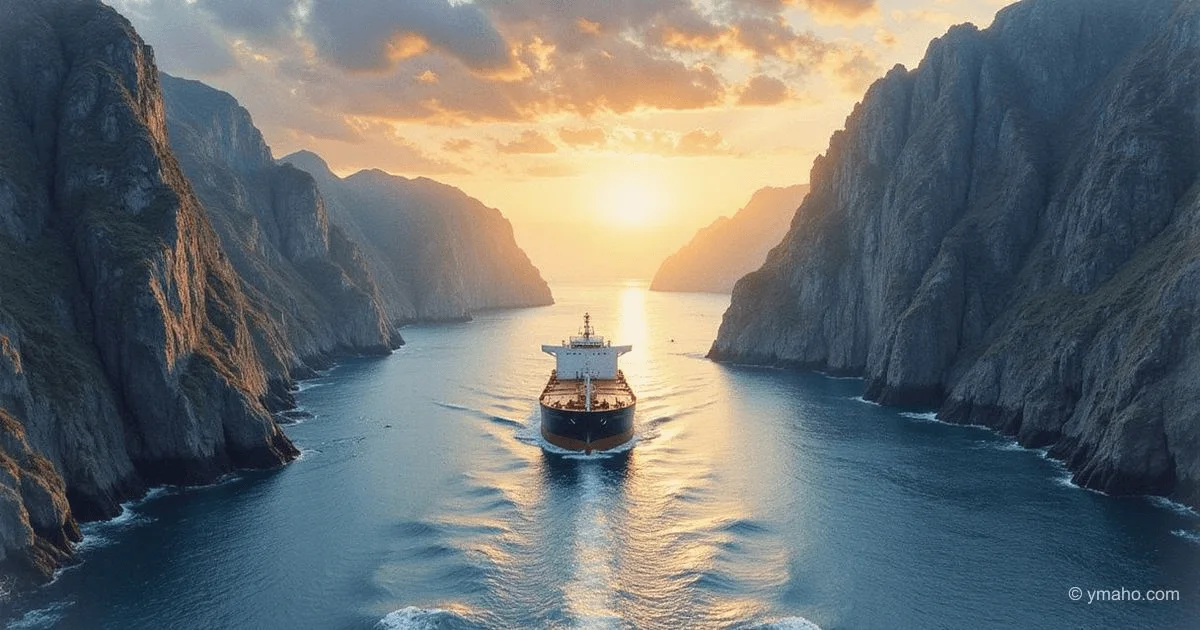
First Tanker Risks Passing Through Strait of Hormuz After U.S. Blockade
The Strait of Hormuz is a narrow passage between Iran and Oman, through which roughly 20% of the world’s daily oil supply flows. Imagine the global oil market as a massive pipeline, and Hormuz is the single doorknob you can twist to shut off the entire flow. Close it—even for just a few days—and fuel prices spike everywhere.
The U.S. has recently increased its military presence in the region to block Iran from selling oil. Their goal? To pressure Tehran during negotiations. But the consequences of this move are already being felt by millions—from German drivers to Vietnamese farmers.
What’s Happening Right Now?
The tanker Agios Fanourios I—a massive vessel capable of carrying over two million barrels—attempted to pass through Hormuz on Wednesday. It’s not linked to Iran and isn’t under sanctions. Its route: from the Persian Gulf to Iraq’s port of Basra, then onward to Asia.
Earlier, on Sunday, it tried but turned back after talks between the U.S. and Iran collapsed. Now, it’s following a route approved by Iran—between the islands of Kish and Larak. This matters because Iran controls one side of the strait, while Oman controls the other.
It’s still unclear whether U.S. warships will allow it to pass. But the mere attempt sends a signal: markets are testing how serious the American blockade really is.
How the Blockade Is Impacting Global Trade
Here’s what’s already changed:
- Several tankers, including the sanctioned Rich Starry, have been forced to turn around.
- Many shipowners are delaying voyages through the Persian Gulf out of fear of detention.
- Insurance companies have sharply raised premiums for vessels heading into the region.
- Iran has temporarily cut exports to avoid escalation.
This isn’t just a regional conflict. Oil from the Persian Gulf goes to China, India, South Korea, and Europe. Any disruption forces traders to buy oil at higher prices—and that price difference eventually reaches you in the form of pricier gasoline or plastic goods.
What Matters Most
- The Strait of Hormuz is a critical chokepoint in the global energy system.
- The U.S. blockade targets Iran but disrupts global supply chains.
- Agios Fanourios I is the first neutral tanker testing the new reality after restrictions were imposed.
- Oil prices are reacting to uncertainty—even if physical shipments haven’t stopped yet.
- Insurance and logistics costs have risen, increasing product prices worldwide.
What This Means for Everyday People
If the blockade drags on, we could see rising fuel prices, higher airfares, and even costlier groceries—since all depend on shipping costs. Even if you live far from the Middle East, your wallet feels every tremor in this region. While the situation remains unstable, any attempt to pass through Hormuz is a step toward understanding just how fragile our global supply network truly is.
— Editorial Team









