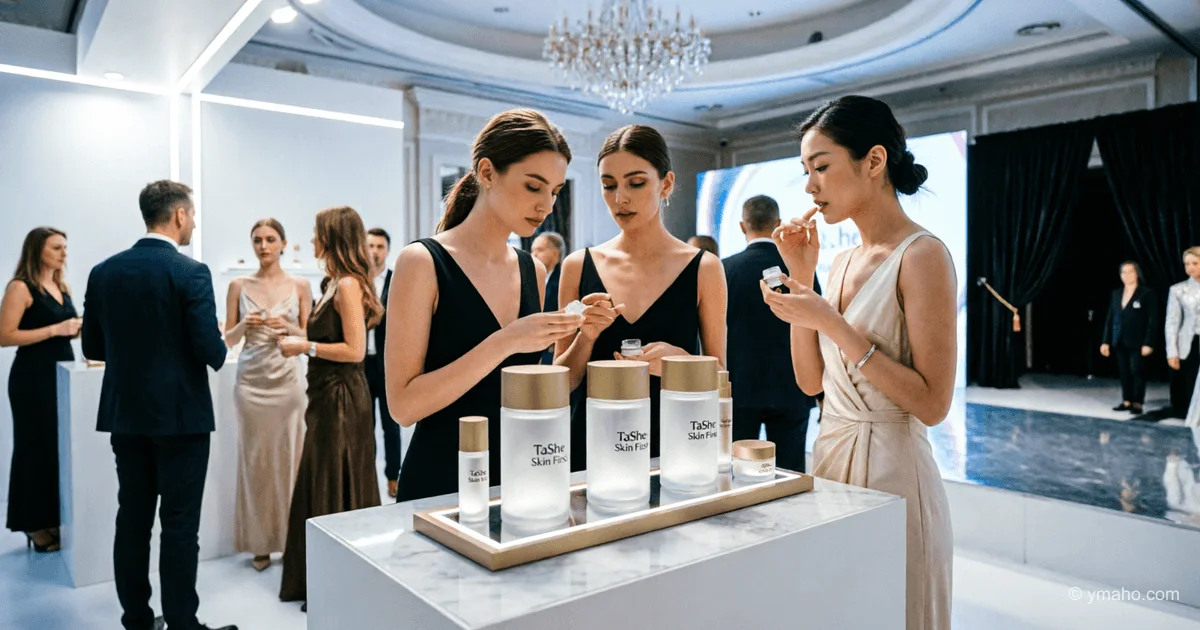
TaShe professional Presents Conscious Skincare at Sochi Fashion Week
The Belarusian brand TaShe professional partnered with Sochi Fashion Week 2026, showcasing the Skin First line and promoting a philosophy that true beauty begins with conscious skincare, not layering on makeup.
The Gist: What's Really Happening
When the Belarusian brand TaShe professional hits the runway at Sochi Fashion Week 2026 with the Skin First line, the mass media see a nice story about "conscious skincare." But for an insider, this event reads completely differently: we are witnessing not just sponsorship, but the start of a major war for consumers in the post-Soviet space, where the main weapon is the philosophy of skinimalism, and the battlefield is regional fashion weeks.
TaShe didn't choose Sochi by chance, rather than, say, Moscow Fashion Week. Over seven years, Sochi Fashion Week has become a key platform for showcasing status and reaching an audience that makes purchasing decisions not in Moscow, but in regions with a high concentration of purchasing power. The premium Pullman Sochi Center hotel, where the event took place, gathered designers of the caliber of Julia Dalakian, VICTORIA VICCI, RIRI — and against this backdrop, the appearance of a skincare brand with the philosophy "beauty begins with care, not cosmetics" looks like a direct attack on traditional beauty retail.
The Skin First philosophy promoted by TaShe is not just a marketing slogan. It is a concrete business strategy aimed at intercepting consumers before they reach decorative cosmetics. Instead of "masking flaws," it offers "maintaining natural health." And this hits the most sensitive nerve of the market: the global skinimalism trend is already reducing sales of heavy foundations by 15-20% in the US and Europe, and has now reached the CIS.
Timeline and Context: From Minsk to Sochi
TaShe's story is a classic "from garage to leader" path. Flario Group, founded in 2012 in Minsk, grew from a small production facility to one of the leaders in the "home hair care" category in Russia, with a portfolio of over 100 products. Key point: TaShe is a brand born within the professional care industry, with its own laboratory and full production cycle in central Minsk. This gives them the right to speak to the consumer in the language of "expertise," not just "beauty."
The timeline of recent events looks like this:
- 2024-2025: TaShe strengthens its position in Russia as a leader in the home hair care category, while simultaneously entering the markets of the CIS and UAE.
- March-April 2026: Release of the first facial skincare line, Skin First — 12 products in vacuum bottles that "protect the contents from air." This is a strong technological signal: a brand that grew on hair is moving into skincare with serious ambitions.
- May 2026: Sponsorship of Sochi Fashion Week and promotion of the "conscious skincare" philosophy. The choice of venue is no accident: Sochi is the resort capital, where the concentration of affluent audiences with a demand for wellness is highest during the May dates.
It's important to understand the context: TaHe as a group of companies has a history dating back to 1994 (Spanish roots). But TaShe professional is specifically a Belarusian brand, and here we see a subtle play with identity: for the Russian consumer, "Belarusian" means "quality but affordable," not "luxurious and unattainable."
Who Wins and Who Loses
Winners:
- TaShe professional and Flario Group. Entering the fashion week runway is an instant leap from the "professional care" category to the "lifestyle brand" category. They gain an association with fashion, style, and premium status — all without the cost of a full rebranding. The approximate cost of such positioning through traditional advertising would be $250,000–$400,000, while the partnership with Sochi Fashion Week cost, in my estimation, 3-4 times less.
- Regional consumers. TaShe offers quality care at a price 30-50% lower than luxury European brands. For an audience that wants "professional care" but isn't ready to pay for La Mer or Augustinus Bader, this is a perfect fit.
- Sochi Fashion Week. Attracting a beauty partner with a skin-first philosophy elevates the event from a "fashion show" to a "lifestyle platform." This is what all major fashion weeks do — from Paris to New York.
Losers:
- Traditional beauty retailers in the "mass-market plus" segment. When consumers hear "beauty begins with care," they redirect their budget from decorative cosmetics to skincare products. Brands like L'Oréal Paris and Maybelline, which build their communication around "transformation" through makeup, lose out.
- TaShe's competitors in the CIS professional care segment. Entering a fashion platform is a claim to leadership, and other Belarusian/Russian brands will either have to catch up or retreat into narrower niches.
- Luxury brands in regional retail. Consumers who previously bought Estée Lauder or Clinique for status may now choose TaShe Skin First — because it's "professional" and "conscious," not "expensive for the sake of being expensive."
What the Media Aren't Saying
The main non-obvious insight: TaShe's partnership with Sochi Fashion Week is not so much about philosophy as it is about distribution. The Skin First line is already available at Zolotoe Yabloko and on marketplaces. But the status of "official partner of Fashion Week" opens doors to premium retail that was previously closed to the Belarusian brand. I expect that within the next six months, TaShe will appear at L'Etoile or Ile de Beauté on special terms — that's how such partnerships work: first status, then shelf space.
Second blind spot: The 12 products in the Skin First line and vacuum packaging are a direct response to the global skinimalism trend, which became mainstream in 2025-2026. According to LookFantastic, sales of BB and CC creams have skyrocketed, and searches for "Korean BB cream" have increased by 100%. TaShe is simply taking this global trend and adapting it to the realities of the CIS market — with an emphasis on "professionalism" and affordable pricing.
Third point that goes unmentioned: TaHe as an international group has Spanish roots and a factory certified to ISO 9001 and ISO 22716 standards. For the consumer, this means "European quality," but for competitors, it means the ability to undercut prices thanks to Belarusian production costs combined with Spanish technology. This is a unique competitive advantage that is nearly impossible to replicate.
Forecast: Next 30 and 90 Days
30 days (until June 20, 2026):
The informational tail from Sochi Fashion Week will translate into sales growth for Skin First. I expect a 35-50% increase in revenue for the line in June compared to April — driven by the "fashion legitimacy" effect. Zolotoe Yabloko will expand shelf space for TaShe, moving the brand from the "professional care" zone to the "premium facial care" zone.
In professional beauty communities, discussions will begin about the "Belarusian phenomenon": how a brand from Minsk managed to occupy a niche that Moscow brands had ignored for years.
90 days (until August 20, 2026):
By the end of summer, TaShe will announce a second wave of expansion for the Skin First line — likely SPF products and night masks. This is a logical step given the global trend toward "skinification" and growing interest in sun protection.
Key forecast: By the end of 2026, at least two more brands from the CIS will try to copy the "fashion week partnership + conscious skincare philosophy" model. But they will lack TaShe's two critical advantages: full-cycle in-house production and the 30-year history of the parent company with European certifications. TaShe has claimed this niche seriously and for the long term, and now the only question is how quickly they will move further — into Europe or into the premium segment of the CIS. In any case, their bet on Skin First and fashion has proven more accurate than many expected.
— Editorial Team









