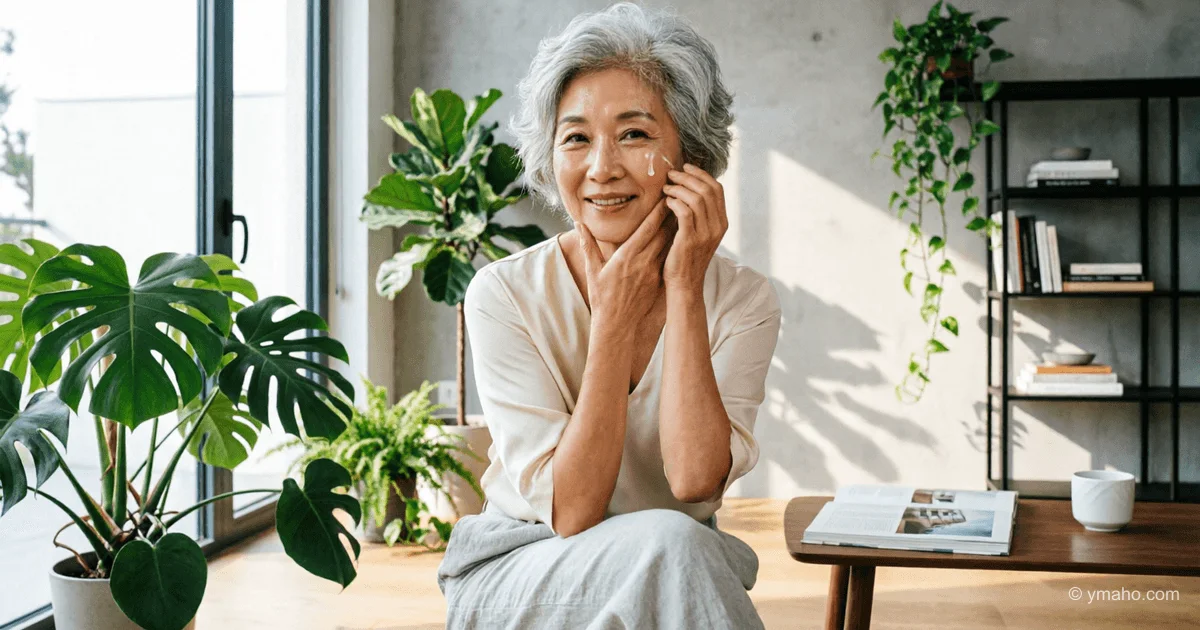
The Well-aging Concept: From Fighting Old Age to Healthy Aging
In 2026, the trend of rejuvenation gives way to the well-aging concept, which implies accepting age-related changes and focusing on health and quality of life. This is confirmed by over 66% of consumers who seek naturalness and simplified care.
From "fighting wrinkles" to the art of aging: How the Well-aging concept is rebooting the beauty industry
Introduction
Not long ago, beauty industry marketing was built on the language of war: "remove," "tighten," "destroy," "rejuvenate." The word "anti-aging" dominated store shelves and advertising campaigns, instilling in consumers that age is an enemy to be fought at any cost. However, today this aggressive rhetoric is being replaced by a new philosophy. Statistics are relentless: according to a 2026 YouGov study, the "rejuvenation" market is not mass-market—only about 10% of consumers actively seek to prevent signs of aging, while the majority are either neutral or even indifferent to the race for eternal youth.
Why is the anti-aging concept losing ground? The answer lies in a paradigm shift among consumers themselves. People are tired of feeling "not young enough" and want to look well-groomed, fresh, and healthy—but at their age, not their daughter's age. That is why the well-aging concept (or healthy longevity) is becoming not just a marketing trend but a fundamental rethinking of the relationship between humans, their bodies, and time.
In this article, we will explore how this historical transition from war to acceptance occurred, its impact on the global economy and societal consciousness, and what awaits the beauty and health industry in the near future.
Event Details and Timeline
The radical shift in the industry did not happen spontaneously. It had been brewing for years, but 2025-2026 became the tipping point when analytical reports and mass consumer behavior confirmed the irreversibility of change.
Stage 1: The Rise of "Skepticism toward Miracles" (2022-2024).
The post-pandemic world faced a reassessment of values. People began to care more about health rather than external gloss. The trend toward conscious consumption and "skinimalism" (minimalism in skincare) showed that complex 10-step routines were exhausting. Consumers started doubting promises of "minus 10 years in a month," realizing that skin condition depends on sleep, hormones, and stress.
Stage 2: Terminology Transformation (2025).
According to WGSN analysts, in 2025 there was a shift away from the term "anti-aging" in favor of "slow ageing" and "longevity." Brands began rewriting their websites and strategies, replacing "fight" with "care," "restoration," and "protection."
Stage 3: Economic and Scientific Confirmation (2026).
In 2026, several key events solidified the trend:
- Analytics: Frost & Sullivan and Kline + Company officially named "skin longevity" as the main growth driver, noting a shift in focus from cosmetic correction to cellular prevention.
- Scientific Background: The study of the 12 hallmarks of aging (by López-Otín) moved from labs to mass market. Consumers began to understand terms like "mitochondria," "senescent cells," and "peptides."
- Social Demand: Major studies, including a report by the China National Committee on Aging, confirmed that older adults (50+) increasingly choose health and active longevity over rejuvenation, fundamentally changing the target audience profile for beauty brands.
Impact and Significance: From Personal Psychology to Global Economy
The shift to well-aging is not just a change of slogans. It is a deep transformation affecting psychology, sociology, and global value chains.
Impact on Society and Psychology:
The most important change is happening in people's minds. The well-aging philosophy dismantles ageism—discrimination based on age. Whereas before, the appearance of gray hair or wrinkles was perceived as a disaster and a source of stress (which, by the way, accelerates aging), now it simply becomes a life stage. The Global Wellness Institute in its 2026 report emphasizes: people stop chasing "biological age for the numbers" and begin to value functionality, mobility, and mental clarity. Women no longer want to look 25 at 50; they want to be energetic and strong at 70.
Impact on Industry and Economy:
The economic consequences of this shift are colossal. While the industry used to profit from insecurities (fear of aging), it is now reorienting toward proactive health.
As BeautyMatter notes, we are entering the era of the "optimization economy," where global spending on wellness has reached $2 trillion. Consumers no longer buy "anti-wrinkle cream"; they buy "microbiome support and glycation protection." This requires a completely different approach to R&D, shifting the focus from the skin's surface to cell biology and nutrition science.
Key Players' Reactions
Large corporations and niche brands have keenly responded to the demand, completely restructuring their strategies.
Big Pharma and Corporations:
At the 2026 annual meeting of the American Academy of Dermatology (AAD) in Denver, the tone of discussions had noticeably changed. Companies no longer talked about "anti-aging" serums but about longevity and preventive health. The brand SkinCeuticals (L'Oréal) actively promotes products that combat AGEs (advanced glycation end products)—an internal aging process. Lancôme invests in technologies targeting mitochondria—the energy powerhouses of cells.
Niche Innovators:
Brands built from the ground up on the principles of well-aging and age-agnosticism are emerging. Companies like Better Not Younger or Flyte.70 deliberately do not target an age-specific audience, creating products "for the need, not the number." Their goal is not to turn back time but to support skin function at any point in life's journey.
Narrative Shift: As expert Yulia Orlova (founder of a natural cosmetics brand) notes in a column for RBC, the brands that win are those that first abandoned the language of fear. Their lexicon now includes words like "support," "restoration," "protection," and "long-term strategy," rather than "lifting" and "tightening."
Forecast and Conclusions
What lies beyond 2026? The transition to well-aging is only gaining momentum, and we predict several key development vectors.
- True Personalization. No more "for all ages" products. The future lies in personalized protocols based on DNA data, microbiome analysis, and real biomarkers of skin condition. Artificial intelligence will predict changes and "tune" care to individual human rhythms.
- Convergence of Beauty & Health. The boundary between cosmetics, supplements, and medicine will finally blur. We will see the rise of "cosmeceuticals"—products with proven biological efficacy that work from the inside and outside. "Neuro-care" (affecting the skin-brain axis to relieve stress) will become a premium segment standard.
- Risk of "Well-aging Washing." As with "green" marketing, the industry will face a wave of speculation. Brands will slap "longevity" labels without scientific backing. Experts warn: to maintain trust, companies will have to provide not promises but evidence from clinical trials.
Conclusion:
The well-aging concept is a step toward more mature and healthy relationships with oneself. It is an acknowledgment that aging is not a disease but a natural process that can and should be lived in comfort, strength, and beauty. Consumers no longer want to be hostages of ticking biological clocks. They want to be architects of their own longevity. And the industry that understands this first will not just win the market—it will shape the future of a healthy nation.
— Editorial Team









