The Graph vs Chainlink: How Two Web3 Data Protocols Work Together
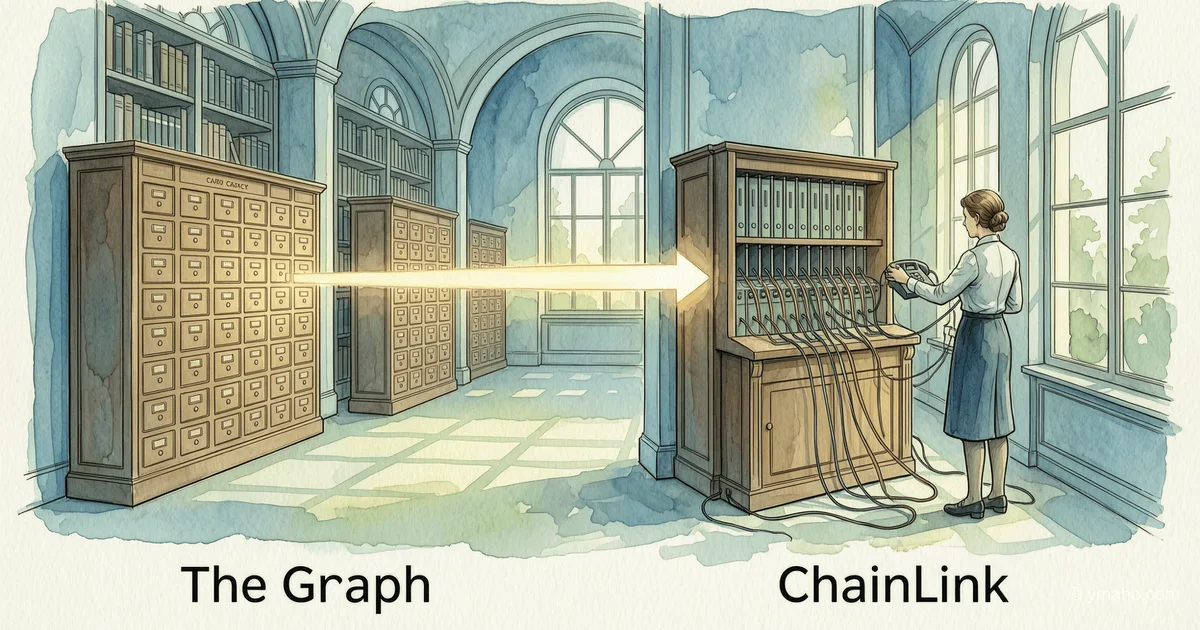
Imagine you're at a giant library where all the books are written in code. You need to find a specific fact, but there's no index, no librarian, and no way to look anything up. That's what using a blockchain feels like without the right tools. Two projects—The Graph and Chainlink—act as the library's indexing system and its phone line to the outside world. They don't compete; they solve different parts of the same problem.
The Graph: The Blockchain's Index Card System
The Graph organizes raw blockchain data so apps can find it quickly. Blockchains record every transaction, but searching through that history directly is slow and expensive. The Graph creates "subgraphs"—like custom indexes—that let developers ask questions such as "Show me all trades on Uniswap in the last hour" using a simple query language called GraphQL. This makes building apps much faster and cheaper.
How It Works
- Developers define what data they want to track (e.g., all token transfers for a specific contract).
- The Graph's network of "Indexers" processes new blocks and updates the index.
- Apps pay a small fee in GRT tokens to query the indexed data.
Think of The Graph as a librarian who has already read every book and made a detailed card catalog. You just ask for the card, not the whole book.
Chainlink: The Bridge Between Blockchain and the Real World
Blockchains are like sealed rooms—they can't see what's happening outside. But many smart contracts need real-world information, like the current price of Bitcoin or whether it's raining in London. Chainlink provides a secure "oracle" network that brings external data onto the blockchain.
How It Works
- A smart contract requests a piece of data (e.g., BTC/USD price).
- Multiple independent Chainlink nodes fetch the same data from different sources (exchanges, APIs).
- The nodes compare results and deliver a verified answer to the blockchain.
- The contract pays a fee in LINK tokens for the service.
Chainlink is like a trusted messenger who checks with several sources before delivering a message, ensuring it hasn't been tampered with.
Key Differences at a Glance
| Feature | The Graph | Chainlink |
|---------|-----------|-----------|
| Core Job | Index and query on-chain data | Bring off-chain data onto the blockchain |
| Data Direction | From blockchain to app | From outside world to blockchain |
| Who Uses It | App developers | Smart contracts |
| Token | GRT (paid for queries) | LINK (paid for oracle services) |
| Example Use | Showing your transaction history in a wallet | Providing live prices for a lending app |
Why They're Not Competitors
Many people ask which one is "better," but that's like asking whether a dictionary or a telephone is more important. You need both for different tasks. In fact, many DeFi apps use both: The Graph to display your portfolio history, and Chainlink to fetch current prices for loans.
Real-World Analogy
- The Graph = A filing cabinet that organizes all your past receipts.
- Chainlink = A news ticker that gives you today's stock prices.
You wouldn't use a filing cabinet to get today's news, and you wouldn't use a news ticker to find last year's expenses.
What Drives the Value of GRT and LINK?
GRT's value grows as more apps need to query on-chain data efficiently. The more activity on Ethereum, Solana, or other networks, the more queries, and the more GRT is used.
LINK's value grows as smart contracts rely on more real-world data. This includes not just prices but also weather, sports results, and even election outcomes. Chainlink is already used by hundreds of projects, and its value is tied to the expansion of "hybrid" smart contracts that blend blockchain logic with real-world events.
What Does This Mean for Regular People?
If you use any decentralized app—a crypto wallet, a lending platform, or a prediction market—you're probably benefiting from both The Graph and Chainlink without realizing it. They work behind the scenes to make sure the data you see is accurate and up-to-date. As Web3 grows, these two protocols will only become more essential, but they serve different roles and are not in competition.
Key Takeaways
- The Graph indexes on-chain data for fast queries; Chainlink brings off-chain data onto the blockchain.
- They are complementary, not competitors, and are often used together.
- GRT's value comes from query demand; LINK's from oracle service demand.
- Both are critical infrastructure for DeFi, NFTs, and other Web3 applications.
Frequently Asked Questions
What is the difference between The Graph and Chainlink?
The Graph helps developers read and search blockchain data quickly, while Chainlink helps smart contracts get information from outside the blockchain, like prices or weather.
Are The Graph and Chainlink competitors?
No. They solve different problems and are often used together in the same application. The Graph is for on-chain data access, and Chainlink is for off-chain data input.
How do GRT and LINK make money for their networks?
GRT is paid by developers to query indexed data. LINK is paid by smart contracts to receive verified external data. Both tokens are used to reward the people who run the networks.
— Editorial Team









