The Largest Attack on Crypto Finance: How Hackers Stole $290 Million and Why It Affects Everyone
In the cryptocurrency world, the largest incident of the year has just occurred: hackers stole nearly $300 million from a system considered secure. This isn't just a loss for investors — it's an event that shows how risks in digital finance can quickly spread across the globe, affecting even ordinary people who keep their money in traditional banks.
What happened and why it matters
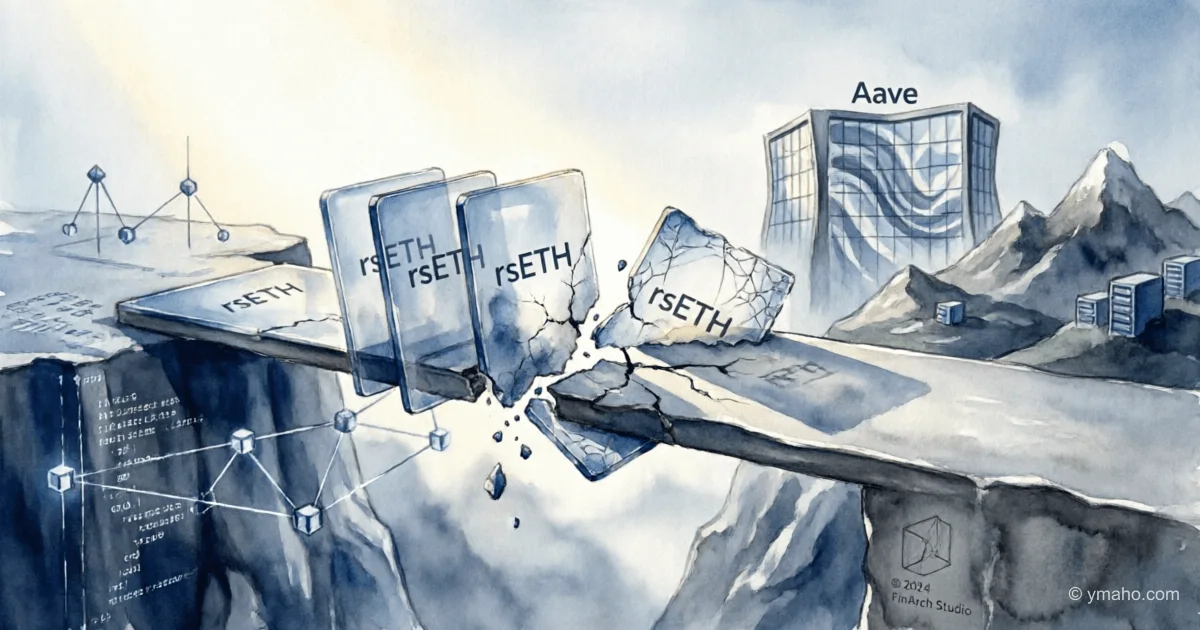
On Saturday, attackers exploited a vulnerability in a technology known as a "cross-chain bridge." This bridge acts like a transfer point between different cryptocurrency networks, allowing digital funds to move from one system to another. The hackers found a flaw in such a bridge built on LayerZero technology and drained a massive amount — 116,500 rsETH tokens. These are a special digital asset issued by the organization Kelp DAO.
The total damage is estimated at $293 million. This is the largest attack on the decentralized finance (DeFi) sector in 2026. DeFi is a system that works like a bank but without the bank itself. People can lend to each other, trade, and invest directly through blockchain-based computer programs. The problem is that when such a system breaks down, it doesn’t affect just one project — it impacts many at once.
How one failure triggered a chain reaction
Imagine one critical brick in a large financial building turns out to be defective. This structure is made up of many interconnected blocks. When one block collapses, the entire construction is at risk. Similarly, the rsETH token wasn’t only used within Kelp DAO but also across other financial applications — as collateral for loans and as reserves for trading platforms.
When hackers stole these tokens, their absence or compromise instantly created problems elsewhere. Cybersecurity firm Cyvers reported that at least nine other platforms were affected. Aave, the largest lending protocol in DeFi, which manages over $20 billion, immediately froze all rsETH-related operations to prevent further losses.
Cyvers' Chief Technology Officer, Meir Dolev, noted the situation could have been far worse. The protocol was "just three minutes away from losing an additional $100 million." A swift response — blacklisting the hacker addresses — blocked their second attempt.
Why this event has global significance
This attack occurred at a particularly sensitive moment for the entire cryptocurrency finance sector. It surpassed the previous major breach at the Drift project and became a new warning signal for the world.
Key takeaways:
- Decentralized finance (DeFi) operates as an interconnected network. Assets are often reused across multiple services. A failure in one place creates risk across many others.
- The attack targeted a "bridge" — a critical piece of infrastructure. Cross-chain bridges are essential yet complex technologies that have become prime targets for attackers.
- The damage extends beyond direct losses. Reputational harm and eroded trust can lead to capital flight across the entire sector, impacting digital asset prices for all investors.
- Market response was immediate. Major platforms like Aave swiftly took protective measures, highlighting the high level of interdependence.
- This is both a technical and economic issue. Losing hundreds of millions of dollars reduces overall liquidity (available capital) in the system, potentially disrupting normal user operations.
What this means for ordinary people
If you don’t invest in cryptocurrencies, you might think this event doesn’t concern you. But that’s not entirely true. Modern financial systems — both traditional and digital — are becoming increasingly interconnected. Major tech companies, banks, and even government initiatives are beginning to experiment with blockchain technologies.
An attack of this scale:
- Undermines trust in financial technology as a whole. This could slow down adoption in everyday life — for example, in fast international payment systems or digital identity solutions.
- Impacts overall stability. Major shocks in one sector can ripple into others, as investors and regulators reassess risks.
- Accelerates regulation. Governments witnessing such incidents may introduce stricter rules for digital assets, affecting service accessibility and convenience for end users.
Simply put, when a major explosion happens in one part of the global financial ecosystem, the vibrations are felt throughout. This event is yet another reminder that security in the digital world isn't just a technical detail — it's the foundation of everything related to money.
— Editorial Team









