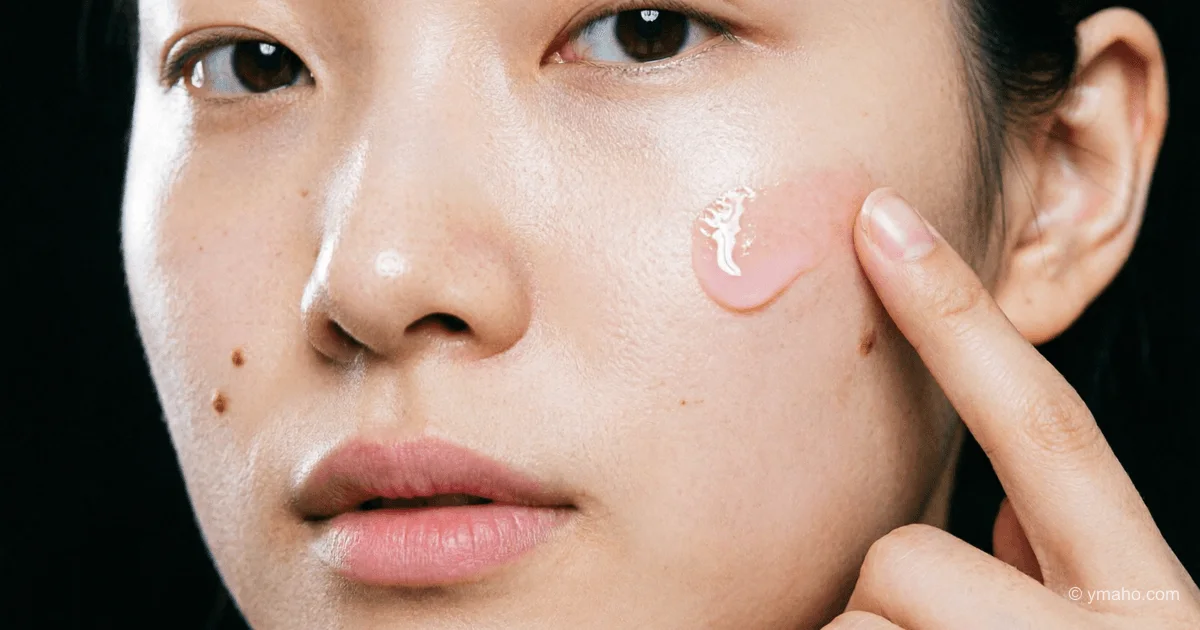
The Era of 'Naked' Skin: The New Trend of Ditching Foundation Entirely
In contrast to layered makeup, a movement is gaining momentum for completely abandoning foundations in favor of maximally healthy and hydrated skin. The focus is on ingredients that naturally even out skin tone and transparent finishes.
Introduction
The beauty industry is entering a new phase where the ultimate luxury asset is no longer skillful masking, but the skin itself—alive, breathing, with visible texture. The No Foundation Skin trend, which until recently seemed like a radical gesture, has now turned into a full-fledged philosophy of self-care. It's not about negligence, but about rethinking the very concept of a "beautiful" face: instead of heavy coverage—prepared skin, instead of total correction—spot treatment, instead of a mask—a second, invisible self.
Event Details and Timeline
Key events that shaped the trend by spring 2026 unfolded across several platforms.
The first landmark moment was the Sandy Liang show at New York Fashion Week, where makeup artist Charlie Riddle, in collaboration with Stila Cosmetics, presented the spring-summer 2026 collection with a complete rejection of foundation. Models walked the runway with skin prepared exclusively with Korean skincare: Glow Replenishing Rice Milk essence, Glow Serum Propolis + Niacinamide serum, and a light Beauty of Joseon sunscreen. The only corrective product was concealer applied sparingly.
Concurrently, in February 2026, Hailey Bieber and Sydney Sweeney cemented the trend in the mainstream by showcasing "Invisible Makeup" looks on red carpets. Sweeney demonstrated an approach where a mix of tinted moisturizer and concealer is used instead of traditional foundation—only where needed to soften redness. No heavy powder, only a natural balm that controls shine without erasing the skin's glow.
In March 2026, industry publication BeautyMatter published an analytical review of the "skinfification" of cosmetics, noting a fundamental shift: hybrid formats—tinted serums, tinted lip oils, tints—are showing explosive growth in search queries. According to Spate, consumers are increasingly searching for skin tint and tinted moisturizer rather than foundation.
By April 2026, the trend had crystallized as part of the broader skinimalism movement. According to analysts, the 2026 consumer is betting on products that work "quietly": they don't mask but improve, don't require complex manipulations but deliver the effect of healthy, rested skin.
Impact and Significance
For the consumer, the shift to No Foundation Skin is not just a product change but a shift in self-perception. Abandoning heavy coverage requires accepting the skin's natural texture—pores, minor imperfections, surface irregularities. Marie Claire Colombia puts it precisely: "No foundation skin doesn't require perfection; it requires consistency in skincare and a more relaxed approach to makeup."
Practical benefits are obvious: reduced time in daily routine, less burden on pores, minimized risk of clogging, and more natural skin "movement"—makeup doesn't crack or slide because there's virtually none.
For the industry, this is a tectonic shift. Foundations have been the core of color cosmetics for decades. The complexion segment, according to analysts at MakeUp in Paris, still accounts for about half of prestige makeup sales, but its structure is radically changing: foundations are giving way to skin tints and tinted moisturizers. Manufacturers must rethink their portfolios—a product that feels like "second skin" while also caring for it requires a fundamentally different approach to formula and texture.
For medicine and dermatology, the trend brings both opportunities and risks. On one hand, reduced occlusive load benefits problematic skin. On the other, BeautyMatter experts warn that "skinfification" without a scientific basis—when active ingredients like niacinamide or acids are added to foundation without considering formula stability and component compatibility—can cause irritation and long-term damage to the barrier.
Key Players' Reactions
The market is responding to the trend by splitting into three strategic lines.
Luxury brands are betting on "invisible" results. Armani Beauty with Luminous Silk Cheek Tint, IT Cosmetics with the Your Skin But Better CC+ Cream line, Chanel with Les Beiges Water-Fresh Tint—all are moving toward products that mimic the effect of "your skin, only better." The entry price point for this segment is around EUR 40–60 per bottle.
Mass market and mid-segment are capturing the skinimalism aesthetic through multifunctional formulas. Aloe Up promotes the idea of "SPF as moisturizer": a product that simultaneously protects from UV radiation and nourishes the skin thanks to aloe vera and plant oils, eliminating the need for a separate skincare layer.
Dermatological and pharmacy brands focus on evidence-based approaches. They invest in research confirming that reducing makeup layers and switching to tinted skincare products actually improves the skin barrier and microbiome. This segment is growing fastest, as it appeals to rational consumers tired of marketing promises.
The Russian market is also responding: analysts note that "perfectly even tone with heavy coverage" has entered the list of anti-trends for 2026. Hybrid formulas that serve both decorative and skincare functions are becoming the new standard.
Forecast and Conclusions
The No Foundation Skin trend is not a temporary fad but a natural stage in the evolution of beauty culture. Its trajectory is determined by several factors.
In the short term (1–2 years), tinted serums and skin tints will finally replace heavy foundations in most consumers' daily routines. The line between skincare and makeup will blur: we will see products that not only "care while masking" but actually improve skin condition with regular use.
In the medium term (3–5 years), the segment will face the challenge of verification. As BeautyMatter experts note, standardized criteria are needed to assess real "skinfification"—otherwise, consumers risk irritation from formulas where active ingredients conflict or lose stability. Regulators—FDA and EMA—will likely begin developing relevant frameworks.
Long-term, No Foundation Skin will evolve into a broader paradigm: "transparent beauty," where value lies not in how flawlessly the skin is masked, but in how healthy it is. By analogy with how skinimalism became synonymous with good taste, abandoning heavy coverage will become a marker of conscious self-care. Brands that manage to fit into this logic will win the battle for the loyalty of the most demanding 2026 consumer—one who is tired of "innovation theater" and demands results confirmed by the state of their own skin.
— Editorial Team









