Therapeutic Sleep: Hotels as Centers for Mental Reset
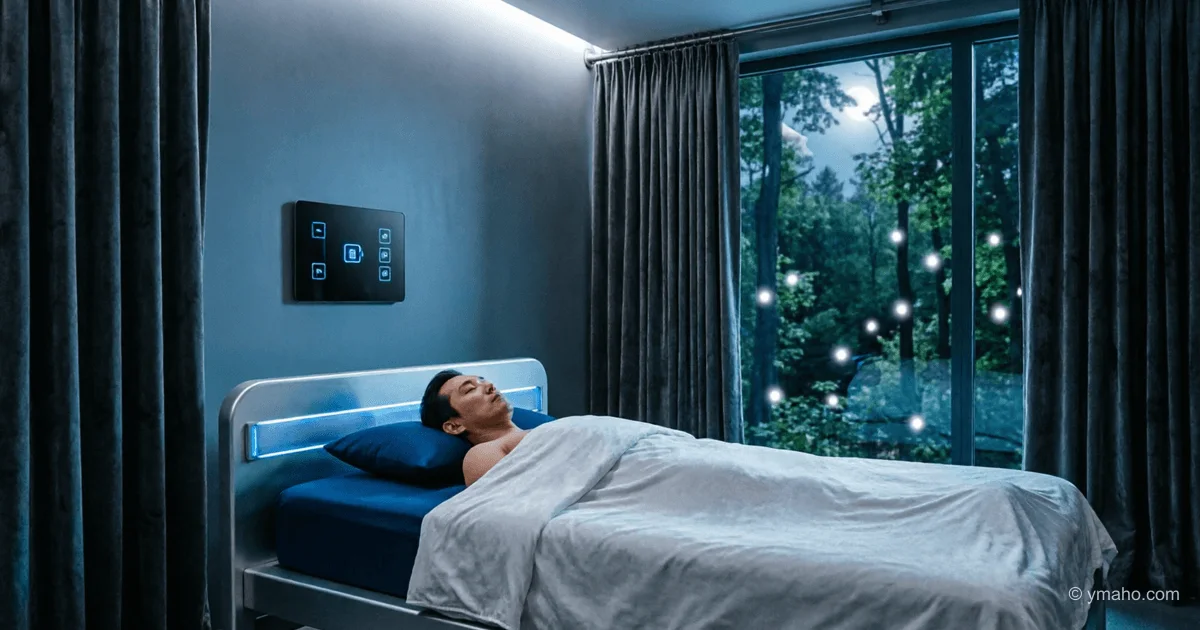
By 2026, sleep has become the new currency of productivity, with demand for sleep tourism growing 15-fold. People are booking hotel rooms with smart climate control and complete blackout for 2–3 days for digital detox and deep recovery, escaping burnout.
What sounded like a fad of spoiled insomniac workaholics in Silicon Valley just five years ago had become a major global tourism trend by May 2026. Sleep is no longer just a physiological need; it has moved into the category of "new productivity currency," and the quest for a good night's rest has spawned an industry worth over $600 billion. From New York to Altai, wealthy individuals exhausted by multitasking and total digitalization are booking hotel rooms not for the pool or excursions, but for three days of deep recovery in environments designed by neuroscientists. This marks a tectonic shift in the hospitality economy: wellness tourism has finally split into two streams—traditional spa relaxation and hardcore, evidence-based "therapeutic sleep" as a medical intervention.
Timeline of the Sleep Tourism Market
Formally, the link between sleep and productivity was discussed as early as the early 2020s, but only in 2026 did this trend gain quantitative parameters of explosive growth. According to a Global Wellness Institute report, sleep tourism is recognized as one of the fastest-growing segments of the global wellness market. An Amerisleep survey conducted on June 12, 2026 among a thousand Americans showed that one in five travelers plans a trip this year with the main goal of normalizing sleep. Meanwhile, 11% of respondents had already chosen a hotel solely for its sleep features, and 43% are willing to pay extra for a room positioned as a "space with enhanced sleep conditions."
The Russian market shows even more aggressive dynamics. According to Izvestia in February 2026, demand for Sleep Well category rooms in the Russian Federation grew 15-fold over the preceding 12 months. The audience for such programs is residents of megacities aged 30 to 50, who book two- to three-day slots in hotels with complete blackout, smart climate control, and mandatory digital detox. The Amadeus Travel Dreams 2026 study adds that 41% of passengers today travel not for sightseeing, but for a peaceful state of mind after the trip.
At the same time, the luxury segment has moved into the "neuro-hospitality" phase. In the Middle East, as noted by industry publication Hotel & Catering, hotels from AlUla to Dubai have turned into "recovery hubs" where guests are offered neurodiagnostics: brain headbands, digital "sleep passports" upon checkout, and consultations with somnologists. Luxury is no longer measured by gold in lobbies—it is measured by a hotel's ability to biologically optimize the guest.
The Sleep Economy and Its Social Contradictions
The financial scale of the phenomenon is impressive. The global sleep economy is estimated at over $585 billion, and this figure includes not only high-tech mattresses but entire architectural concepts. According to Amadeus, a hotel operator that implements sleep packages increases the average booking value by 34%. An average 150-room hotel can generate up to $1 million in additional annual revenue from personalized rest-related services alone. Today, the average American traveler is willing to pay $1,725 for a "sleep vacation," and 9% of respondents are willing to pay an extra $500 or more for just a sleep-optimized room.
However, it is in this triumph of monetization that the sharpest social paradox lies. Sleep tourism, like the entire wellness industry, reproduces and deepens inequality. The Global Wellness Institute directly points to the "sleep gap"—the disparity in access to quality sleep between the affluent and those facing financial instability, unstable housing, and shift work. The Amerisleep survey confirms this reflection: 56% of respondents consider prioritizing sleep a marker of privilege, and 67% view sleep tourism as a luxury few can afford. The paradox of the era is that the very population groups most in need of restorative rest—due to stress, poverty, and overwork—are excluded from "resort therapy" by economic barriers.
Industry Responses and the Technology Race
The reaction of key market players has taken two directions: the luxury hub segment and mass-market adaptation. In the high-end segment, projects like Equinox Hotels with their AI beds that adjust firmness in real time, Six Senses with circadian lighting, and Middle Eastern properties implementing "invisible service" based on predictive AI set the tone. In New York, Conrad Downtown offers the Goodnight Conrad package, including a white noise generator and Byredo aromatherapy. Nobu Miami Beach promotes a two-day Ocean Breeze Sleep Retreat with tatami mats, green tea, and mandatory breakfast in bed.
In the Russian market, according to mosregtoday, the most promising regions for sleep tourism are Altai, Karelia, and the Black Sea coast, where hotels in 2026 have already begun mass-adapting rooms for sleep recovery. In China, according to analysts, the market for "therapeutic hotels" is supported by government policy and a number of pilot projects integrating medicine, AI, and hotel services.
At the same time, somnologists and sleep architects warn of the risk of "hyper-optimization." The same Amerisleep survey records an alarming symptom: 35% of respondents admitted feeling pressure to achieve "perfect sleep." The attempt to fit rest into KPIs, controlling every phase of slow-wave sleep via a bracelet, itself becomes a source of stress—directly contradicting the therapeutic purpose of the concept.
Forecast and Conclusions
By the end of 2026, sleep tourism will finally become institutionalized as an independent vertical within the hospitality industry. Three key trends can be predicted for the near future. First, sleep technology will democratize: the same principles—absolute darkness, cooling to 18–20°C, noise cancellation, and minimal blue spectrum—will begin to penetrate from luxury hotels into mid-range chain hotels. Second, "sleep certificates" will appear on the market—independent standards confirming that a room is truly designed according to scientific criteria, not just equipped with a couple of extra pillows. This will separate real programs from marketing imitation.
Third—and most importantly—the critical mass of public attention to the issue will inevitably raise the question of the right to sleep as a social problem. Already, researchers note that poor sleep correlates with chronic diseases and cognitive decline, meaning the sleep gap directly translates into health inequality. Within five years, we can expect government and corporate programs subsidizing "sleep hygiene" for vulnerable groups—not as a luxury, but as an element of preventive medicine.
Therapeutic sleep is no longer just the top luxury offering of 2026. It becomes a mirror reflecting all the contradictions of the post-industrial economy: the desperate need for mental recovery, the technological power to meet that need, and the growing wall between those who can afford a $2,000-a-night ticket to a sleep room and those for whom eight hours of silence is an unaffordable luxury.
— Editorial Team









