Researchers Develop Thermostable Hantavirus Vaccine Using Ensilication
An international team of scientists is using the "ensilication" method to create a hantavirus vaccine that is thermostable and does not require a cold chain. The development is particularly relevant given the lethal outbreaks of a disease with no specific treatment or vaccine.
Ensilication Against Hantavirus: How a $0.30 Silica Cage for a Vaccine Could Change Epidemiology in Poor Regions
While the world watches the Andes hantavirus outbreak on the cruise ship MV Hondius—seven confirmed cases, four deaths, passengers dispersed across 12 countries—a story unfolds in the laboratories of the University of Bath that could make this panic the last of its kind. Professor Asel Sartbaeva and her team are developing the first thermostable vaccine against hantavirus. And it's not just about the vaccine itself. It's about the ensilication technology, which has the potential to rewrite the rules of the game for global vaccination.
The Core: What's Really Happening
"Currently, there is no effective vaccine against hantaviruses, leaving populations in Southeast Asia, Africa, and South America vulnerable to rodent-borne diseases," says Professor Sartbaeva. Her team has developed a new antigen against the Hantaan hantavirus and has already tested it in laboratory conditions and animal models. The result is stated with academic restraint, but behind it lies a breakthrough: "excellent immune response."
Ensilication is a process where the protein molecules of a vaccine are encased in a protective "cocoon" of silica at the nanoscale. Imagine a tiny glass safe that protects the contents from heat but opens exactly when the vaccine enters the body. This is not cryopreservation, lyophilization, or the addition of stabilizers—it is a fundamentally different approach. The vaccine remains stable at room temperature.
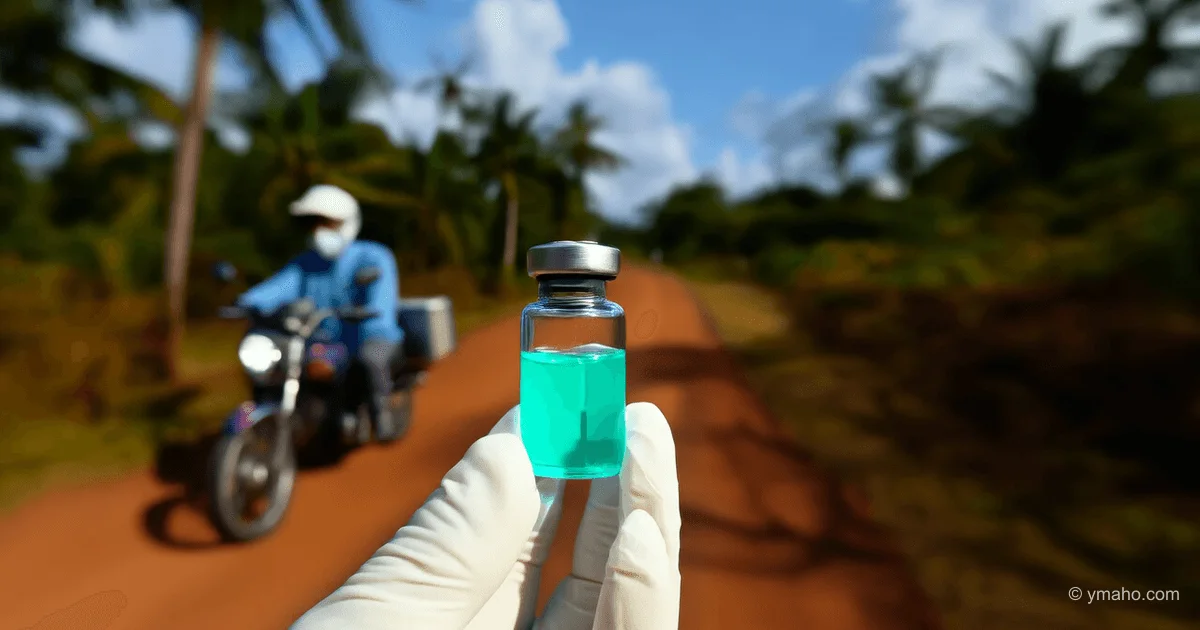
The team combined an mRNA platform with ensilication. The result is a vaccine that does not need a cold chain. This means it can be delivered to a remote village on a motorcycle under the scorching sun and will not spoil. For hantavirus—a disease that affects remote rural areas—this is not a convenience but a difference between life and death.
Timeline and Context
The work began long before the outbreak on the MV Hondius. Sartbaeva has been working on ensilication for over a decade. The technology evolved from concept to patent, from patent to spin-out EnsiliTech (founded in July 2022), from spin-out to government contract. In 2024, EnsiliTech won a £1.7 million contract from the UK Department of Health and Social Care to develop the world's first thermostable mRNA vaccine.
May 2026 brought an ironic coincidence: the vaccine data was ready for publication just as the world anxiously watched the hantavirus outbreak on the cruise ship. The MV Hondius was traveling from Ushuaia (Argentina) to Cabo Verde. On board were 147 passengers and crew. Three died, one is in intensive care in Johannesburg, and several others are under observation. The authorities of Cabo Verde denied the ship entry. Spain agreed to accept passengers for evacuation. The WHO declared a monitoring regime but emphasized that the pandemic risk is low.
What happened is not an ordinary episode. The Andes strain is the only one among the 38 known hantaviruses capable of human-to-human transmission. Its fatality rate reaches 60%, making it one of the deadliest viruses modern medicine faces. In 2025, 229 confirmed cases of hantavirus pulmonary syndrome were reported in the Americas, with 59 deaths. In 2026, preliminary data shows 94 cases and 13 deaths. And that's only official statistics from eight countries.
Who Wins and Who Loses
Winners:
EnsiliTech and the University of Bath gain a platform technology with potential applications far beyond hantavirus. EnsiliTech can stabilize any heat-sensitive vaccine. If the mRNA platform with silica stabilization proves effective in clinical trials, EnsiliTech will become an acquisition target for big pharma with an estimated value of $300–500 million.
Global health, especially resource-limited systems, gains a tool that solves a problem costing £35 billion annually—that's how much the pharmaceutical sector loses due to spoiled drugs from cold chain failures. The World Health Organization estimates that up to half of all vaccines are wasted in developing countries due to refrigeration equipment failures. A thermostable vaccine is not an additional product but a replacement for existing infrastructure.
Patients in endemic areas get the first real protection against a disease for which no vaccine has existed for decades. Hantavirus steadily circulates in the Southern Cone countries (Argentina, Chile), Southeast Asia, and Africa.
Losers:
Manufacturers of refrigeration equipment for pharmaceutical logistics. If ensilication becomes the standard for new vaccines, the cold chain market will shrink by a segment worth $15–20 billion over 10–15 years.
Developers of traditional hantavirus vaccines without thermostabilization. Their products, even with comparable efficacy, will not be able to compete in regions without reliable electricity.
Pharma companies that invested billions in building ultra-cold infrastructure for mRNA vaccines during the COVID-19 pandemic. If Bath's technology makes ultra-cold unnecessary, these investments will depreciate faster than expected.
What the Media Misses
Insight One: "Ensilication," not "Inciliration."
The news article uses the term "inciliration," but all scientific publications, University of Bath press releases, and official EnsiliTech materials use "ensilication"—from "ensilicification" (encasing in a silica shell). This is not a spelling nitpick. It's the difference between understanding the mechanism and a superficial retelling. The silica "cocoon" is not a chemical modification of the protein but a physical barrier that preserves the antigen's three-dimensional structure from thermal denaturation.
Insight Two: Ensilication vs. Lyophilization.
Many media outlets compare ensilication to lyophilization. This is a mistake. A lyophilized vaccine requires reconstitution with a sterile solvent, creating risks of preparation errors and contamination. An ensilicated vaccine is a liquid ready for injection without any additional steps. This is a fundamental difference in terms of usability in field conditions and mass vaccination. That's why military agencies in several countries are interested in the technology.
Insight Three: The Project Started Before the Panic.
Sartbaeva's lab began work on the hantavirus vaccine before the MV Hondius outbreak. This is not an emergency development reactively mobilized in response to a crisis. It is a systematic study that coincidentally aligned with an event that brought media and investor attention. Crucially, the vaccine was developed for the Hantaan virus (Old World, hemorrhagic fever with renal syndrome), while the cruise ship outbreak was caused by the Andes virus (New World, pulmonary syndrome). The technological platform is transferable, but the specific antigen may require adaptation.
Insight Four: The Economics of Ensilication.
The cost of ensilication per dose, according to EnsiliTech estimates, is in the range of $0.20–0.35. This is comparable to the cost of a traditional vaccine vial. But the economic impact is not in production cost but in eliminating the entire cold chain, which accounts for 30–50% of vaccine delivery costs in remote regions. For a hantavirus vaccine that will primarily be needed by poor rural communities, this is critical.
Forecast: Next 30 Days and 90 Days
30 Days (by mid-June 2026):
Interest in the development will be fueled by ongoing monitoring of the MV Hondius outbreak. The incubation period for hantavirus is up to 45 days, so new cases among the 40 passengers who disembarked before quarantine began may still be identified. Each such case will be a reminder that no vaccine exists.
EnsiliTech will intensify negotiations with potential investors. I expect an announcement of a Series A round closure of £10–15 million by the end of June. Interest will come from funds specializing in global health and pandemic preparedness.
90 Days (by mid-August 2026):
The University of Bath team will announce readiness to move to Phase 1 clinical trials. Partnerships with researchers from South Africa and the US, already existing within the project, will accelerate regulatory approvals. I estimate Phase 1 start in Q4 2026 or Q1 2027.
EnsiliTech may receive additional government funding (BARDA mechanisms in the US, UK Vaccine Network, CEPI). Total funds raised for development could reach $25–30 million by year-end.
Structural Forecast for 3–5 Years:
If Phases 1–2 are successful, the hantavirus vaccine could receive accelerated approval for an orphan indication. Hantavirus will not be a commercial blockbuster—the market is too small and poor. But ensilication technology, proven effective with this vaccine, will become a platform for thermostable versions of existing vaccines—from measles to next-generation mRNA vaccines.
By 2030, the question will no longer be "can ensilication work?" The question will be "why aren't all vaccines ensilicated?" And the answer will not be scientific but economic: because companies that built billion-dollar cold chains do not want to write off those assets. But hantavirus, mercilessly killing three out of five infected, leaves no choice. The technology born in Bath's lab will become the standard not because of philanthropy, but because death from a disease preventable by a $0.30 vaccine is a price the world is no longer willing to pay.
— Editorial Team









