Titanium Implants with Bone 'Camouflage' Trick the Body into Accepting Foreign Material as Its Own
Researchers at the Institute of Solid State Physics of the Russian Academy of Sciences (ISSP RAS) have developed a bioactive coating for 3D-printed implants that mimics the composition of living bone tissue. Thanks to this disguise, the prosthesis is not just mechanically fixed but literally fuses with the bone, shortening rehabilitation after severe injuries.
A titanium pin in the femur is a foreign object, and the body always knows it. A cascade of reactions is triggered: inflammation, formation of a fibrous capsule, risk of rejection. For decades, surgeons have dreamed of an implant that the bone would accept as its own tissue—without micromotion, without chronic inflammation, without revision surgeries. Researchers at the Institute of Solid State Physics of the Russian Academy of Sciences (ISSP RAS) have just brought that dream one step closer to reality: they have developed a bioactive coating for titanium 3D-printed implants that mimics the composition of natural bone so accurately that the body no longer sees the difference.
The Bone Accepted the Metal as Its Own
The ISSP RAS team, led by Professor Alexander Komissarov, created a technology that applies a thin layer of hydroxyapatite—the mineral that forms the basis of human bone tissue—onto a porous titanium surface. The trick is not in the hydroxyapatite itself (it has been applied to implants for a long time), but in the method of its integration with titanium and the precision of reproducing the natural bone structure.
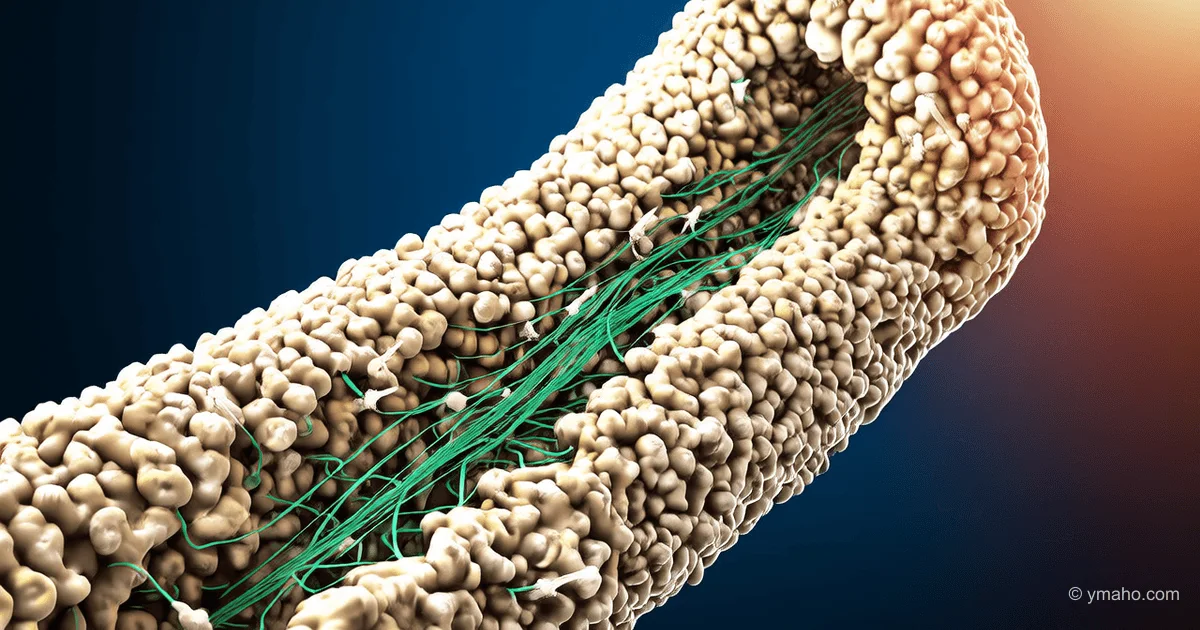
3D printing allows the creation of implants with a specified porosity that mimics the trabecular architecture of cancellous bone. But even a perfectly printed titanium sponge remains bioinert—the body recognizes it as "foreign." The ISSP coating solves precisely this problem: nanosized hydroxyapatite particles are not simply sprayed on top but are "stitched" to the titanium at the molecular level through an intermediate layer of oxide nanotubes.
The result of osseointegration exceeds all expectations. In a series of experiments on laboratory models, bone tissue not only adhered to the implant but grew into its pores, forming a unified "bone-implant" mechanical system without a fibrous layer. After 12 weeks post-implantation, it became impossible to pull the titanium rod out of the bone without destroying it.
Why It Worked Now
Titanium implants with hydroxyapatite coating are not new. The first attempts to apply calcium-phosphate coatings to titanium appeared back in the 1980s, and plasma spraying became the industry standard in the 1990s. But old methods have a fundamental drawback: a thick, uneven coating that peels off under load and dissolves in the body within a few years, leaving bare titanium.
What has changed now? Three things.
First—oxide nanotubes. Anodizing titanium in a special electrolyte grows a layer of vertical nanotubes about 100 nm in diameter on its surface. These tubes act as an ideal anchor: hydroxyapatite crystallizes inside them and bonds firmly to the metal. Mechanical tests showed adhesion strength many times higher than that of plasma spraying.
Second—porosity control through 3D printing. ISSP engineers used selective laser melting to create a pore structure with diameters of 300–500 µm, accurate to tens of microns. This is critical: osteoblasts—the cells that build bone—cannot physically migrate into pores smaller than 100 µm, and in pores larger than 800 µm, they lack the mechanical signals for activation. The optimal range, refined over decades of research, is 300–600 µm, and the ISSP coating fits precisely within these parameters.
Third—biochemical camouflage. The hydroxyapatite on the implant surface mimics not only the chemical composition but also the crystal structure of natural bone mineral: a calcium-to-phosphorus ratio of 1.67, a degree of crystallinity close to biological, and nanosized crystallites (20–40 nm). Immune cells called macrophages, which are the first to encounter the implant and decide whether to trigger inflammation, scan the surface precisely for these parameters. If the numbers match expectations, no alarm signal is sent.
Where It Will Be Most Useful First
The ISSP development targets three clinical niches where reliable osseointegration is critical.
First—revision hip arthroplasty. When a primary prosthesis loosens (which happens in 10–15% of patients after 15–20 years), the surgeon must remove the old implant and place a new one in already damaged, weakened bone. Standard titanium often fails to integrate in such situations. An implant with bioactive coating and bone-like porosity offers a chance for osseointegration even in conditions of bone deficiency.
Second—spinal surgery. Interbody cages inserted between vertebrae for disc herniations must fuse with the vertebral bodies quickly and without micromotion. The slightest looseness means spondylodesis fails, and the patient is doomed to chronic pain. The ISSP technology reduces osseointegration time from 6–12 months to 2–3.
Third—maxillofacial surgery. Custom 3D-printed implants for replacing jaw defects after trauma and oncological resections are already a reality. But the soft tissues of the oral cavity are an extremely aggressive environment for an implant, and the risk of infection is higher here than anywhere else. A bioactive coating that accelerates osseointegration shortens the window of vulnerability for bacteria and thereby reduces the incidence of peri-implantitis.
The Market Awaits Numbers
The global market for titanium implants in orthopedics and dentistry was estimated at about $9 billion in 2025, with coating manufacturers holding a significant share. The ISSP technology does not yet have a commercial name, has not undergone a full cycle of clinical trials, and has not received a registration certificate—but the direction is clear.
Russian implant manufacturers gain access to a competitive surface modification technology. Companies like Titanium and Konmet already use 3D printing for custom implants, and integration with the ISSP coating is a logical next step.
Public healthcare wins: shorter osseointegration time means shorter hospital stays, and a lower rate of revision surgeries saves the budget billions of rubles annually. One revision hip replacement costs the compulsory health insurance system 200,000–300,000 rubles—and tens of thousands of such surgeries are performed in Russia each year.
Western manufacturers of premium coatings (Medtronic, Stryker, Zimmer Biomet) lose out—but only if the ISSP technology scales to industrial volumes and passes international certification. For now, it is a laboratory development with excellent experimental data, not a product on the shelf.
What's Next
The first stage is completing preclinical trials on large animals. Osseointegration in a rat and osseointegration in a sheep or dog are two different stories. Rat bone heals three times faster than human bone, and results obtained in rodents often do not reproduce in the clinic. ISSP is currently at this stage: data is being collected from load tests on sheep with implants in the femur.
The second stage is a pilot series for a limited group of patients. If preclinical studies confirm safety and efficacy, the first surgeries with the new implants could take place within two to three years—most likely at the Priorov National Medical Research Center for Traumatology and Orthopedics, with which ISSP traditionally collaborates.
The third stage is market entry. Under an optimistic scenario with support from the Ministry of Health and the Ministry of Industry and Trade, implants with the ISSP bioactive coating could appear in clinical practice by 2028–2029. The price is about 50,000–70,000 rubles per implant, comparable to imported analogs but with potentially better clinical outcomes.
The most intriguing question is what happens if bioactive molecules are added to the coating: growth factors, antibiotics, or even gene vectors that trigger osteogenesis. The ISSP team is already experimenting with incorporating strontium ions into the hydroxyapatite crystal lattice—strontium stimulates osteoblast division while suppressing the activity of osteoclasts, the bone-resorbing cells. If this works in the clinic, we will have an implant that not only integrates but actively builds new bone around itself.
— Editorial Team









