Collision on the Way to Europe: How a Local Accident Affects International Routes
When an international train suddenly stops due to a collision, it's never just a "technical delay." At the Briahiv station in Vinnytsia Oblast, a freight locomotive from a private quarry grazed a passenger "Intercity+" train en route from Kyiv to Przemyśl, Poland. Fortunately, all 576 passengers and crew remained unharmed. Yet the incident raises questions about how the modern rail network connecting Ukraine to Europe actually functions—and why even a local accident instantly reverberates across borders.
How One Accident Triggers a Chain Reaction
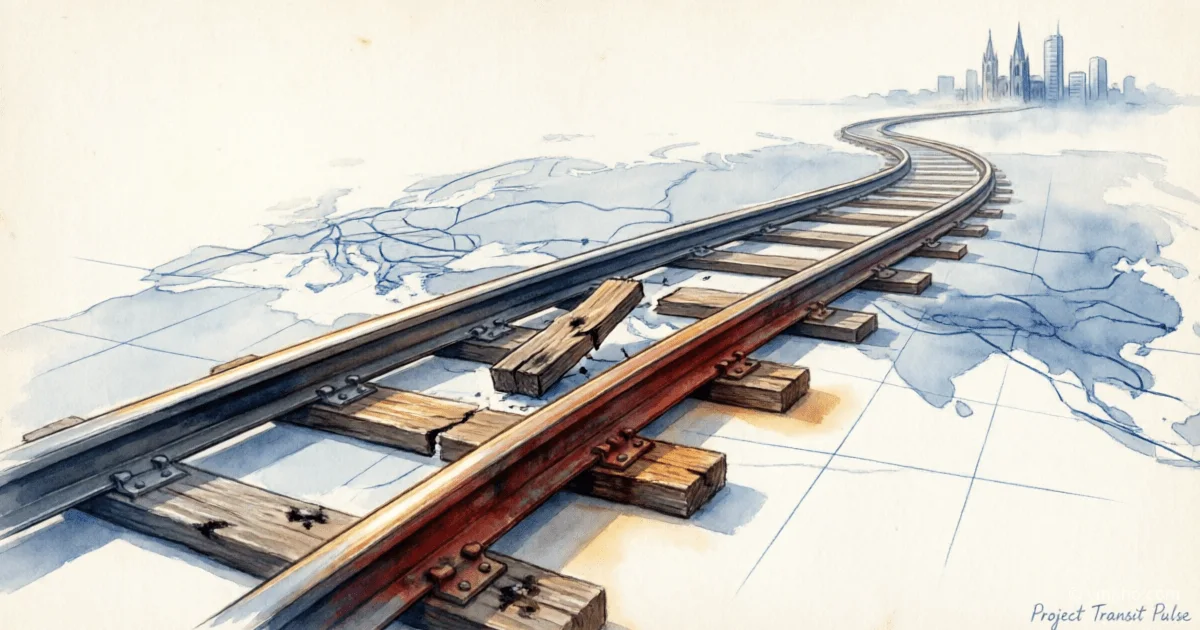
Imagine the railway system as a complex network of water pipes. If there’s a blockage in one section, pressure shifts immediately throughout all connected branches. The Kyiv–Przemyśl train isn’t just a vehicle carrying people—it’s part of an international corridor where schedules are synchronized with Polish carriers, border control, and connecting services deeper into the EU. When this timetable is disrupted, Ukrzaliznytsia must manually reconfigure logistics: dispatching backup trains, arranging expedited passport checks, and coordinating with foreign operators to ensure passengers don’t miss their onward connections. This well-oiled crisis management mechanism kicks in automatically but demands significant resources.
Why Safety at Track Junctions Is Now Top Priority
Ukraine’s railways are currently operating under heightened strain. The infrastructure simultaneously serves domestic routes, humanitarian cargo, and growing passenger traffic toward European borders. The collision with a private company’s locomotive highlights how critical it is to clearly separate tracks and strictly regulate third-party traffic. An investigation has already begun, with experts examining not only human error but also signal system conditions, traffic scheduling, and coordination between state and private operators. A similar past incident—an off-rail wagon—was recorded in Zhmerynka, pointing to a systemic need for modernizing key junction stations.
• Fact: The collision occurred at Briahiv station; no injuries reported.
• Fact: All passengers are accommodated at the station, and a replacement train has been dispatched.
• Fact: Border services and foreign rail operators have been notified to minimize delays.
• Context: The Kyiv–Przemyśl route is one of the key land corridors into the EU.
• Expectation: The investigation will determine the cause of the private locomotive’s schedule deviation.
What This Means for Ordinary Travelers
If you’re planning a rail trip to Europe, build in some buffer time for unexpected delays. International routes are becoming increasingly popular, meaning infrastructure will continue operating at full capacity until phased modernization is complete. That said, emergency response systems and train replacement protocols function reliably, so passenger safety remains a top priority—even when schedules go awry.
What Matters
• No injuries resulted from the accident; all passengers were promptly evacuated and provided with alternative transport.
• The incident affects an international route, requiring immediate coordination with multiple countries and border agencies.
• The rail network operates as a single organism: a disruption on one segment demands instant rescheduling across the entire system.
• The investigation will focus on interactions between state-owned tracks and private industrial locomotives.
• Cross-border reliability depends directly on investments in signaling systems and decongestion of major hub stations.
— Editorial Team









