Ground Drone Operators School: Why Training Matters More Than Equipment
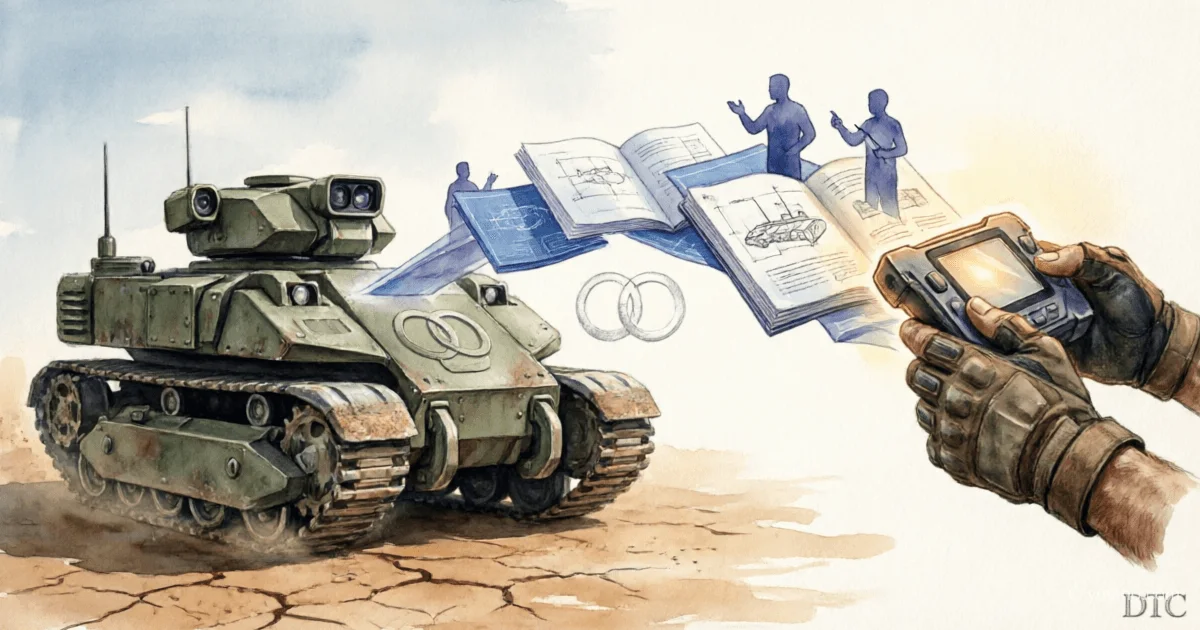
Ground robots are no longer science fiction — they’ve become as standard in modern defense as a radio or bulletproof vest. But hardware alone is useless without skilled operators. That’s why a major telecom provider and a charitable foundation have joined forces to scale up a specialized training school. This isn’t just a local initiative; it reflects a global trend: in today’s conflicts and crises, victory goes not to the side with more gear, but to the one that trains people faster and better to operate it.
Why hardware loses value without skills
Imagine buying a high-end professional quadcopter, only to realize you’ve never held a controller. Without practice or an understanding of flight physics, it becomes an expensive and dangerous toy. The same applies to ground robotic systems (GRS). These remotely operated machines take on the most dangerous tasks: terrain reconnaissance, cargo delivery, or operations in active combat zones. They save lives by replacing humans where threats are highest. Yet their effectiveness depends entirely on operator training. A single mistake can cost millions in hryvnias — or, more importantly, jeopardize a critical mission. That’s why building a full-fledged training ecosystem with experienced mentors and modern facilities has become the crucial link in the entire chain.
How civilian tech and defense are converging
In 2025, a joint project between a telecom company and the "Povernys zhyvym" foundation raised over 47 million hryvnias. These funds weren’t used to buy new equipment, but to build training infrastructure: comfortable housing, secure training grounds, and technical classrooms for cadets. This shift signals a fundamental change in mindset. The focus used to be on volume of deliveries; now it’s on training quality and creating a sustainable knowledge system. Instructors with real-world experience pass on skills in a structured environment, drastically reducing newcomers’ adaptation time and minimizing errors in the field.
For the global market, this sends a clear message: defense and technology sectors are increasingly relying on civilian resources and corporate support programs. Telecom providers, cloud services, and electronics manufacturers are becoming an invisible yet solid rear guard. Even the fact that the telecom operator’s parent company is listed on a U.S. stock exchange highlights how local initiatives in high-tension zones integrate into global financial networks. International investors are increasingly evaluating companies not just by quarterly reports, but by their ability to support long-term societal resilience.
What this means for ordinary people
The rise of specialized schools shows that modern technologies demand not just narrow engineers, but competent users capable of making quick decisions. Remote operation skills, data handling, and interaction with complex interfaces are gradually entering civilian professions — from logistics to agriculture. For the economy, this means steady growth in demand for technical education. For each of us, it underscores that true resilience is built on knowledge and adaptability — not just resource availability.
Key takeaways
- Ground robotic systems reduce direct risks but require professional operators.
- Over 47 million hryvnias were invested in training infrastructure and safety, not equipment procurement.
- The focus has shifted from mass deliveries to building a sustainable system for transferring hands-on expertise.
- Civilian businesses and the telecom sector are becoming integral parts of the global tech ecosystem.
- Workforce training has become a strategic asset on par with innovation itself.
— Editorial Team









