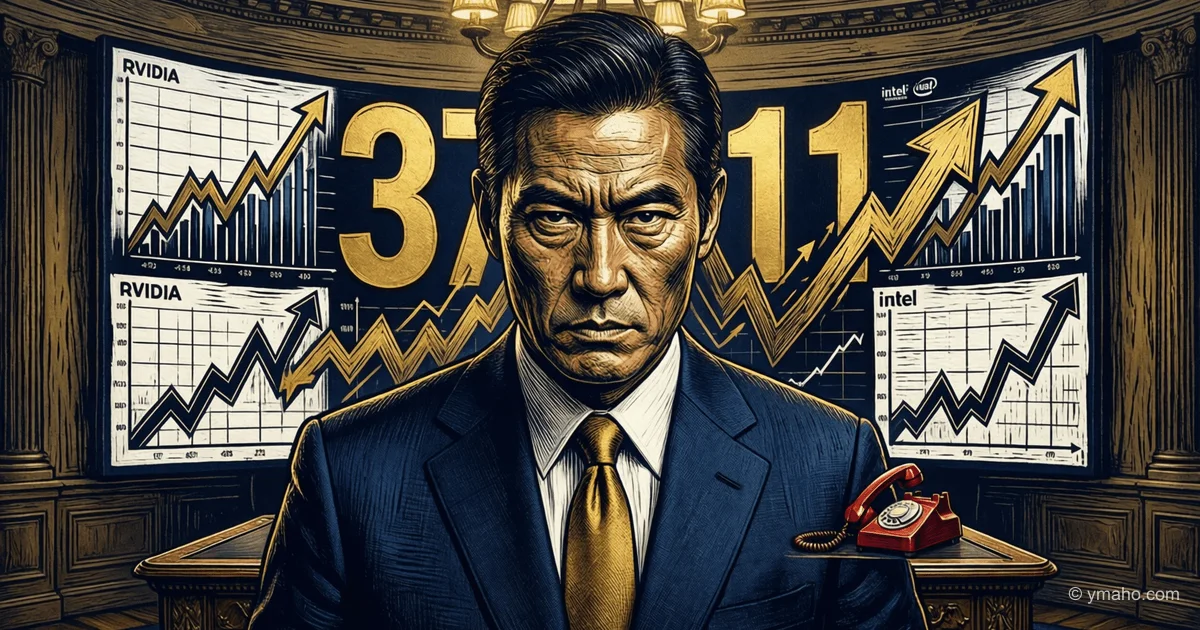
Donald Trump Declares Record 3,711 Stock Market Trades
According to the latest report on the U.S. president's stock market activity, nearly four thousand stock trades were executed during the period, primarily in IT companies and the financial sector. This has sparked a wave of criticism from political opponents and suspicions of insider trading, although the Trump Organization claims that asset management is handled by independent organizations.
Trump the Trader: What Lies Behind the President's 3,700 Trades
Quiet automation or the biggest conflict of interest in history? The data doesn't lie, but it stays silent on the main issue.
[The Gist]: What's Really Happening
The official version raises eyebrows. The Trump Organization claims the president's assets are in "fully discretionary accounts" managed by third parties through automated systems, and that neither Trump nor his family "play any role in selecting, directing, or approving specific investments." However, the term "unsolicited trades" for 625 transactions in the report completely contradicts this fairy tale. In professional jargon, "unsolicited" means the client gave the order to the broker, not the other way around.
What do we actually see? This is a classic example of a concentrated portfolio with elements of active management, disguised as passive indexing. Yes, 90% of the portfolio overlaps with the Russell 3000, and the trading spike on March 23 coincided with the S&P index rebalancing. This points to the use of a direct indexing strategy—where you own individual stocks rather than an ETF to harvest tax losses.
But the "devil" is in the individual positions. This is not a dumb robot. The system cannot decide on its own to dump $1 million to $5 million into Nvidia exactly one week before the Meta deal announcement and one week before the licensing of AI chip exports to China. A robot does not buy Boeing on the eve of a trip to China, where the aviation giant expects contracts. And certainly, a tax-loss harvesting algorithm does not buy Oracle while the White House decides the fate of TikTok.
The "insider view" here is simple: we are looking at a manager who uses a passive strategy as "white noise" to hide highly concentrated, high-risk bets. Total trading volume ranges from $220 million to $750 million. This is not diversification; it's aggressive trading on March volatility, when the war with Iran began.
Timeline and Context
The key date is February 10, 2026. On that day, Trump's portfolio did a somersault:
- Sold Microsoft and Amazon for $5 million to $25 million each.
- Bought Nvidia for $1–5 million.
- Bought Apple and Google.
A week later, Nvidia announces a strategic partnership with Meta. A few weeks after that, the administration liberalizes chip exports. Coincidence? In the financial world, this is called "front-running."
Next—March 2026. The market panics over Iran. The S&P drops 8%. While the crowd sells, Trump's portfolio executes over 2,000 trades in a month. We see purchases of Intel (6 trades amid the decline), AMD, and even Iridium Communications.
The result? The S&P rebounded 19% and hit new highs. Profits on some positions bought at the bottom (like Bloom Energy or Marvell) are estimated to exceed 100%. Trump bought the panic, sold (partially Microsoft/Meta) before the drop. Perfect timing.
Who Wins and Who Loses
The "Family" (Trump Organization) wins. Officially, the assets are managed by sons Donald Jr. and Eric. If the report is to be believed, the total capital gain from the market rally after the March bottom alone could amount to tens of millions of dollars.
"Insider circles" win. If Trump's algorithm so accurately hits AI and defense trades, then someone inside the White House apparatus is leaking information about future contracts or announcements. Ordinary hedge funds would kill for such latency.
The market loses. Not in money, but in trust. The difference between Trump and congressmen is that he directly comments on companies (e.g., praising Tim Cook of Apple a week after buying Apple stock). When the president says "Buy American," smart money looks at what he bought last week.
What the Media Isn't Saying
The main non-obvious insight is this is not greed; it's the architecture of future lobbying. Look at the "losing" positions: Trump dumped Tesla (millions in sales), Meta, and Amazon. Why? Because Elon Musk became a political competitor (and dumping Tesla is a blow to Musk's capital). Meta and Amazon fell under the antitrust knife of his administration.
Purchases go into Intel—a company the U.S. government effectively bailed out by taking a stake. Purchases go into Boeing and Lockheed—beneficiaries of war.
The media misses that a "random" automatic algorithm does not buy stocks of companies whose lobbyists spend weekends at Mar-a-Lago. This is a reward and punishment system embedded in the presidential portfolio. By buying stocks, Trump (or his "robot") materializes his political will on the market.
Forecast: Next 30 Days and 90 Days
Next 30 days: The Senate and Congress will ramp up bills banning stock trading for officials. Currently in play are the RESTORE Trust in Congress Act and the ETHICS Act, which aim to extend even to the president. By June 24 (tentatively), we will see high-profile hearings. Risk: Volatility in Big Tech stocks if Trump starts urgently selling positions to avoid a political scandal.
Next 90 days: If reform fails (and lobbying is strong), the "Trump strategy" will become the new norm for investors. Everyone will start monitoring officials' statements not as news, but as signals to action (Politically Traded Assets). I expect the creation of the first ETFs tied to congressional portfolios.
But there is also a technical factor: the report showed 625 "unsolicited" trades in March. This means Trump personally approved real trading during the most acute crisis. If the CFTC or SEC launches an investigation (and rumors of a probe into oil futures have already surfaced), Trump Media & Technology Group (DJT) shares could crash 30-40% in a week, dragging down confidence in the "Trump index."
Editorial Forecast
- Asset: Stocks of companies mentioned in the "unsolicited" March purchases (Intel, Boeing, Iridium Communications) / Direction: Up in the next 48 hours.
- Key levels: The market has already digested the main news, but now we are in a "catch-up analysis" phase—retail investors will copy the president's trades. We expect a 1.5-2.5% increase in these tickers at market open.
- Confidence level: Medium.
- Main risk: A sudden White House announcement that the portfolio is being moved to a "blind trust" with a real ban on trading—this would collapse the premium for "presidential coverage" of these assets.
— Editorial Team









