First-in-World Drug Approved to Delay Type 1 Diabetes in Children as Young as 1 Year
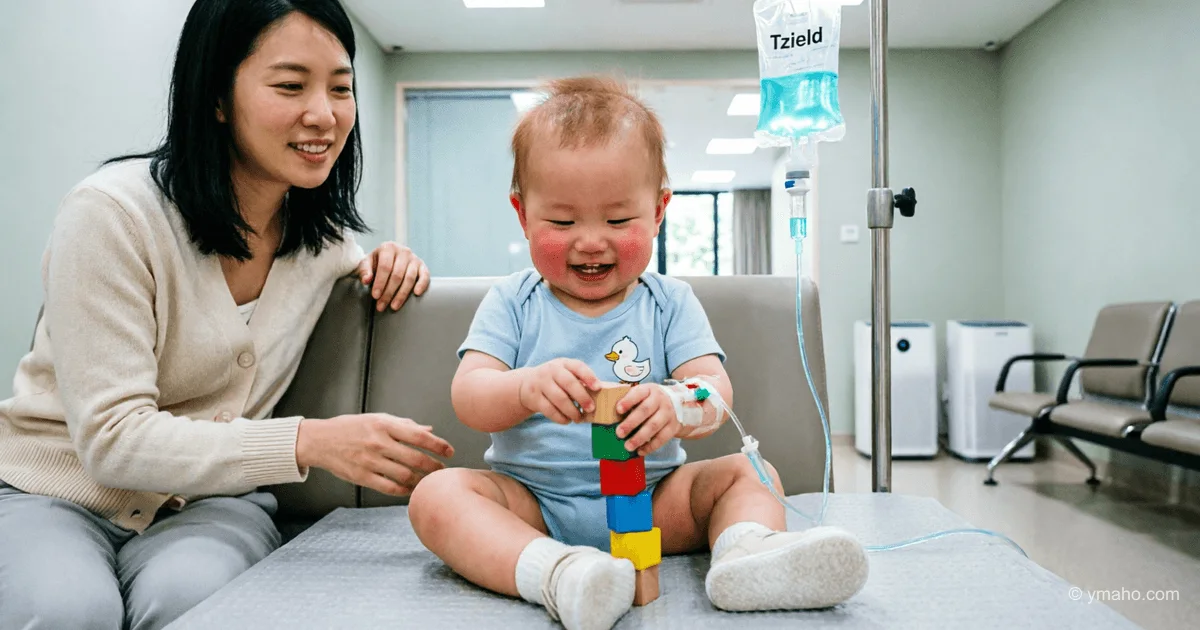
The FDA has expanded the indications for Tzield (teplizumab), approving it for children aged one year and older. This is the first disease-modifying drug for an autoimmune condition that can delay the progression to insulin-dependent type 1 diabetes in the youngest patients.
Stopping Diabetes Before It Starts: How Tzield Changed the Game for the Youngest Patients
Introduction
Imagine being told that your one-year-old child is sick. Not with a cold, but with an autoimmune process that is relentlessly destroying their pancreas. You know that in a few months or years, type 1 diabetes will set in—a lifelong dependence on insulin, constant blood sugar monitoring, risk of hypoglycemia. And there is nothing you can do about it. Until now.
On April 22, 2026, the U.S. Food and Drug Administration (FDA) expanded the indications for Tzield (teplizumab), approving it for children aged one year and older. This is the first disease-modifying drug for an autoimmune condition that can delay the progression to insulin-dependent type 1 diabetes in the youngest patients.
Dr. Kimber Simmons, Associate Professor of Pediatrics at the Barbara Davis Center in Colorado, called this "a new chapter in diabetes care." And that is no exaggeration. This is not about improving disease control, but about modifying the disease itself—intervening in the autoimmune process before it causes irreversible damage.
Event Details and Timeline
From First Steps to a New Milestone
Tzield (teplizumab-mzwv) is a monoclonal antibody targeting the CD3 receptor on the surface of T-lymphocytes. Its mechanism of action involves modulating the immune response: it partially activates and then inactivates autoreactive T-cells that attack the pancreatic beta cells. As a result, the number of "killer cells" decreases, while the proportion of regulatory T-cells that suppress autoimmune aggression increases.
In November 2022, the FDA first approved Tzield for adults and children aged 8 years and older with stage 2 type 1 diabetes. This was a historic moment: for the first time, a drug could not just treat symptoms but address the underlying cause of the disease. The drug received Breakthrough Therapy and Orphan Drug designations.
What Justified the Expanded Indication?
The current expansion to children as young as 1 year is based on interim results from the PETITE-T1D study (Phase 4). The study enrolled 23 children under 8 years of age with stage 2 type 1 diabetes. Participants received a 14-day course of daily intravenous infusions of teplizumab.
An interim analysis of 15 participants, published in the journal Diabetologia, showed that after 51.9 weeks of follow-up, the probability of not progressing to stage 3 was 89.6%. Only two participants progressed to the clinical stage of diabetes. Importantly, no grade 4 or 5 adverse events were reported.
The study is ongoing, but the data already obtained were sufficient for the FDA to grant expanded approval under priority review.
What Are the Stages of Type 1 Diabetes?
Understanding this approval requires understanding the stages of the disease:
- Stage 1: Presence of two or more autoantibodies, normal glucose levels. The process has begun but is clinically silent.
- Stage 2: Presence of autoantibodies plus impaired glucose tolerance (dysglycemia). The patient is still asymptomatic, but the risk of progressing to stage 3 in the coming years is extremely high.
- Stage 3: Clinical manifestation of diabetes with hyperglycemia requiring insulin therapy.
Tzield is indicated specifically for stage 2—for patients in whom autoimmune destruction is already underway but insulin is not yet needed. This is the "window of opportunity" where intervention can have maximum effect.
Impact and Significance
For Patients and Families: A Gift of Time
Dr. Simmons emphasizes a key point: "These children are often at the highest risk for rapid progression, without warning." The small size of the patient, complete dependence on parents for care, and the complexity of managing insulin therapy in young children all make delaying the transition to stage 3 especially valuable.
Studies show that teplizumab delays the clinical onset of diabetes by an average of 2 years. Two years without insulin injections. Two years without constant fear of hypoglycemia. Two years during which parents can prepare, learn, and accept the new reality without immediately diving into intensive therapy.
"Delaying the onset of stage 3 during the years when disease management is often most challenging due to the child's small size and reliance on caregivers can have a truly meaningful impact on families," says Dr. Simmons.
For the Medical Field: A Paradigm Shift
Tzield is the first and only drug that modifies the course of any autoimmune disease before its clinical manifestation. Historically, medicine has reacted to symptoms: diagnose diabetes, prescribe insulin. Tzield's approach is preventive: identify the process at a preclinical stage and stop it.
This opens the door for similar strategies in other autoimmune diseases—rheumatoid arthritis, multiple sclerosis, celiac disease. If the autoimmune process can be "slowed down" before symptoms appear, many diseases could potentially be moved from the category of incurable to manageable or even preventable.
For the Healthcare System: New Challenges
With expanded indications comes the question of screening. To treat children at stage 2, they must first be identified. Currently, screening for autoantibodies is mainly available to relatives of patients with type 1 diabetes (through the TrialNet program). Mass screening of young children is an organizational and economic challenge that still needs to be addressed.
Additionally, the drug requires a 14-day course of intravenous infusions in a clinical setting. For a family with a young child, this is a significant logistical burden, even if the drug itself is available.
Reactions from Key Players
Sanofi (developer) is actively promoting the expanded indication. Christopher Corsico, Global Head of Development at Sanofi, stated: "The autoimmune attack that causes this disease often begins at an early age, and the burden that autoimmune type 1 diabetes places on this very young population and their families is significant. This approval underscores the importance of targeting the immune system early."
At the same time, the FDA is reviewing another application for expansion—for patients aged 8 years and older with newly diagnosed stage 3 diabetes. If approved, Tzield could be used even after clinical onset.
Global presence: The drug is already approved in Europe (under the name Teizeild), the UK, China, Canada, Israel, Saudi Arabia, UAE, Kuwait, and Brazil for patients aged 8 years and older. The expansion in the US may prompt other regulators to take similar actions.
However, there are also cautious reactions. The Canadian Agency for Drugs and Technologies in Health issued a "do not reimburse" recommendation in January 2026, meaning the drug should not be included in public drug insurance programs. The reason is likely cost-effectiveness: at a price typical of innovative biologics, a 2-year delay in diabetes may not be considered sufficient clinical benefit for public funding. This case shows that even breakthrough drugs face economic barriers.
Forecast and Conclusions
The expanded indication for Tzield marks the transition of type 1 diabetes from the category of "inevitable chronic diseases" to "diseases that can be delayed or possibly prevented." Until now, gene therapy and immunomodulation were the prerogative of ultra-rare diseases; now these technologies are coming to more common conditions.
Short-term prospects (1-2 years):
- A decision from the FDA on the use of Tzield for stage 3 (newly diagnosed diabetes) is expected.
- Other countries may follow the US in expanding age indications.
- Discussions on mass screening programs for islet autoantibodies in children will begin.
Long-term questions (3-5 years):
- Can a combination of teplizumab with other immunomodulators extend the delay from 2 to 5 years or more?
- Will biomarkers emerge to predict which patients will respond best to therapy?
- How can the drug be made accessible to all who need it, given its cost?
The main takeaway from this approval is simple yet profound: the immune system that attacks the body is not "fate." It can be modulated. And the earlier you start, the greater the chance of preserving health. Dr. Simmons sums it up: "This is especially important because these children are often at the highest risk for rapid progression without warning." Now they have a warning. And they have a weapon.
— Editorial Team









