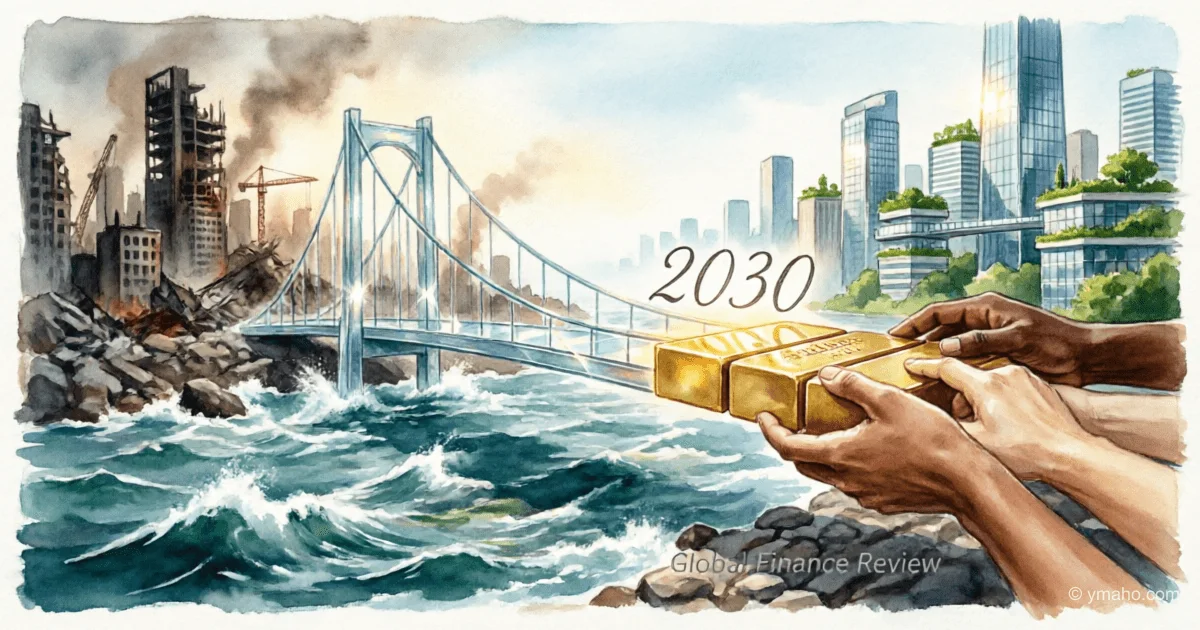
Ukraine and Western Creditors Defer Debt Payments Until 2030: How It Will Impact the Global Economy
Imagine taking out a home renovation loan, only to suddenly have a house fire. Instead of making payments, you negotiate with the bank to pause them until the fire is out and the roof is fixed. That’s exactly what Ukraine has secured from its international creditors—a reprieve that affects not just Kyiv, but your wallet through global markets.
This matters because when crisis-hit nations get temporary debt relief, it lowers the risk of financial earthquakes. Had Ukraine failed to reach an agreement, a default could have dragged down banks and funds worldwide, driving up prices on everything from gasoline to your personal savings.
How the “Financial Breather” Works
On April 17, Ukraine and G7 nations alongside the Paris Club signed a memorandum deferring sovereign debt payments until the end of February 2030. That’s a staggering $215 billion—roughly equivalent to Belgium’s entire annual budget. Until that date, the country won’t pay a single cent on debts originally scheduled for repayment starting in February 2026.
After 2030, payments will resume, but spread out evenly: between 2035 and 2039, Ukraine will repay the balance in semi-annual installments plus accrued interest. Think of it like pausing a mortgage for four years, then paying it off in smaller chunks with a slight late fee attached.
Key Agreement Terms:
- Participants: United States, Germany, France, Japan, the United Kingdom, and six other nations
- Freed-up Capital: $1.67 billion annually (in current prices)
- Allocation: Defense, social programs, and infrastructure reconstruction
- Stability Backing: A new IMF program designed to approve and oversee the repayment schedule
Why the World Backed Ukraine
This isn’t the first time lenders have offered a break; creditors already extended concessions in 2022 and 2023. But this latest deal is now woven into the country’s broader survival strategy amid ongoing warfare. Finance Minister Serhiy Marchenko made it clear: “The freed-up funds will go straight to the military and hospitals, not toward debt servicing.”
For the West, this is a pragmatic investment in regional stability. If Ukraine were to default, it would trigger a domino effect: creditor banks (particularly French or German institutions) would face heavy losses, potentially shaking their stock markets and the euro. Plus, since Ukraine is a critical exporter of grain and metals, a default would likely send European grocery prices soaring.
The Numbers Behind the Deal
Under Ukraine’s 2026–2028 debt management strategy, annual payments would have totaled 1.19 trillion hryvnias—roughly 10.4% of GDP. For context, peacetime debt servicing rarely exceeded 5%. The country has bought itself a “window of opportunity,” but there’s a catch.
Deferring debt doesn’t erase it; it just delays the bill. By 2035, the total obligation will swell due to capitalized interest—much like carrying a credit card balance without making payments. Ukraine will ultimately owe more, though creditors are banking on the economy recovering enough to handle it by then.
Why It Matters
- No Default: The agreement prevents a technical default that could have sparked panic across bond markets
- Funding the Frontline: Every deferred dollar is redirected toward purchasing defense equipment or rebuilding the power grid
- A Global Precedent: Other crisis-stricken nations (like Ghana or Zambia) can now point to this deal and demand similar concessions
- IMF Oversight: The Fund acts as a watchdog, ensuring funds are allocated according to agreed priorities
- Creditor Risks: If the conflict drags on, this deferment could eventually morph into a partial debt write-off
So, what does this mean for everyday people? First, you won’t see a sudden spike in prices triggered by a Ukrainian default—which is a win for the stability of your savings. Second, these kinds of agreements show the world how to navigate crises through negotiation rather than chaos. Most importantly, when nations step up to help each other during emergencies, it lowers the odds of future global shocks that ripple outward, affecting everyone from a farmer in Kansas to a taxi driver in Bangkok.
— Editorial Team









