Ukraine’s Drone Strikes on Russian Oil Sites Are Changing the War’s Economics
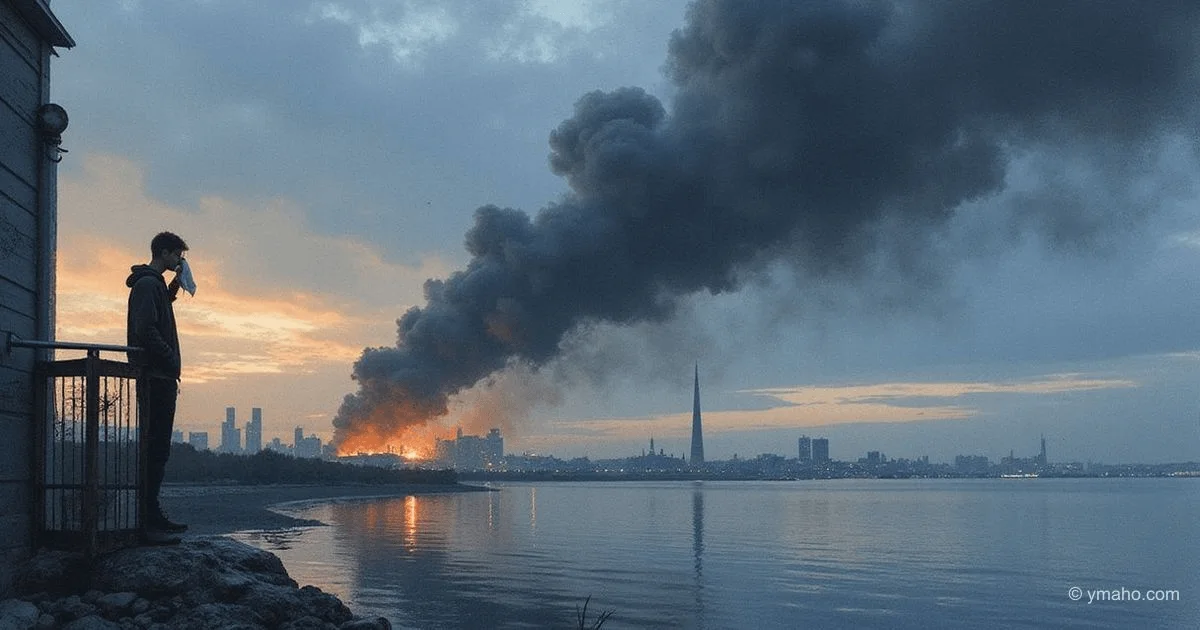
You might not live near a battlefield, but if you fill up your car or heat your home with oil, what’s happening to Russia’s oil infrastructure right now could eventually affect you. Ukraine has launched a wave of long-range drone attacks on key Russian oil terminals and refineries—hitting facilities so hard that residents in St. Petersburg, hundreds of kilometers away, say they can smell burning fuel in the air.
Why Target Oil Terminals?
Russia earns billions every month from selling oil abroad. That money helps fund its war effort in Ukraine. By striking export terminals like Ust-Luga and Primorsk on the Baltic Sea, Ukraine aims to cut off part of that income stream. Think of it like unplugging a power strip: if you stop electricity from flowing out, the devices connected to it lose power—even if the main generator is still running.
These two ports handle about 40% of Russia’s seaborne oil exports. After repeated drone strikes in March 2026, both stopped shipping entirely. Satellite images show blackened storage tanks and lingering smoke. Traders scrambled to reroute oil through smaller ports, but those lack the capacity to handle the volume, creating bottlenecks.
How Far Can These Drones Fly?
Early in the war, Ukrainian drones could only reach targets within about 500 kilometers (310 miles) of the border. Now, new models like the FP-1 can fly up to 1,500 kilometers (932 miles)—far enough to hit deep inside Russia without crossing into neighboring countries’ airspace.
This matters because flying over places like Estonia or Latvia would alert NATO and complicate diplomatic relations. Instead, Ukraine plans routes entirely over Russian territory, slipping past air defenses that were already weakened by earlier strikes.
Key improvements enabling these missions:
- Longer flight range (now ~1,500 km)
- Heavier payloads (up to 120 kg of explosives)
- Better navigation systems
- Reduced reliance on foreign airspace
The Ripple Effect on Global Oil Prices
Here’s where it gets globally relevant: every $10 increase in the price of a barrel of oil gives Russia an extra $1.6 billion per month in revenue. Ironically, while Ukraine tries to reduce Russian income, other global events—like recent military actions near Iran’s Strait of Hormuz—have pushed oil prices higher, partly offsetting Ukraine’s gains.
So Ukraine’s refinery campaign isn’t just about destruction—it’s a strategic move to counterbalance external factors that accidentally help Moscow. It’s like trying to bail water out of a leaky boat while someone else keeps pouring more in upstream.
What Does This Mean for Regular People?
If Russia’s oil exports stay disrupted, global supply could tighten, potentially pushing fuel prices higher worldwide—even in countries far from the conflict. On the flip side, if Ukraine succeeds in significantly cutting Russia’s oil income, it could weaken Moscow’s ability to sustain the war long-term, possibly leading to earlier negotiations. Either way, energy markets are watching closely, and changes at the pump may follow.
Key Takeaways
- Ukraine is using long-range drones to strike Russian oil export terminals, aiming to reduce Kremlin war funding.
- Attacks have halted shipments from two major Baltic ports, forcing costly rerouting through smaller facilities.
- New drone tech allows strikes deep inside Russia without violating third-country airspace.
- Global oil prices are influenced by both Ukraine’s actions and unrelated conflicts (e.g., near Iran), creating complex economic ripple effects.
- While not targeting civilians, these strikes represent a shift toward economic warfare with potential worldwide consequences.
— Editorial Team









