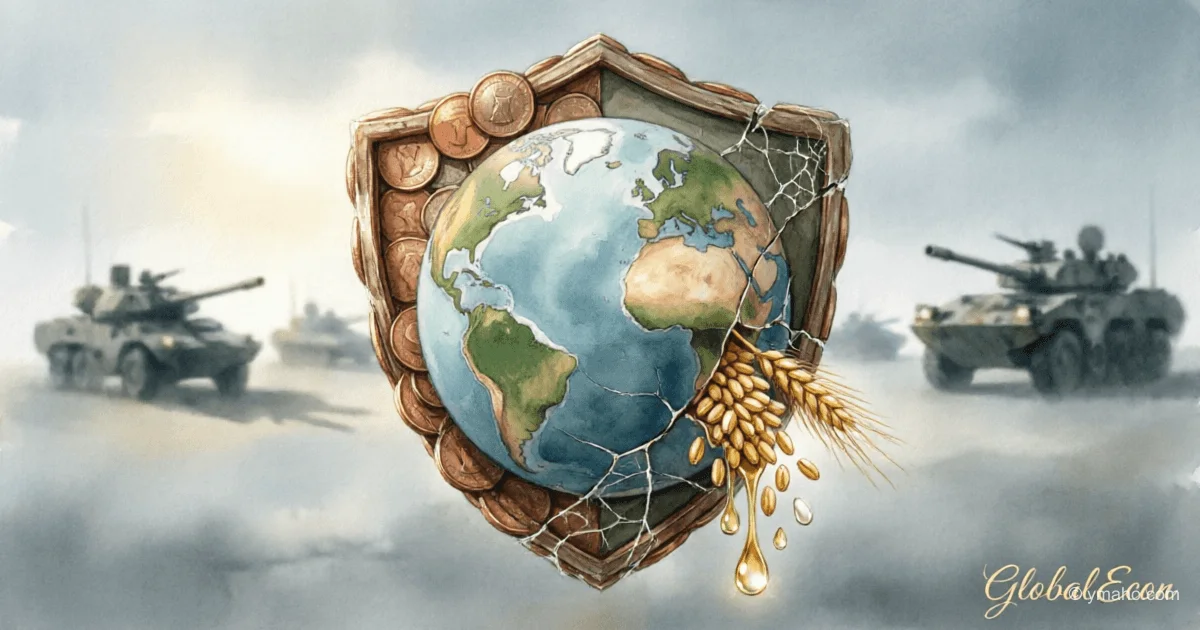
Ukraine on the Frontlines: How Military Spending Impacts Your Wallet
In the first quarter of 2026, Ukraine spent a record 916 billion hryvnias—a 7% increase year-over-year. Two-thirds of that money went straight to defense. So why should anyone living thousands of miles away care? Because the war here, whether in Kyiv or Kharkiv, directly impacts grocery and gas prices worldwide. This isn’t just an abstract threat; it’s already reshaping your daily life.
Why Are Military Expenses Rising?
Since the beginning of 2026, Ukraine has allocated 571 billion hryvnias (roughly $15 billion) to national security and defense. That accounts for 62% of the entire budget. For context, peacetime defense spending typically hovers between 5% and 10% of a nation’s budget.
Imagine if your household spent 60% of its income not on groceries, clothing, or education, but on reinforcing the house against constant threats. That’s exactly what Ukraine’s budget looks like today.
Key spending categories:
- Public sector and military salaries: 408 billion UAH (44.6% of the total). Up 17%, driven by wage increases and a larger armed forces roster.
- Social welfare payments: 169 billion UAH (18.5%). Pensions, benefits, and student stipends are rising, but at a slower pace than defense spending.
- National debt servicing: 65 billion UAH (7.1%). Costs jumped 11% amid rising global interest rates.
Global Ripple Effects: From Grain to Oil
Ukraine is one of the world’s top grain exporters. But wartime disruptions have crippled logistics and locked down key ports, putting upward pressure on global bread and cereal prices.
Meanwhile, the conflict has fundamentally shifted Europe’s energy landscape. The EU once relied heavily on Russian natural gas but is now pivoting to alternatives like U.S. liquefied natural gas (LNG) and renewable sources. This transition has driven up gas and electricity costs across Europe, with inflationary pressures now reaching Asia and the Americas.
Even if you never buy Ukrainian grain, you’ll feel the impact through higher prices at restaurants and supermarkets. And if your government is financially supporting Ukraine—like the U.S. or EU member states—those dollars might otherwise have funded local hospitals or road repairs. For instance, the U.S. has already committed over $75 billion to Ukraine, a sum that could have built multiple new hospitals in every single state.
Crucially, that money doesn’t just disappear. It flows into purchasing weapons manufactured abroad—in places like Poland, Germany, and the United States. While this boosts the defense sectors of those nations, it simultaneously siphons capital away from civilian infrastructure. The result? Construction and infrastructure costs are climbing everywhere.
Key Takeaways
- Budget deficit: Over three months, government revenues (734.6 billion UAH) fell short of expenditures. The shortfall sits at nearly 182 billion UAH, covered through borrowing and Western financial assistance.
- Reserve funds depleting: 78% of the stabilization fund has already been drawn down. If foreign aid slows, Ukraine will struggle to meet payroll and pension obligations.
- Global chain reaction: The longer the war drags on, the higher global food and energy prices climb. That hits every household pocketbook.
- Borderless inflation: Energy-driven price spikes in Europe forced central banks to hike interest rates. Those rate hikes make borrowing more expensive for you, too.
- Aid with economic trade-offs: International support for Ukraine isn’t just humanitarian goodwill. It keeps the economy afloat, but it forces donor nations to run larger budget deficits themselves, which can further fuel global inflation.
What does this mean for everyday people?
The war in Ukraine is no longer a regional conflict. It’s already affecting your grocery bills, travel expenses, and even mortgage rates. If international aid dries up, it could accelerate inflation back home. And if the conflict continues, expect fresh waves of price hikes on essential goods. A routine trip to the supermarket will cost more—and that reality applies to everyone.
— Editorial Team









