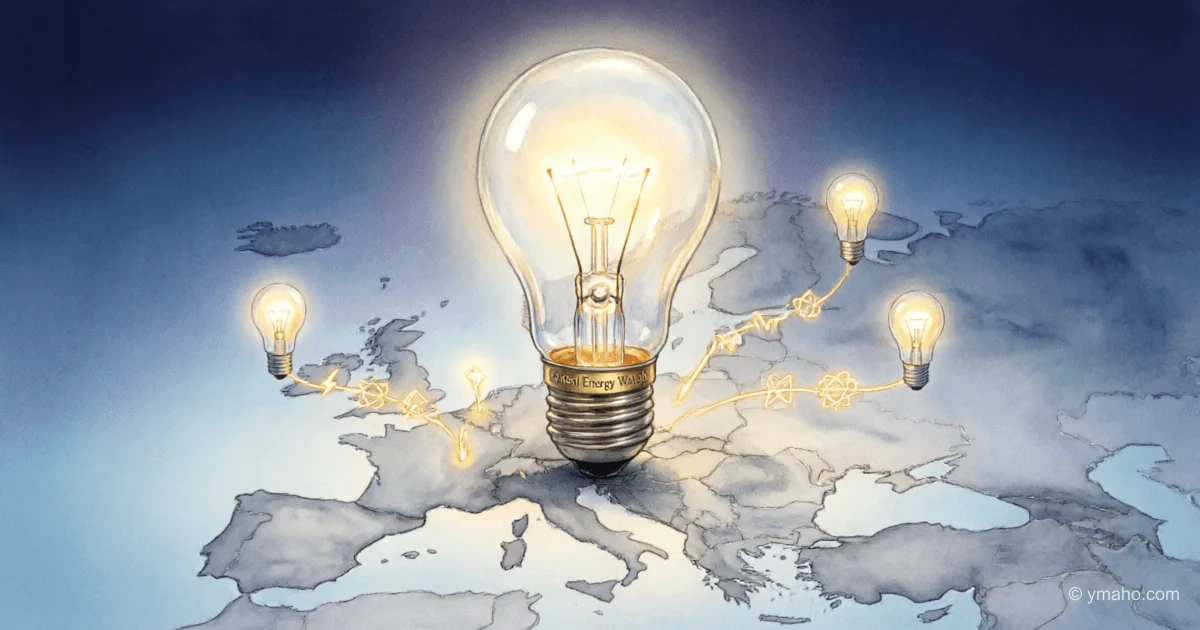
How the Stability of Ukraine’s Power Grid Affects Your Electricity Bill
On Saturday, April 18, Ukraine announced that residential power would remain uninterrupted despite ongoing attacks. While this may seem like a regional update, it actually impacts anyone who pays for electricity. Why? Because the energy conflict in Ukraine keeps global markets on edge, influencing fuel costs and supply chain security across Europe and Asia.
Think of the global energy market as a giant aquarium. If a crack forms in one section—such as damage to Ukraine’s power infrastructure—the water begins to leak out, and the level drops everywhere. To compensate for the loss, more water (or fuel) must be added, driving up costs for everyone. That’s why maintaining a stable Ukrainian grid isn’t just a domestic issue; it’s a direct factor in worldwide energy pricing.
Why Is Ukraine Still Keeping the Lights On?
Ukrenergo confirmed that no residential outages are scheduled for April 18, offering a rare bright spot amid relentless drone strikes. Just a day earlier, on April 17, strikes on energy infrastructure left parts of Zhytomyr, Dnipro, Zaporizhzhia, and several other regions without power.
How are they managing to keep the system running? Technicians work around the clock, deploying mobile repair crews and backup generators. It’s similar to how drivers navigate heavy traffic: when a road segment closes, they instantly reroute through alternate paths. The power grid operates the same way—when a line goes down, electrical load is automatically shifted to other available routes.
To prevent system overloads, however, Ukrenergo has asked residents to limit the use of high-wattage appliances (like washing machines and space heaters) between 6 p.m. and 10 p.m. These are peak demand hours when electricity consumption hits its daily maximum. Picture an entire office suddenly boiling kettles at once—the grid simply couldn’t handle it. Even minor conservation efforts during this window help prevent widespread blackouts.
How Does This Ripple Across the Globe?
You might wonder, “Why should I care whether the lights stay on in Ukrainian homes?” The answer lies in market interconnectivity. Although Ukraine isn’t directly integrated into the European ENTSO-E network, it remains a critical hub for gas transit and regional power generation.
Here’s how it plays out on a global scale:
- Natural gas and oil prices. Following the outbreak of war, Europe drastically reduced its reliance on Russian gas. Ukraine has since become a vital corridor for alternative energy imports. Any instability in Ukraine’s power infrastructure fuels concerns about the reliability of these transit routes, pushing commodity prices higher.
- European electricity markets. While Ukraine hasn’t yet fully synchronized with the continental grid, Eastern European nations like Poland and Romania maintain tight operational ties with it. Major disruptions in Ukraine could trigger a domino effect, causing voltage fluctuations and grid stress in neighboring countries.
- Global inflation. Energy underpins virtually every industry, from food production to electronics manufacturing. When energy costs climb, consumer prices follow. For instance, in 2022, targeted strikes on Ukrainian energy facilities contributed to a 300% surge in European natural gas prices, which in turn accelerated inflation worldwide—a phenomenon where currency loses purchasing power, forcing consumers to pay more for identical goods.
Key Takeaways
- Ukraine’s power grid withstands sustained attacks thanks to rapid repairs and decentralized backup systems.
- Global natural gas and electricity prices are highly sensitive to conditions in Ukraine: any report of grid failures triggers immediate market volatility.
- Conserving power during peak hours (6–10 p.m.) doesn’t just prevent local blackouts; it also eases strain on international energy networks.
- The world is building more resilient energy infrastructures by learning from Ukraine’s crisis response, particularly through the expansion of microgrids and solar capacity.
What does this mean for the average person?
If Ukraine continues to defend its energy infrastructure, we can collectively avoid further spikes in fuel and grocery costs. But if the situation deteriorates, those price hikes will quickly show up on your utility bills. So the next time you flip off an unnecessary light switch in the evening, you’re doing more than trimming your expenses—you’re actively supporting global energy stability, which touches nearly every facet of modern life.
— Editorial Team









