US Launches Funding for Ukraine's Energy Sector: How $300 Million Will Impact Gas and Raw Materials Markets
The United States and Ukraine have launched a $300 million financing mechanism to purchase American energy equipment. At first glance, this appears to be a standard bilateral deal—but it reflects a broader trend: the restructuring of global energy and raw materials supply chains amid war. Why should this matter not only to experts but also to ordinary people who pay heating bills or track global prices?
How the New Financing Scheme Works
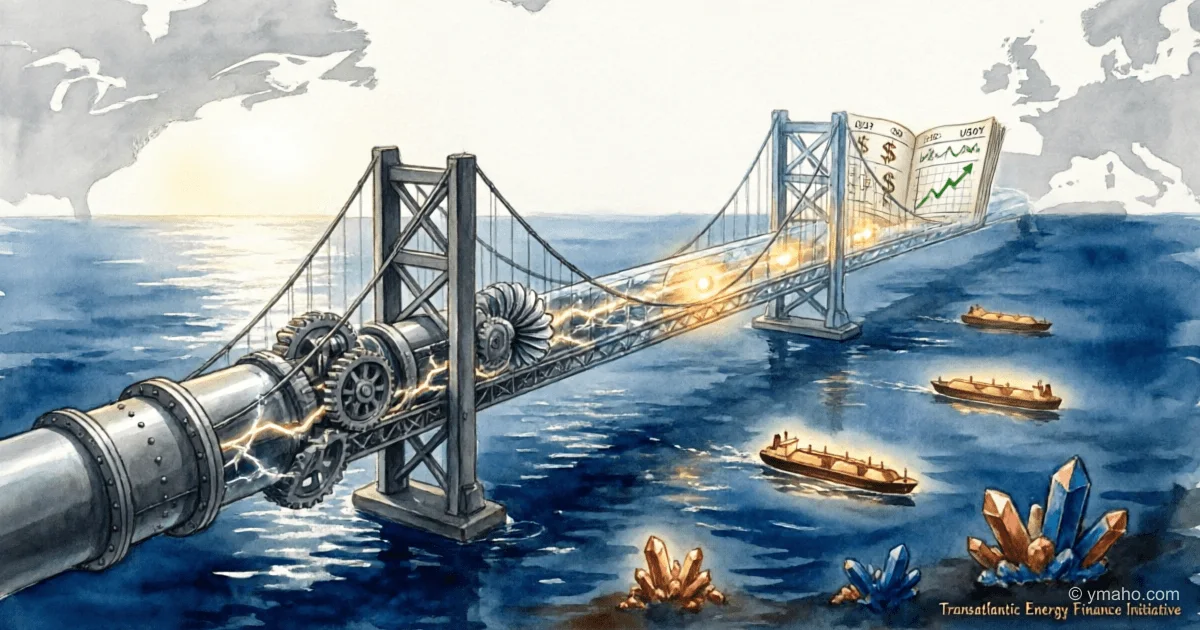
Funds will flow through the U.S. Export-Import Bank (Eximbank), a government institution that supports American companies selling goods abroad. Think of it as a "financial bridge": the bank provides credit to the buyer so they can purchase equipment from U.S. manufacturers, while producers receive guaranteed orders. In this case, the $300 million will go toward restoring gas fields and energy infrastructure damaged by missile strikes.
This is not a one-off move. Both sides are already discussing a larger-scale energy modernization program exceeding $1 billion. When a country rebuilds infrastructure using targeted foreign loans, it eases pressure on its national budget while simultaneously creating stable demand for industrial goods in the lending country. Confirmed tranches are already structured, with major packages under negotiation.
The Gas Question: LNG and New Routes
A separate part of negotiations focuses on liquefied natural gas (LNG). This is regular natural gas cooled to extremely low temperatures so it becomes liquid and easier to transport across oceans via tankers. Ukraine has already contracted a record 900 million cubic meters of American gas for the 2025–2026 heating season. Now the goal is to finance such deliveries under terms close to European market rates.
For the global market, this sends a signal: demand for U.S. gas in Eastern Europe is rising, and logistics chains are becoming more flexible. When major buyers lock in long-term contracts backed by export bank financing, it reduces price volatility and makes the market more predictable. This mechanism acts as insurance against sharp fuel price spikes during winter months.
Locomotives, Critical Minerals, and Dual-Use Goods
Energy is not the only focus. The agreement package also includes financing for locomotives for the railway system. Over 300 units have been destroyed or damaged, and without rolling stock, it’s impossible to efficiently transport coal, equipment, or humanitarian supplies. Restoring transportation directly affects how quickly resources can move across Europe.
Additionally, plans are underway to sign a memorandum on critical minerals—rare metals and raw materials essential for modern batteries, electronics, and defense systems. Ukraine holds significant reserves of lithium, titanium, and graphite. Attracting American investment into this sector could gradually shift the balance in the global raw materials market, currently dominated by a few major players. This is a long-term strategy, not an instant fix.
• $300 million — initial tranche for energy equipment via the U.S. Eximbank.
• Over $1 billion — proposed scale of full energy sector modernization.
• 900 million cubic meters — already contracted volume of U.S. LNG.
• 300+ locomotives — requiring replacement or major repair.
• Critical minerals and dual-use goods — next in line for framework financing.
What This Means for Ordinary People
When major nations link their energy and logistics systems through long-term contracts, fuel and electricity prices become more stable. For consumers, this means a lower risk of sudden tariff hikes during the heating season. Moreover, developing critical mineral extraction in Europe could gradually reduce production costs for electronics and electric vehicles, making technology more affordable over time.
Key Takeaways:
• The deal is financed through the U.S. export bank, ensuring orders for American manufacturers and reducing buyer risk.
• The focus extends beyond reconstruction to integration into transatlantic gas and raw materials supply chains.
• LNG financing on European-like terms makes gas imports more price-predictable.
• Critical minerals are emerging as a strategic asset, drawing Western capital outside traditional monopolies.
• All program parameters are clearly defined: current tranches confirmed, large packages and memoranda in structuring phase.
— Editorial Team









