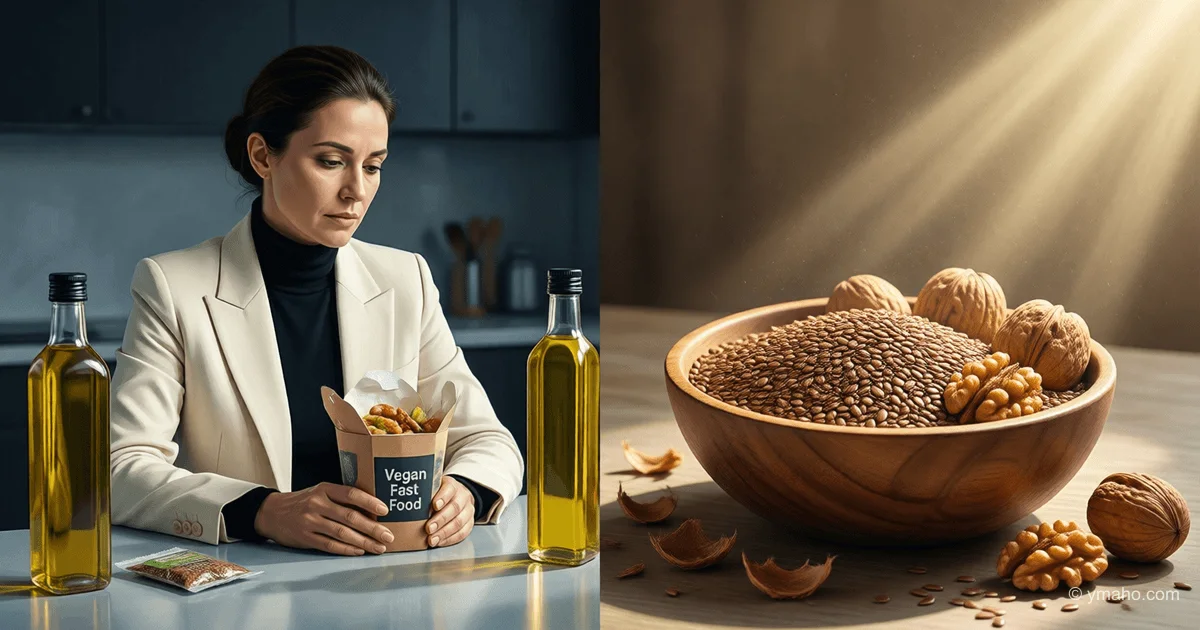
New Harvard Report: High-Omega-6 Vegan Diets Linked to Mood Deterioration in Women Aged 30–45
Study from May 21, 2026 advises balancing with alpha-linolenic acid (flaxseed, walnuts) to prevent anxiety.
Vegan diets high in omega-6: why it's not about nutrition, but about cutting corners on quality
[The Gist]: What's really happening
Harvard isn't declaring war on veganism. It's exposing an engineering problem in modern plant-based diets—the imbalance between cheap oils (sunflower, corn, soybean) and omega-3 sources. This isn't a vitamin deficiency. It's a dysregulation of two systems that control inflammation and mood.
Women aged 30–45 are the perfect "canaries in the coal mine." They are more sensitive to inflammatory processes due to estrogen metabolism. When arachidonic acid (a breakdown product of omega-6) constantly dominates the diet, the brain receives an "inflammatory signal" that clinically manifests as anxiety and apathy.
Key insight: Most "vegan" products in supermarkets (meat substitutes, sauces, ready meals) are made with omega-6 oils. They are cheaper and provide the desired texture. Manufacturers know this, but they won't switch to stable omega-3 oils (flax, perilla)—that would increase costs by 2–3 times and reduce shelf life.
Timeline and Context
Note the publication date—May 21, 2026. It follows two important events:
- December 2025 — The British Journal of Nutrition publishes an analysis showing that over the past 40 years, the omega-6 to omega-3 ratio in the Western diet has risen from 10:1 to 25:1. The norm is 4:1.
- March 2026 — The WHO, in a draft global nutrition strategy, mentions that popular plant-based diets often ignore alpha-linolenic acid.
The Harvard study is based on data from 1,600 women. The findings bring to light: veganism can be beneficial, but industrial veganism is harmful.
Who Wins and Who Loses
Winners:
- Producers of algae-based omega-3 supplements. The market for such vegan supplements, valued at $650 million in 2025, will grow by at least 25% over the summer.
- Health food chains with "live" fats. Cafés using flax and hemp oil will attract a new audience.
- Traditional Mediterranean diet. Doctors will recommend it as a "safe" alternative, hitting the plant-based food brand.
Losers:
- Vegan fast-food brands. Beyond Meat and similar companies may see sales drop among women aged 30–45. Projected decline of 8–10% by the end of Q3 2026.
- Soy and sunflower industries. They will bear the brunt of the negative impact.
- Veganism's image as a "panacea." Harvard undermines the narrative that a plant-based diet is automatically good for mental health.
What the Media Isn't Saying
The news glosses over a key engineering fact: when heated, flaxseed oil becomes toxic. Therefore, it cannot be used for frying. That's why fast-food manufacturers stubbornly use heat-stable omega-6 oils. Harvard's conclusion—"add flaxseed"—is technically correct but naive from a food technology perspective.
Also, the study doesn't address genetic polymorphisms. About 20% of women have a variant of the FADS1 gene that slows the conversion of plant-based omega-3 into active forms (EPA and DHA). These women absolutely need algae supplements.
Another omission: hidden sources of omega-6 in "healthy" products. Many oat-based fitness bars contain sunflower oil as a binding agent. Peanut butter in healthy desserts is pure omega-6.
Forecast: Next 30 Days and 90 Days
Next 30 days (until June 22, 2026):
- Mass emergence of vegan products labeled "omega-3 balanced." Ozon and Wildberries will launch dedicated categories for such items.
- Guides on "quiet substitution" of oils in home cooking. The most popular hack: adding ground flaxseed to morning oatmeal, completely replacing vegetable oil.
- Heated debates on forums between raw foodists and vegans. Raw foodists will claim they were always right about heat treatment of fats.
Next 90 days (until August 22, 2026):
- Nestlé or Danone will launch a line of ready-to-eat breakfasts with enriched microencapsulated algae omega-3. The price will be 30% higher than standard cereals.
- The Russian Ministry of Health may issue guidelines recommending adding flaxseed meal to baby food.
- Major coffee chains (Starbucks) will start selling "anti-stress bars" with pecans (which have a good balance) and microgreens.
Main 12-month forecast: We will see a new packaging trend—"Cold Pressed" and "No Heat" will become marketing magnets for plant-based fats. Manufacturers will replace sunflower oil with avocado or coconut oil (which have almost no omega-6) in premium lines. Costs will rise, but brands will regain the trust of a Harvard-frightened audience. The biggest loser will be the middle class, who bought cheap meat substitutes—they will either have to pay more or return to meat or fish. Veganism will split into "expensive and healthy" (only whole foods with seeds) and "cheap and inflammatory" (soy fast food). And the gap between them will only widen.
— Editorial Team









