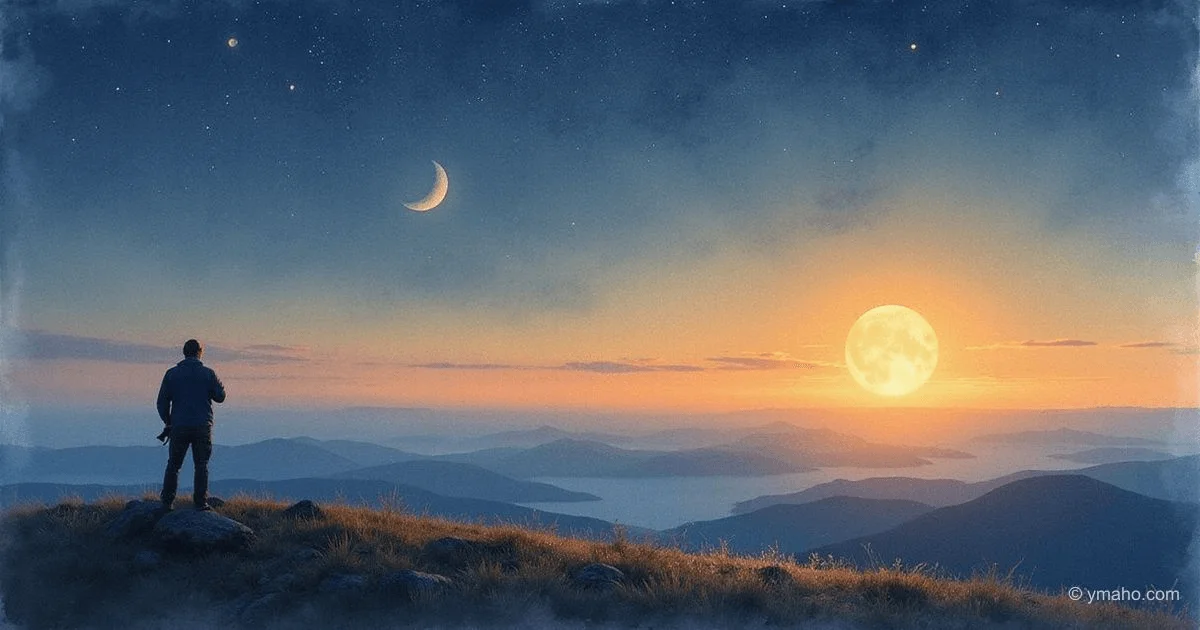
Why Venus Will Steal the Sky in 2026 — And How to See It
For a few magical months in 2026, the night sky will feature a dazzling guest: Venus, our solar system’s brightest planet, will blaze in the western evening sky like a celestial spotlight. You don’t need a telescope or astronomy degree—just clear skies and a look west after sunset. This isn’t just pretty; it’s a rare chance to witness cosmic choreography that ancient cultures tracked with awe.
Why Venus Matters (Even If You’re Not an Astronomer)
Venus is Earth’s closest planetary neighbor, often called our “sister planet” because it’s similar in size. But unlike Earth, it’s wrapped in thick, toxic clouds and hot enough to melt lead. What makes it special in our sky? Its reflective clouds bounce sunlight so effectively that it outshines every star and planet—except the sun and moon. Think of it like a giant mirror hanging in space, catching the sun’s rays and beaming them back to us.
In 2026, Venus returns as the “evening star” after hiding behind the sun early in the year. From late March through September, it’ll climb higher each night, then slowly descend—a predictable dance governed by orbital mechanics. Ancient Mayans and Babylonians noticed this pattern repeats every 8 years, and 2026 closely mirrors 2018’s sky events.
A Sky Full of Surprises: April to July Highlights
Mark your calendar for these standout moments:
- April 23: Venus passes near Uranus and the Pleiades star cluster. Though Uranus is 7,700 times dimmer, Venus acts like a glowing arrow pointing right to it. All three fit in standard binoculars.
- June 9: Venus teams up with Jupiter—one hour after sunset, they’ll appear less than two finger-widths apart in the sky.
- June 16–17: A delicate crescent moon joins Mercury, Jupiter, and Venus in a planetary quartet, with the twin stars Castor and Pollux watching from above.
- July 9: Venus glides just above Regulus, the bright heart of Leo the Lion.
- July 17: Venus and a slim crescent moon create a romantic pairing low in the west.
These aren’t random alignments—they happen because all planets orbit in roughly the same flat plane, like marbles rolling around a dinner plate. From our viewpoint on Earth, they occasionally line up along that shared path, called the ecliptic.
Watching Venus Change Shape—Without Leaving Your Backyard
Here’s something mind-blowing: if you peek through even a small telescope over the coming months, you’ll see Venus shift from nearly full to a huge, thin crescent—just like the moon. Why? Because as Venus orbits closer to Earth, we see more of its dark side, revealing its phase. By late September, its disk will appear four times larger than in spring, though it’ll sit very low in the sky.
You might even spot the crescent with steady binoculars by late summer. It’s a direct visual proof that planets orbit the sun—not Earth—a discovery that once reshaped human understanding of the cosmos.
What Does This Mean for Regular People?
You don’t need gear or expertise to enjoy this show. Just step outside 30–60 minutes after sunset, face west, and look for the brightest “star.” Over weeks, you’ll notice it climbing higher, then sinking again. Sharing this with kids, friends, or even alone can spark wonder about our place in the universe. Plus, these planetary gatherings remind us that the sky is alive with motion—predictable, beautiful, and free for everyone.
Key Takeaways
- Venus will dominate the western evening sky from April through September 2026.
- It reaches peak brightness on September 18, shining at magnitude –4.8—bright enough to cast shadows in very dark areas.
- Several close encounters with Uranus, the Pleiades, Jupiter, Mercury, and the moon offer easy stargazing opportunities.
- Through a telescope, Venus shows dramatic phase changes, growing larger and thinner as it approaches Earth.
- No equipment needed: Venus is easily visible to the naked eye and perfect for casual skywatchers.
— Editorial Team









