FDA Approves Vepdegestrant — First Protein Degrader for Breast Cancer Treatment
The FDA has approved vepdegestrant (Veppanu) for the treatment of advanced breast cancer with ESR1 mutation. This is the first-in-class heterobifunctional protein degrader, which demonstrated a significant improvement in progression-free survival compared to fulvestrant in the VERITAC-2 study.
Many perceived the approval of vepdegestrant as just another addition to oncologists' arsenal. In reality, on May 5, 2026, the FDA set in motion a mechanism that systematically dismantles the architecture of cancer resistance. This is not just a new drug — it is a death sentence for an entire class of mutations that were considered impregnable for decades.
The Essence: What Is Really Happening
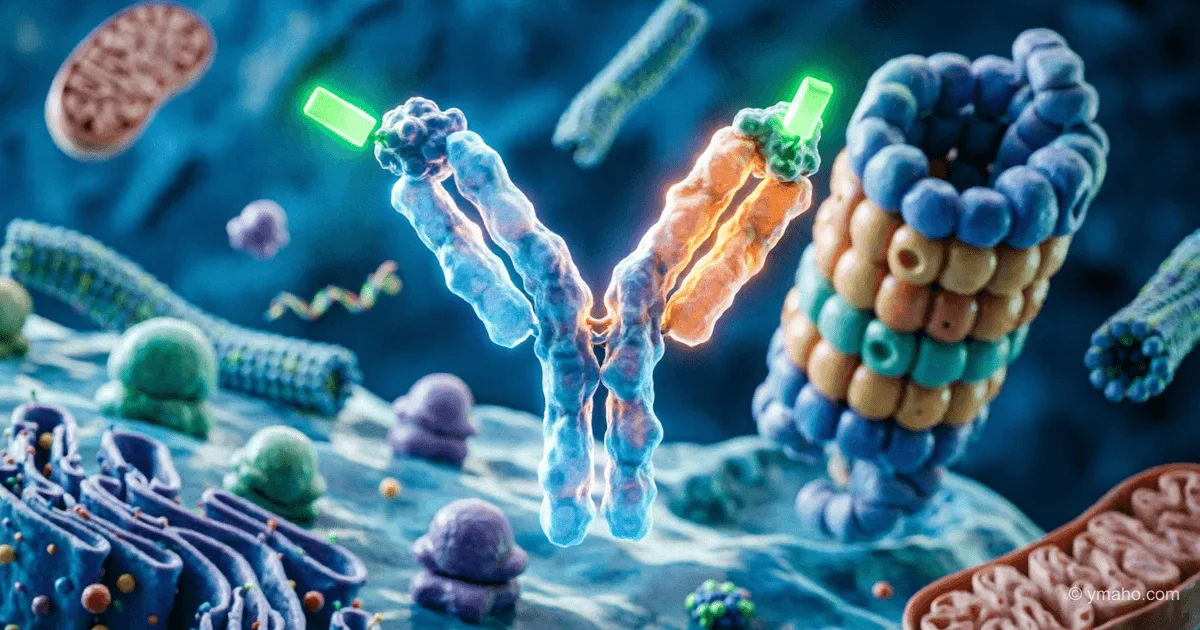
Vepdegestrant is the first approved heterobifunctional degrader of the estrogen receptor. Unlike selective degraders like fulvestrant, which simply bind to the receptor and trigger its partial degradation, vepdegestrant works as a molecular glue. It simultaneously grabs the estrogen receptor and E3 ubiquitin ligase, after which the proteasome ruthlessly destroys the target protein. The receptor is not just blocked — it physically disappears from the cell.
The VERITAC-2 study, whose results formed the basis for approval, showed something more important than just statistical significance. In patients with ESR1 mutation whose disease progressed on aromatase inhibitors, the median progression-free survival was 7.2 months versus 3.7 months on fulvestrant. But the key figure is hidden in the subgroups: in patients with double ESR1 mutations, efficacy was even higher. This is not a coincidence — it is a direct consequence of the mechanism of action.
Timeline and Context
Endocrine therapy for breast cancer has evolved by inertia over the past 20 years: tamoxifen, aromatase inhibitors, fulvestrant. Each subsequent drug only slightly delayed the inevitable. Mutations in the ESR1 gene, which encodes the estrogen receptor, are the tumor's way of saying, "I have adapted, your blockers no longer scare me." Such mutations are present in 30-40% of patients with metastatic HR+/HER2- cancer after hormonal therapy.
The PROTAC (proteolysis targeting chimera) technology underlying vepdegestrant was born in academic labs back in 2001. The first paper by Craig Crews and Ray Deshaies in PNAS described a chimeric molecule capable of recruiting ubiquitin ligase to a target protein. Over the next two decades, pharma spent billions of dollars trying to turn this elegant idea into a drug with acceptable bioavailability.
Arvinas — a biotech company from New Haven — spent 8 years and approximately $1.3 billion to solve the problem of oral delivery of PROTACs. The molecule must be large enough to bind two proteins simultaneously, but small and lipophilic enough to pass through the intestinal wall. These are almost contradictory requirements.
The FDA granted accelerated approval on May 5, and full approval is expected after the submission of overall survival data from the ongoing VERITAC-3 study, where vepdegestrant is combined with palbociclib. The estimated date is December 2028.
Who Wins and Who Loses
Winners:
Arvinas and its shareholders. The company's market capitalization increased by $4.2 billion in the day following approval. Pfizer, which bought rights to co-commercialization in 2021 for $650 million upfront and up to $1.4 billion in milestones, gains access to a market worth $7.8 billion annually.
Patients with ESR1 mutation, especially those with double and triple mutations. Previously, their effective options ended with chemotherapy. Now they have a targeted therapy that attacks the cause of resistance, not the consequence.
The PROTAC technology as a whole. This is the first time a heterobifunctional degrader has proven its value in a registration study. Investors who poured over $8 billion into PROTAC companies over the past 7 years have finally received platform validation.
Losers:
Novartis with their selective estrogen receptor degrader, which is in Phase 2. They now must show not just non-inferiority, but superiority — the bar has been raised.
Manufacturers of fulvestrant. The $1.2 billion annual market will start shrinking as soon as vepdegestrant enters clinical guidelines.
Patients without ESR1 mutation. For them, vepdegestrant is currently unavailable, but pressure on the healthcare system demanding "give us something new too" will increase, and budgets are not elastic.
What the Media Isn't Saying
Most publications write about the approval as a single event. They miss the context that only insiders know.
First: Pfizer and Arvinas are already conducting the VERITAC-3 study with a combination of vepdegestrant and palbociclib in the first-line treatment of metastatic breast cancer. Interim data are expected in October 2026, and if positive, the drug moves to first-line therapy. This transforms the market from niche to mass — approximately 60,000 new patients annually in the US alone.
Second: Arvinas' pipeline includes three more PROTAC molecules, including ARV-110 targeting the androgen receptor in prostate cancer. Phase 2 data are expected in June 2026, and the success of vepdegestrant dramatically increases the chances of approval. This is not one drug — it is a pipeline.
Third: The FDA approved vepdegestrant under accelerated approval but with an unprecedentedly strict requirement for post-marketing cardiotoxicity monitoring. In VERITAC-2, there were 4 cases of grade 3 QT interval prolongation, and the regulator mandated ECG monitoring every 6 weeks during the first year of therapy. This adds approximately $2,800 to the annual cost of treatment and may limit penetration into real-world clinical practice.
Fourth: Price. Arvinas announced a wholesale price of $17,200 per 28-day cycle. This is cheaper than CDK4/6 inhibitors but 6 times more expensive than fulvestrant. Insurers, including UnitedHealth and Aetna, have already begun negotiations on prior authorization for ESR1 testing — they do not want to pay for the drug without a confirmed mutation.
Forecast: Next 30 Days and 90 Days
30 days (by June 5, 2026):
The NCCN will release updated guidelines, including vepdegestrant as a preferred option for ESR1-mutated cancer after progression on aromatase inhibitors. Oncologists will begin ordering ESR1 testing via liquid biopsy en masse. The volume of Guardant360 and FoundationOne Liquid tests will increase by 40-50%. Laboratories performing these tests will see revenue growth of approximately $120 million per quarter.
The European Medicines Agency will initiate an accelerated review procedure. Documents have already been submitted, and a decision is expected by October. This is a standard lag of 5 months between the FDA and EMA.
90 days (by August 5, 2026):
Clinical practice will begin to change. Oncologists accustomed to prescribing fulvestrant on autopilot will face the need to wait for genetic test results before choosing therapy. This will increase the time to treatment initiation by 3-5 days but will give patients better outcomes.
By August, we will see the first real-world data from centers that started using vepdegestrant under expanded access programs before approval. If the rate of QT prolongation in the real-world population exceeds 2%, the FDA may convene an emergency advisory committee meeting.
Arvinas will begin negotiations with the FDA for an additional indication for vepdegestrant in endometrial cancer. Preclinical data show high expression of estrogen receptors in endometrial tumors, and PROTAC may work there as well. This adds another 40,000 patients per year and a market of $2.1 billion.
Strategically, the most important thing: the success of vepdegestrant paves the way for other PROTAC drugs targeting "undruggable" proteins — transcription factors, scaffold proteins, mutant oncoproteins. In the next 90 days, we will see a flood of investments into companies developing degraders for KRAS G12D, c-MYC, and tau protein. This is the beginning of an era in which the concept of "undruggable target" disappears from the pharmacological lexicon.
Arvinas did not just get a drug approved. The company proved that it is possible to create a drug that does not inhibit a protein but commands the cell to destroy it. The difference between these two approaches is the difference between blocking a door and demolishing the entire building.
— Editorial Team









