UK Approves Gene Gel Vyjuvek for Rare 'Butterfly Disease'
The UK regulator (MHRA) has approved Vyjuvek (beremagene geperpavec) for treating wounds in dystrophic epidermolysis bullosa. This gene gel delivers a missing gene directly into wound cells: in a study, complete healing at 6 months was observed in 67% of treated wounds versus 22% in the placebo group.
VYJUVEK: When Gene Therapy Becomes a Gel
The Gist: What's Really Happening
On May 15, 2026, the UK regulator MHRA approved Vyjuvek (beremagene geperpavec) for treating wounds in dystrophic epidermolysis bullosa (DEB).
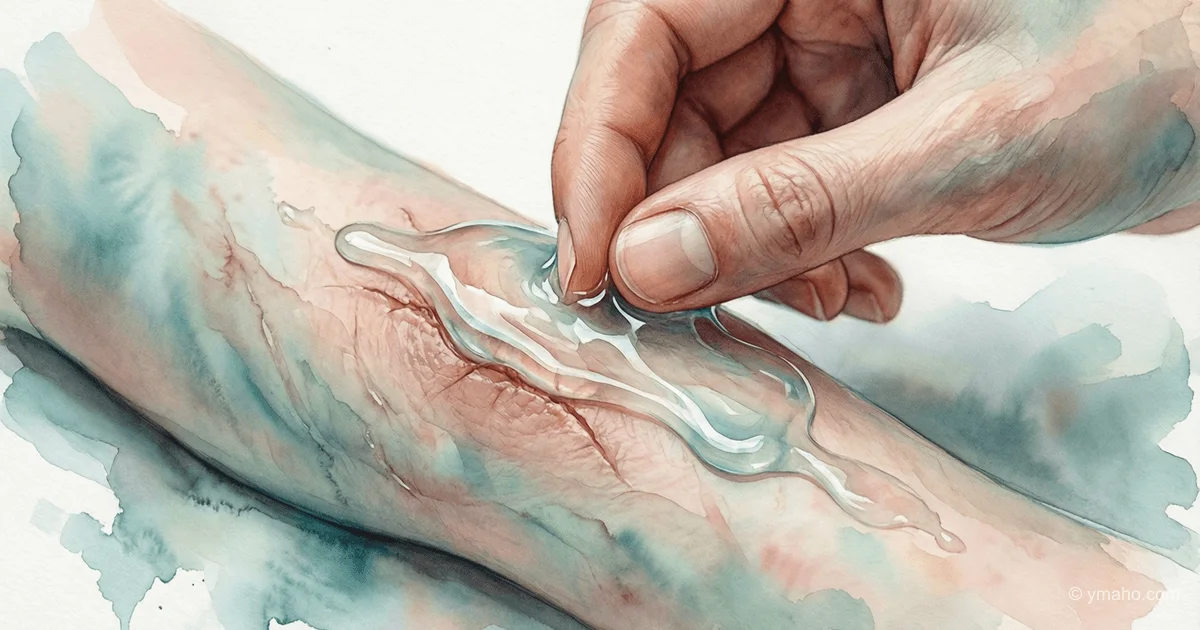
This is not just another rare disease drug approval. It is the first time in the world that gene therapy is sold as a gel that can be applied at home. Not intravenously. Not in an operating room. But with a finger—on a wound.
And the numbers accompanying this approval are striking: at 6 months, complete healing was observed in 67% of Vyjuvek-treated wounds versus 22% in the placebo group. At 3 months, 71% versus 20%.
A difference of 46 percentage points is not just "statistically significant." It is "clinically transformative."
Mechanism of action is a separate discussion that shows why this technology matters beyond "butterfly disease." The drug uses a genetically modified herpes simplex virus type 1 (HSV-1) that has been stripped of its ability to replicate. This virus delivers two copies of the functional COL7A1 gene directly into wound cells—keratinocytes and fibroblasts.
The virus does not integrate into the patient's genome, does not cause mutations, and does not stay in the body forever. It works like a courier: delivered the package, the cell unpacked it, produced collagen VII protein, and the virus disappeared.
Collagen VII forms "anchoring fibrils"—microscopic structures that bind the epidermis and dermis together. In DEB patients, the COL7A1 gene is broken, fibrils are absent, and skin peels off at the slightest friction. Vyjuvek restores the ability to produce this protein locally—right where it is needed.
And the main innovation that many miss: this gel can be reapplied. One dose does not cure forever—but it heals a specific wound. If a new wound appears (and in DEB they appear constantly), the gel can be applied again. This is not a "one-time therapy" but a "tool for chronic use."
Timeline and Context
2021: Krystal Biotech publishes results from the Phase III GEM-3 study (n=31 patients) at a conference. Primary endpoint met: 67% vs 22% at 6 months.
May 2023: FDA approves Vyjuvek in the US—the first and still only drug for DEB.
February 27, 2025: The European Medicines Agency (EMA) issues a positive CHMP opinion recommending approval.
May 15, 2026: MHRA (UK) grants marketing authorization. The drug is added to the Orphan Register, providing up to 12 years of market exclusivity.
A key point for understanding: the UK approval was obtained through the International Recognition Procedure (IRP)—a mechanism that allows reliance on the decision of another trusted regulator (in this case, the FDA). This accelerated the process by years.
Who Wins and Who Loses
Winners (obvious):
- DEB patients in the UK. There are about 500–1,000 of them. Until now, they had no approved treatment that targeted the cause rather than symptoms. Only bandages, antibiotics, painkillers. Vyjuvek is the first drug that restores the ability to heal wounds.
- Krystal Biotech (KRYS). The company's market cap is $9.03 billion as of May 15, 2026. Annual stock return is 116.3%. Vyjuvek is already sold in the US, and its Q1 2026 revenue beat analyst expectations. UK approval opens access to the NHS. And following the UK, Europe is next (EMA approval expected in the coming months after the positive CHMP opinion).
- Family doctors and nurses. The drug can be applied by patients or their caregivers at home. This means the healthcare system does not spend resources on hospitalizations for each wound treatment.
Losers:
- Standard dressings and antiseptics for DEB. The market for these products (estimated at tens of millions of dollars) will begin to shrink as patients switch to Vyjuvek. Not because Vyjuvek is cheaper (it is expensive), but because it works where dressings only cover the wound but do not heal it.
- Skeptics of local gene therapy. For a long time, it was believed that gene therapy only works with systemic administration (intravenous) or ex vivo cell modification (as in CAR-T). Vyjuvek proves: cells can be modified in situ—directly in tissues, without removing them from the body. This opens the door for other local gene therapies: for eyes, joints, skin in other diseases.
What the Media Doesn't Tell You
Non-obvious Insight #1: Clinical data show sustained healing, but not a complete cure
Here's what rarely makes headlines. In the GEM-3 study, 50% of Vyjuvek-treated wounds had complete healing at both 3 and 6 months—meaning they remained closed for at least 3 months. In the placebo group, only 7% of wounds did.
The difference is impressive—43 percentage points. But it also means that half of the wounds did not have sustained healing. Reasons: possibly some patients' immune systems attack the HSV-1 vector after repeated applications; possibly some wounds are chronic and fibrotic, and cells in them are no longer capable of regeneration even with the gene.
This does not diminish the success. But it is important to understand: Vyjuvek is not a panacea. It is a tool that offers a chance for healing where there was none before. But not for all wounds and not for all patients.
Non-obvious Insight #2: The HSV-1 platform is Krystal Biotech's hidden asset, more important than the drug itself
Notice a detail that investors see but patients do not. Vyjuvek uses not AAV (like most gene therapies) but herpes simplex virus type 1.
HSV-1 has several advantages over AAV in the context of local therapy:
- Capacity: HSV-1 can carry up to 30–40 kb of genetic material, while AAV only 4.7 kb.
- Tropism for epithelial cells: exactly those in skin, cornea, lungs.
- No genome integration: unlike lentiviruses, HSV-1 remains episomal.
- Possibility of repeated administration: the immune response to HSV-1 exists in most people, but it is not strong enough to fully neutralize the therapeutic dose when applied topically.
Krystal Biotech holds exclusive rights to this platform. They already have a pipeline: for cystic fibrosis (lungs), alpha-1 antitrypsin, ophthalmology, oncology. Vyjuvek is the proof-of-concept showing the platform works in the clinic. After this, the market values not just one drug but the entire technology.
Analysts estimate the potential of this platform at multiples of the current $9 billion market cap.
Non-obvious Insight #3: Cost and access to Vyjuvek in the UK are not yet clear, but this is a key test for the NHS
In the US, the price of Vyjuvek is about $300,000 per patient per year (exact figures vary depending on insurance coverage and number of wounds treated). This is typical for gene therapies for rare diseases—Zolgensma costs $2.1 million, Libmeldy $3.6 million.
But Vyjuvek differs from them: it requires repeated application. New wounds appear constantly, and each needs to be treated again. The "one-time payment" model that works for Zolgensma does not apply here.
The UK's NHS typically negotiates substantial discounts—often 50–70% off list price. But even at a 70% discount, the annual cost would remain around $90,000 per patient.
For 500 patients, that is $45 million per year. The NHS can afford it, but negotiations will be tough. Krystal Biotech has stated it is "focused on working closely with relevant authorities to support broad and rapid access." That is a diplomatic way of saying: "We are ready to offer a discount, but not a ruinous one."
Forecast: Next 30 Days and 90 Days
30 days (by end of June 2026):
- Negotiations with the NHS on price and reimbursement. This is the most critical process. If the NHS agrees to a price around $100,000–$150,000 per patient per year, the drug will become available within 3–6 months. If it demands a discount below $50,000, Krystal Biotech might walk away from the UK market (unlikely due to prestige and the need for post-marketing data).
- Official launch in pharmacies and clinics. MHRA approval is only the first step. The drug must physically appear in hospitals, doctors and nurses must be trained, application protocols developed. A realistic timeline for the first patient prescription is August–September 2026.
- Market reaction. KRYS shares have already risen 13.13% in the 7 days after Q1 earnings and approval news. In the next 30 days, a correction is possible, but the long-term trend remains upward (116% over the year).
90 days (by end of August 2026):
- EMA decision on full marketing authorization. The positive CHMP opinion was on February 27, 2025. Full authorization usually follows within 2–4 months. There is already a delay—possibly due to manufacturing issues or requests for additional data. If authorization comes in the next 90 days, it will open access to 27 EU countries.
- First real-world post-marketing data. US physicians have had experience with Vyjuvek since May 2023. Analysis of this data—how many wounds heal, how many require reapplication, what side effects occur with long-term use—will be published or presented at conferences. This data will either strengthen the drug's position or reveal limitations currently hidden behind the short 6-month study observation.
- Expansion of Krystal Biotech's pipeline. The company is investing Vyjuvek profits into developing other drugs on the same HSV-1 platform: for cystic fibrosis (data expected in 2026–2027), alpha-1 antitrypsin (pulmonary form), and ophthalmology. Vyjuvek's success attracts talent and partners.
Main forecast:
Within 12–18 months, Vyjuvek will become the standard of care for DEB wounds in the US, UK, and EU. Its annual sales will reach $500 million to $1 billion (current market cap is $9 billion, implying significantly greater potential).
But more importantly, Vyjuvek will prove the concept: local, repeatable, non-integrating gene therapy is possible, safe, and effective. And then the floodgates will open for dozens of other local gene therapies—for non-healing diabetic wounds, burns, corneal ulcers, fistulas in Crohn's disease.
The irony is that "butterfly disease"—one of the rarest, most forgotten diseases—has become the platform for a technology that could transform medicine on a much broader scale.
And Krystal Biotech, a Pittsburgh company that no one knew five years ago, has created not just a drug. It has created a new way to deliver genes to the right place, at the right time, in the right dose—and stop when needed. That is the next generation of gene therapy.
— Editorial Team









