The Solid Format Revolution: Why Waterless Cosmetics Are Conquering the Market
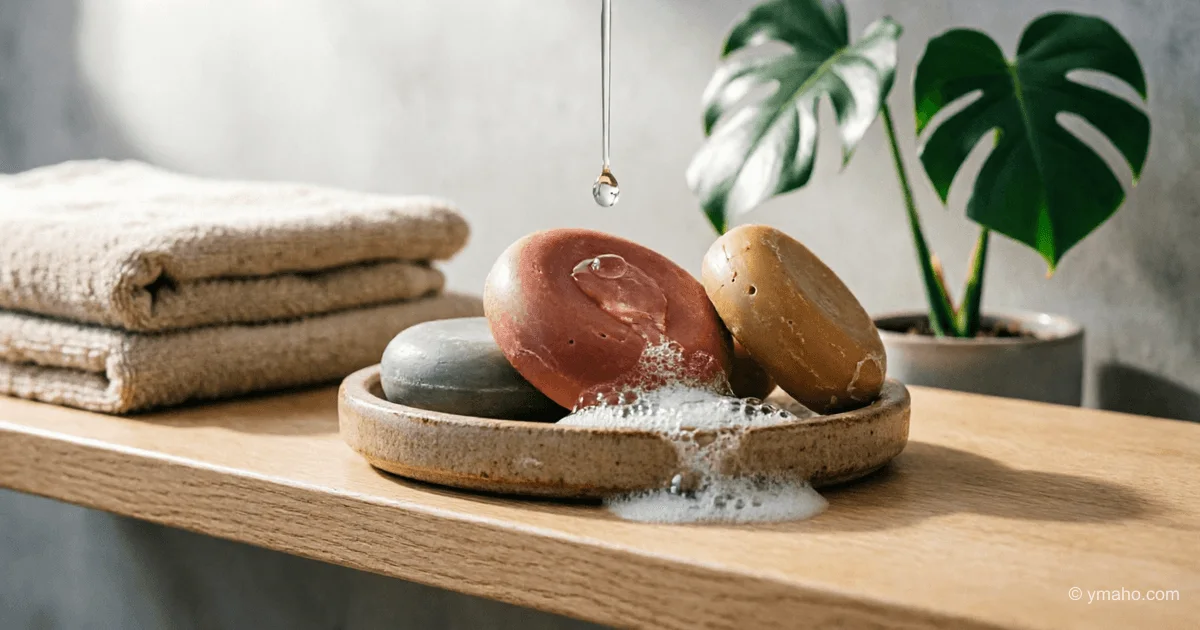
Waterless cosmetics (solid shampoos, cleansing bars) are becoming the standard of conscious care in 2026. The absence of water in the formula eliminates the need for harsh preservatives, and the high concentration of active ingredients in a single bar replaces up to three bottles of liquid product, avoiding contact with microplastic packaging.
The beauty industry has always reflected the global economy and social demands, but what is happening on store shelves and online catalogs in 2026 can only be called a "quiet revolution." We are talking about a massive shift from liquid forms to solid ones, from familiar bottles with dispensers to compact bars and blocks. This movement, known as waterless beauty, is no longer a niche hobby for eco-activists. It is becoming a new industry standard, transforming supply chains, consumer habits, and the very concept of quality. The main driver of this shift is a mature consumer demand: people no longer want to pay for diluted formulas and plastic waste, choosing instead concentrated effectiveness and eco-friendly minimalism.
Event Details and Timeline: From Eco-Niche to Market Pillars
The transition to solid formats is not a spontaneous surge but an economically confirmed trend that has formed into a multi-billion dollar industry in 2026. According to data from the global report by Research and Markets, the waterless cosmetics market has made a rapid leap: from $11.73 billion in 2025 to $13.26 billion in 2026, demonstrating a compound annual growth rate (CAGR) of 13%. The forecast for 2030 is even more impressive—reaching $21.19 billion with a steady growth of 12.4%. This means the trend has passed the early adoption stage and entered a phase of active commercialization.
This shift is especially noticeable in the hair care segment. The global solid shampoo market, according to Fortune Business Insights, will reach $12.16 billion in the same 2026 and nearly double to $19.23 billion by 2034. Importantly, North America has become the main foothold of this revolution, accounting for 47.74% of the global market as early as 2025, indicating the trend's transition from local experiments to mainstream Western consumer culture.
Analysts also record narrower but significant changes. The solid skincare segment (Water Free Skincare) has also strengthened: the market grew to $18.46 billion in 2026, with a forecast of reaching $23.69 billion by 2030. This dynamic is supported by consumer interest in long-term storage of products without preservatives and a demand for "clean" formulas.
Impact and Significance: Rethinking the Value Formula
The significance of waterless beauty extends far beyond environmental concerns, although the ecological argument remains weighty. According to BeautyMatter, companies operating in this segment, such as Olive Tree People, challenge fundamental industry practices: about 80% of liquid cosmetics contain 60% to 95% distilled water as a filler. This annually results in an astronomical 78 billion liters of water used essentially as ballast to add volume and texture. Eliminating water allows for a radical reduction in the carbon footprint during transportation—products become lighter and more compact.
However, the main significance of the trend for the mass consumer lies in rationality. As noted by Yulia Orlova, founder of a natural cosmetics brand, in RBC, consumers increasingly ask themselves: what exactly are they paying for? In a world where marketing noise is at its peak, solid formats offer a crystal-clear value proposition—"density of meaning." When one shampoo bar replaces up to three bottles of liquid product, the need for harsh preservatives, usually added to aqueous solutions to prevent bacterial growth, disappears. This instantly moves the product into a category that is safer for skin and hair.
Industry analysts from DESIFINE point out that solid serums, waterless tablets, and powder masks contain less than 10% water, while over 87% of their ingredients are of natural origin. This perfectly correlates with the global movement towards "conscious beauty," where formula purity and minimalism are valued above aggressive design and imposed excess. Waterless beauty has become a response to consumer fatigue from cluttered bathrooms with dozens of half-empty bottles, turning care into a compact ritual that easily fits into life.
Reactions of Key Players: Philanthropy and Technological Leap
Corporate reaction to this trend has been segmented into two directions: technological breakthrough and humanitarian mission. In the technological field, we see an explosion of innovation in DIY kits for reconstituting cosmetics. The market for so-called Reconstitution Kits, according to Future Market Insights, will grow from $2.28 billion in 2026 to $8.14 billion by 2036, with an impressive CAGR of 14.7%. In such systems, active components (e.g., L-ascorbic acid or peptides) are stored in a dry, stabilized form and activated by the consumer just before application. This solves the main problem of "liquid" cosmetics—oxidation, hydrolysis, and loss of effectiveness even before the product reaches the skin. Brands are actively investing in lyophilized powders and dual-chamber packaging with controlled dosing to ensure jewel-like precision of "freshness."
The second reaction is demonstrating a direct link between eliminating water in cosmetics and solving the global water crisis. The most striking case here is the initiative of Olive Tree People, based on the principle: "Water is for drinking, not for skincare." The brand, supported by over 70,000 "waterless beauty pioneers," initiated the drilling of wells in 90 African villages in Tanzania. By 2025, their wells provided clean drinking water to about 15,000 people. According to founder Thomas Lommel, this is not charity but building a "sustainable cycle" where water saved in cosmetics turns into a real resource for life. This radically changes marketing rules: market leaders begin to sell not just a tube but a socially significant action.
Forecast and Conclusions: The End of the "Water as Filler" Era
It can be confidently predicted that in the next five years, waterless cosmetics will cease to be perceived as a separate segment and will become the standard of quality care. The growth from $13.26 billion to $21.19 billion is merely a quantitative expression of a fundamental shift in consciousness that will tighten requirements for formula transparency. Technologies developed for DIY activation will gradually flow into mass-market products, and we will increasingly see on shelves products activated by a light press on a blister rather than sitting diluted on a shelf for months.
The economics of this transition are inexorable: expensive logistics and the demand for "purity" will make transporting millions of tons of distilled water around the planet commercially and environmentally absurd. As the expert group Mintel, cited by RBC, aptly put it, consumers increasingly choose care that gives a "feeling of a working product" without marketing noise. The solid format revolution is not just a new jar; it is a mature conversation about how true value in cosmetics is measured by the concentration of benefit per gram, not liters of diluted formula. And this conversation the industry can no longer ignore.
— Editorial Team









