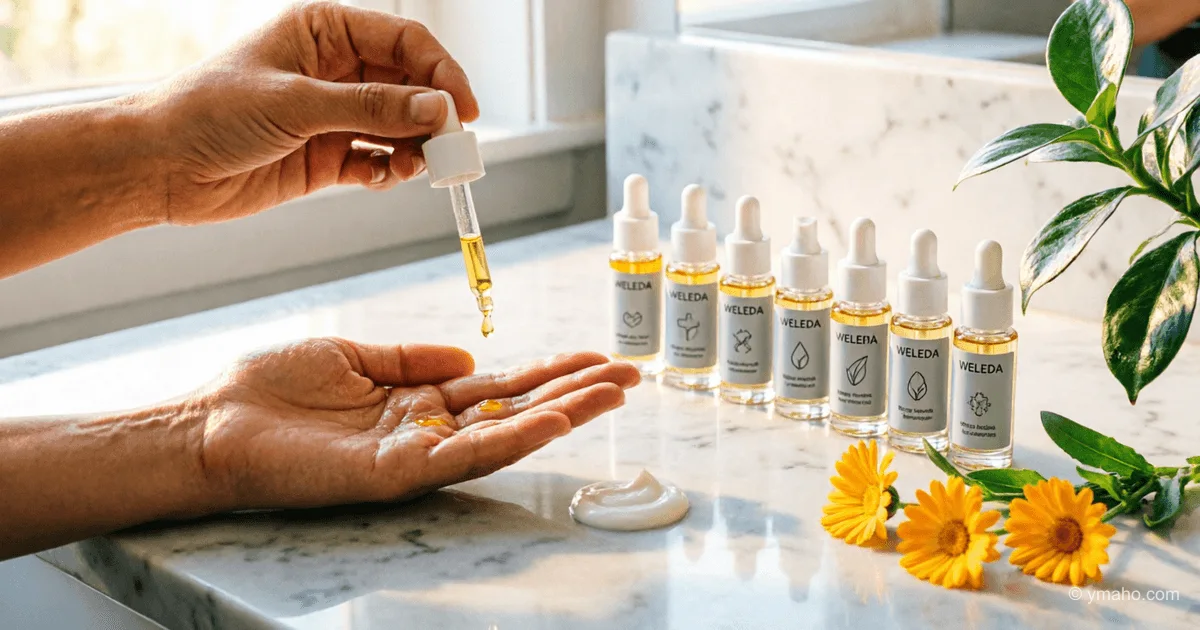
Weleda Booster Drops: A New Step Toward Hyper-Personalized Skincare
Swiss brand Weleda has launched the Booster Drops line — 7 highly concentrated serums targeting specific concerns from hydration to repair. The products can be mixed with your regular cream, instantly adapting your routine to your skin's individual needs.
We're used to pharmacy and natural brands being about conservatism and tried-and-true formulas. But Weleda's launch of the Booster Drops line, personally promoted by CEO Tina Müller, is more than just a product expansion. It's a delicate operation to reassemble the philosophy of a century-old brand and its attempt to have it both ways: preserve its heritage while capturing an audience that once considered Weleda "grandma's bathroom cosmetics."
1. The Essence: What's Really Happening
The real goal of Booster Drops isn't just to sell you a seventh serum. It's a declaration that Weleda is entering the territory of "active natural skincare," historically dominated by premium brands like Tata Harper or Vintner's Daughter, but at three to four times the price. Weleda enters the segment with products priced around €15–25 (the recommended retail price in the Netherlands, for example, is €14.99 for 30 ml), intentionally positioning them as affordable "premium."
Tina Müller, who came from Douglas, knows full well that margins in the serum category are 65–75% versus 40–50% for basic creams. By shifting its assortment toward concentrated treatments, Weleda aims to increase the average transaction value without alienating its traditional consumer. In fiscal year 2025, the company's cosmetics division surpassed €401.9 million in sales for the first time in its history (up 9.2% year-over-year), outpacing the market. Booster Drops is the flagship tool for sustaining that momentum.
2. Timeline and Context: From Skin Food to Gen Z
October 2023. Tina Müller becomes CEO. Her first move is an aggressive marketing overhaul, increasing the budget by €21 million (up more than 20% from the previous year).
- The company records steady 8% growth in cosmetics, but analytics show an aging core audience. Weleda decides the brand urgently needs to speak to Gen Z and millennials.
January 2025. Weleda signs a contract with Bene Schulz, a member of the group Elevator Boys, making him the brand's first global male face. This isn't just a collaboration; it's a cultural manifesto: Schulz embodies the generation for whom skincare is self-expression, not age concealment.
August 2025. Official launch of Serum Booster Drops. The line starts with six products, expanding to seven by early 2026. The concept "Drop it! Mix it! Boost it!" becomes central to communication.
January 2026. Nye Smith, formerly in M&A at Boots, is appointed Managing Director for Cosmetics in the UK. His mission is to drive aggressive digitalization and make Weleda visible among "the biggest, brightest, boldest brands." That same month, a collaboration with Stella McCartney is announced: Weleda becomes the brand's official skincare partner, pairing the centenary of iconic Skin Food with McCartney's 25th fashion house anniversary.
March 2026. Agency team5pm is appointed as Weleda's social agency in the Benelux region, focusing on TikTok, Instagram, and YouTube. The stated goal is organic growth among the 20–35 age group and building a sustainable digital community.
April 2026. Weleda enters the SPF category with UV Glow Fluid, signaling to the market that it now competes not only with pharmacy brands but also with luxury sun protection lines.
3. Who Wins and Who Loses
Winners: Consumers looking for effective formulas with proven results but unwilling to overpay for brand storytelling. Weleda builds Booster Drops communication around scientific duos: "active scientific ingredient + botanical component." For example, Hyaluronic Moisture Serum features dual hyaluronic acid and snow mushroom. This delivers a sensory experience and efficacy comparable to the pharmacy dermocosmetic segment, but with a natural certification and fragrance-free options in some products.
Retailers like Holland & Barrett get traffic: a product tagged "vegan" and "fragranced" at €14.99 creates an entry point for young buyers into the natural skincare category.
Losers: Niche natural cosmetics manufacturers that built their positioning on custom oil blends. The "customization" that Weleda brings to the FMCG level undermines the very business model of expensive boutique brands. Why pay $120 for a personalized oil blend at an atelier when you can buy Sunkissed Bronzing Drops with yuzu and hyaluronic acid for instant radiance at €14.99?
Also losing: luxury pillars of pharmacy skincare, especially in Europe. With its marketing investments and collaborations at the McCartney level, Weleda is winning not only wallet share but also media presence.
4. What the Media Isn't Saying
Insight one. The success of Booster Drops is a triumph of operational logistics, not just marketing. Weleda grows some ingredients (calendula, iris) in its own biodynamic gardens, but to ensure an omnichannel launch in dozens of countries, the company has set up vertical supply chain control unusual for this price segment. Typically, only luxury brands do this. Weleda is breaking the model of "complex formulas only for expensive brands."
Insight two. The bet on Bene Schulz and the "mixability" of skincare is an operation to destigmatize skincare for men. Weleda deliberately moves away from gender segmentation, marketing Booster Drops as a product for anyone who sees skincare as fashion. This opens the brand to the male audience's wallet, which in Europe in 2026 is growing faster than the female segment (estimated +14% vs. +9%).
5. Forecast: Next 30 Days and 90 Days
In the next 30 days, I expect a massive TikTok campaign from team5pm in the Benelux with viral "Mix your Boost" formats. This will trigger local shortages of certain SKUs (most likely Glow Perfecting and Pore Refining), as Weleda historically plays it safe with initial batches.
Within 90 days, Weleda will sit down at the negotiating table with Europe's largest fashion retailers. Given the collaboration with Stella McCartney and participation in Paris shows, Booster Drops will appear in corners bordering selective luxury — the final step to cementing its "affordable premium" status. The next logical step is launching a personalized "mix machine" inside the Weleda mobile app, where AI will recommend drop combinations based on skin condition and weather. Investments for this are already included in the 2026/2027 marketing budget.
— Editorial Team









