Wellness as an Investment: Conscious Spa Travel Replaces Material Gifts
For Mother's Day, experts note a shift from one-off luxury treatments to long-term health investments: demand is rising for retreats focused on digital detox, sleep improvement, mindful eating, and emotional balance.
As an insider consulting major hotel chains, I have before me a CNBC TV18 report from May 8, 2026, about "wellness gifts" for Mother's Day. I see not a heartwarming trend but a cold reshuffling of the asset management market. What the media presents as "conscious spa travel instead of material gifts" is actually a fundamental "financialization of the body" — turning your health and sleep into an investment portfolio managed by multinational corporations. Luxury retail is dying, and the hotel industry is urgently reinventing itself to take Louis Vuitton's place in Gen Z wallets.
The Core: What's Really Happening
We are witnessing not a rise in demand for retreats, but the launch of a giant pump transferring capital from the "luxury goods" sector to the "luxury health" sector. The key indicator is not the 57% of travelers choosing trips for health, but the explosive growth of wellness real estate. According to the Global Wellness Institute, this market has already reached $584 billion in 2024 and is projected to exceed $1.1 trillion by 2029. Six trillion dollars is not a niche; it's the absorption of the residential real estate market by the wellness industry.
The hotel business is in an identity crisis. To survive, it stops selling "nights" and starts selling "lifetime access to health." Aman has already raised $900 million from Saudi Arabia's sovereign wealth fund (PIF) and Cain International, with plans to inject another $2 billion by 2025. Their strategy is not to build hotels but to build ecosystems where wellness is the core, and residences, superyachts, and even private jets are the shell. This is not the hotel business; it's managing private health clubs for the ultra-wealthy. Also telling is IHG's acquisition of Six Senses for $300 million in 2019: major groups don't build a wellness brand from scratch; they buy a ready-made "soul" because creating authenticity from scratch is impossible.
Timeline and Context
The current moment — May 11, 2026 — is perfectly chosen. Mother's Day triggered a media wave about "wellness gifts." But a month earlier, in April, Compare Retreats published a market overview of wellness residences, recording the $584 billion figure. And a week before Mother's Day, on May 7, CNBC TV18 ran quotes from experts at Jaypee Greens, Taj Surajkund, and Pullman New Delhi Aerocity, all chanting in unison the mantra of "shifting from luxury to health investments." This is a classic synchronized PR campaign.
Meanwhile, in March 2026, the Global Wellness Institute published a report on the "sleep divide" — the gap in access to sleep. It states in black and white: the sleep economy is valued at $585 billion, but access to quality sleep is becoming a luxury item, exacerbating social inequality. This very divide fuels the new business model: hotels sell not sleep, but a pass into the caste of people who can afford to sleep properly.
Who Wins and Who Loses
Winners:
- Diversified hotel ecosystems. Aman, Six Senses, Equinox Hotels. Their model no longer depends on RevPAR (revenue per available room). Selling residences starting at $5 million per unit generates cash for construction, and the residences themselves become a perpetual source of customers for spas and retreats. IHG plans to grow the Six Senses portfolio to 43 properties, and each new location is not just a hotel but the core of a residential cluster.
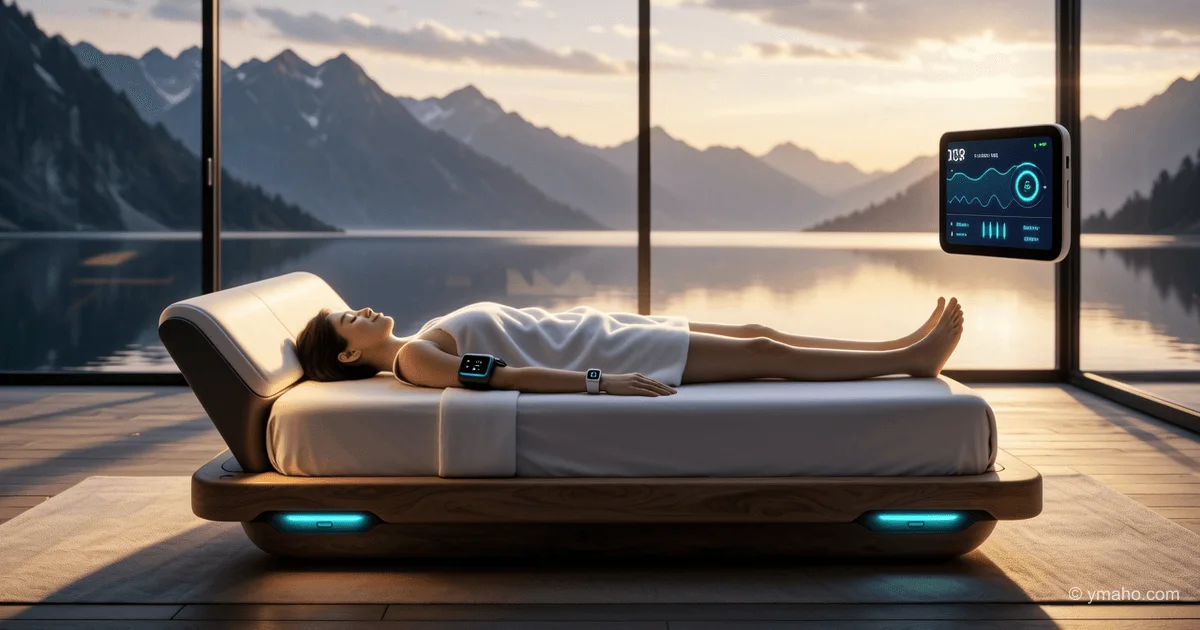
- Data owners. Equinox Hotels and Six Senses use pre-arrival consultations, biometric trackers, and AI recommendations. They know more about your cortisol, sleep quality, and metabolic age than your family doctor. This data is the new gold standard for cross-selling: from nutraceuticals to personalized insurance plans.
- Local natural enclaves. Regional retreats like Long Lane in West Sussex, focused on sobriety and longevity. They benefit from the growing number of 18-25 year olds joining the National Trust (up 39% in the past year). Gen Z wants a digital detox without flying to Bali.
Losers:
- Classic luxury retail. Jewelry, watches, leather goods. When a consumer chooses a "retreat for emotional balance" instead of a $5,000 bag, the margins of traditional luxury houses melt away. A wellness trip costs $3,000-$15,000 per weekend and leaves no budget for material status symbols.
- Democratic spa resorts without medical licenses. The market is stratifying. For the ultra-wealthy: Aman with superyachts. For the middle class: 15-minute meditation apps. The ordinary spa hotel with hot stone massages falls into a dead zone: not medical enough for the rich, too expensive for the masses.
- Society as a whole. A "wellness apartheid" is forming. The GWI notes: quality sleep becomes a privilege. If recovery is only accessible through paid retreats, low-income populations are doomed to chronic sleep deprivation and related diseases. The cost of preventable chronic diseases by 2030 is estimated at $47 trillion, and wellness tourism does not solve this problem but exacerbates it by diverting resources to the premium segment.
What the Media Leaves Out
First and most explosive fact: the epidemic of iatrogenic exhaustion. What Forbes China in January 2026 calls a shift "from wellness to human productivity" is actually the integration of sports medicine into the hotel business. Equinox Hotels embed sleep trackers and recovery protocols in rooms. This means your rest is evaluated by KPIs: did you "recover" enough to be productive tomorrow? Wellness ceases to be rest and becomes mandatory hygiene for efficiency. This is not care; it's an upgrade of humans into perpetual motion machines.
Second insight concerns "retreat addiction." Digital nomads visiting Alma Frequency at Six Senses Crans-Montana get hooked not on results but on the process of biohacking. It's an endless loop: you arrive at a retreat, undergo diagnostics, get a list of deficiencies, return home feeling "broken" and in need of repair. The next retreat is bought not for pleasure but to fix flaws identified in the previous one. This is a business model of a lifelong health subscription disguised as care.
Third point: monetization of climate anxiety. The growth of the National Trust among young people is explained not by love of nature but by a search for control in a world where everything else is falling apart. The retreat industry sells not digital detox but the illusion that turning off notifications for three days solves the existential fear of the planet's future.
Forecast: Next 30 Days and 90 Days
Next 30 days (until June 10, 2026):
On the wave of post-Mother's Day hype, we will see the launch of "wellness subscription" lines from major chains. Marriott and Accor, already using CRM data for predictive recommendations, will start selling packages not of "five nights" but of "six months of health." It will look like a subscription: $12,000 for six months including two retreats, monthly AI consultations, and access to a local spa. The hotel business invades the territory of medical insurance with a "preventive luxury" product.
90 days (August 2026):
By the end of summer, we will see the first major data protection lawsuit. Some guest of Equinox or Six Senses will discover that data on their cortisol levels and sleep quality, collected during a retreat, was used to target insurance products or sold to third parties. The scandal will be valued at $50-80 million in class-action lawsuits and force the industry to introduce a "Wellness Data Confidential" certification. In response, Aman and Six Senses will strengthen the positioning of their closed ecosystems: "Only with us do your biometric data not leave the residence perimeter." Thus, health inequality will reach a new level, where access to privacy becomes part of the luxury package, and everyone else will pay for sleep hygiene with every click in a mobile app.
— Editorial Team









