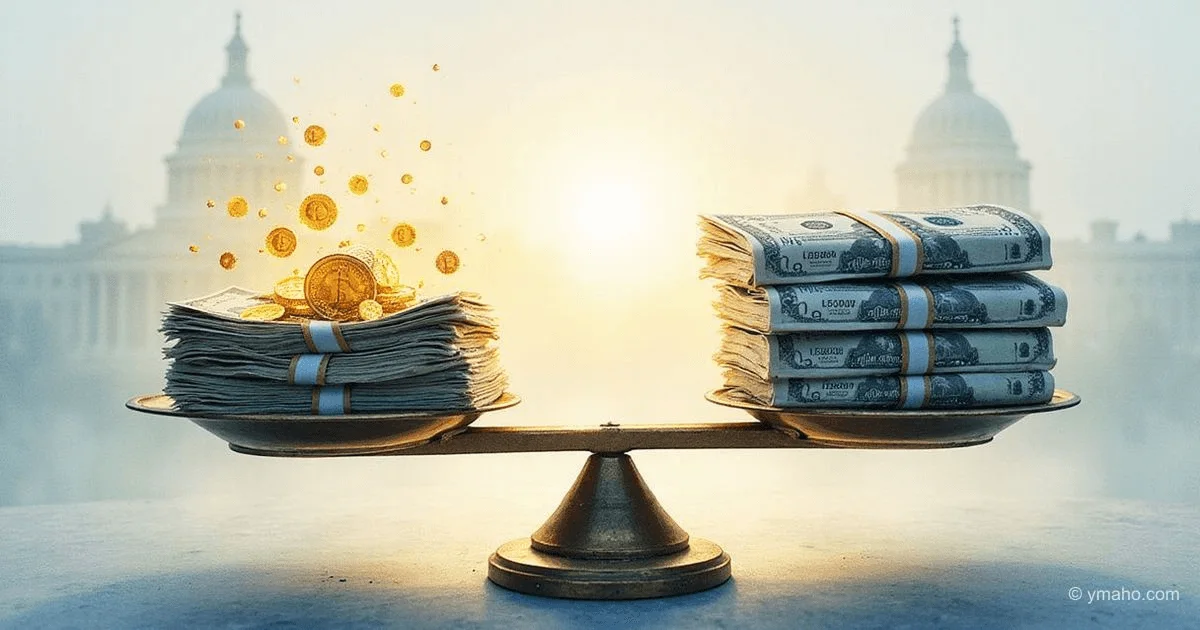
Why Some Stablecoins Are Now Backed by U.S. Government Debt — And What That Means for You
Imagine you hand someone a $1 bill, and they give you a digital token that’s supposed to be worth exactly that same dollar—now and later. But what if that person keeps your dollar in a risky investment? If things go south, your token might not be worth a real dollar anymore. That’s why many stablecoins—the digital dollars of the crypto world—are now switching to something far safer: short-term U.S. government debt, also known as Treasury Bills (T-Bills). This shift isn’t just about tech—it’s about trust, safety, and making sure your digital money stays as solid as actual cash.
What Exactly Backs These Digital Dollars?
Stablecoins aim to hold a steady value—usually $1—by being backed by real-world assets. Early versions sometimes used a mix of bank deposits, corporate loans, or even obscure financial instruments to earn extra yield. But those choices came with hidden risks: if one of those loans defaulted, the stablecoin could lose its peg.
Now, many are moving toward High-Quality Liquid Assets (HQLA)—a fancy term for super-safe, easy-to-sell holdings. The gold standard here is short-term U.S. Treasuries. These are IOUs from the U.S. government that mature in under a year. Because the U.S. has never defaulted on its debt, these are considered among the safest assets on Earth.
When a stablecoin says it’s “backed by T-Bills,” it means every digital token in circulation has a matching dollar’s worth of these government bonds sitting in reserve. No guesswork. No complex portfolios. Just a clear, 1:1 link between token and asset.
Why Short-Term Government Debt? A Simple Analogy
Think of short-term Treasuries like a savings account that earns a tiny bit of interest but can be emptied instantly. Long-term bonds are more like a certificate of deposit—you lock your money away for years, and if you need it early, you might lose some value.
For stablecoins, liquidity is everything. If thousands of people suddenly want to cash out their tokens, the issuer needs to sell assets fast without losing money. Short-term T-Bills can be sold almost immediately at near-full value, even in stressful markets. That’s crucial for keeping the $1 promise intact.
Here’s what makes them ideal:
- Extremely low default risk: The U.S. government stands behind them.
- High liquidity: They trade constantly in massive global markets.
- Low price swings: Because they mature quickly, they’re less affected by interest rate changes than long-term bonds.
How Redemption Actually Works
When you buy a Treasury-backed stablecoin, your dollars are used to purchase T-Bills. In return, you get tokens—each representing $1 of that government debt. When you want your money back, you send your tokens to be “burned” (permanently removed), and the issuer sells enough T-Bills (or uses cash from maturing ones) to send you real dollars.
This system only works smoothly if the reserves are truly liquid and fully matched to the token supply. If there’s a mismatch—say, too many tokens for too few assets—the peg can break, as happened with some earlier stablecoins.
It’s Safer, But Not Risk-Free
Even with T-Bills, risks remain:
- Custody risk: Someone—a bank or custodian—holds the actual bonds. If that institution fails or gets hacked, access to the assets could be delayed or lost.
- Regulatory uncertainty: Governments might impose new rules on how stablecoins operate or what they can hold.
- Market stress: In a true financial panic, even T-Bills can face temporary liquidity crunches, though this is rare.
Importantly, the stablecoin itself doesn’t eliminate these risks—it just shifts them from credit risk (will the borrower pay?) to operational and systemic risk (can the system handle stress?).
What Does This Mean for Regular People?
If you use stablecoins to send money, save, or trade crypto, knowing what backs them matters. Treasury-backed stablecoins are generally more trustworthy because their value rests on rock-solid assets—not promises or complex investments. That doesn’t mean they’re perfect, but they’re closer to digital cash than speculative tokens. For everyday users, this trend means more stability, clearer transparency, and less chance of waking up to find your “$1” token worth only 90 cents.
Key Takeaways
- Many modern stablecoins are now backed entirely by short-term U.S. Treasury Bills—among the safest assets in the world.
- T-Bills offer high liquidity and low volatility, making them ideal for maintaining a stable $1 peg.
- Redemption relies on the ability to quickly convert these bonds into cash when users cash out.
- Risks still exist, including custody failures, regulation, and extreme market conditions.
- This shift reflects a broader move toward treating stablecoins like digital cash equivalents, not yield-generating investments.
— Editorial Team









