Moscow Rolls Out New Standard Women's Health Centers
Traditional women's health clinics are being replaced by modern centers that combine diagnostics, pregnancy management, and inpatient care into a single complex under the supervision of one medical team.
How the reform of women's health clinics in Moscow is changing the global women's health market—and what it means for private medicine
The Essence: What's Really Happening
On May 12, 2026, Moscow Mayor Sergei Sobyanin announced the continued rollout of a new standard for obstetric and gynecological care. At first glance, it's a local city story about replacing outdated women's health clinics with modern centers. But looking at the numbers and mechanics, it becomes clear: this is not a facelift. It's the creation of Europe's largest state-owned vertically integrated women's health operator.
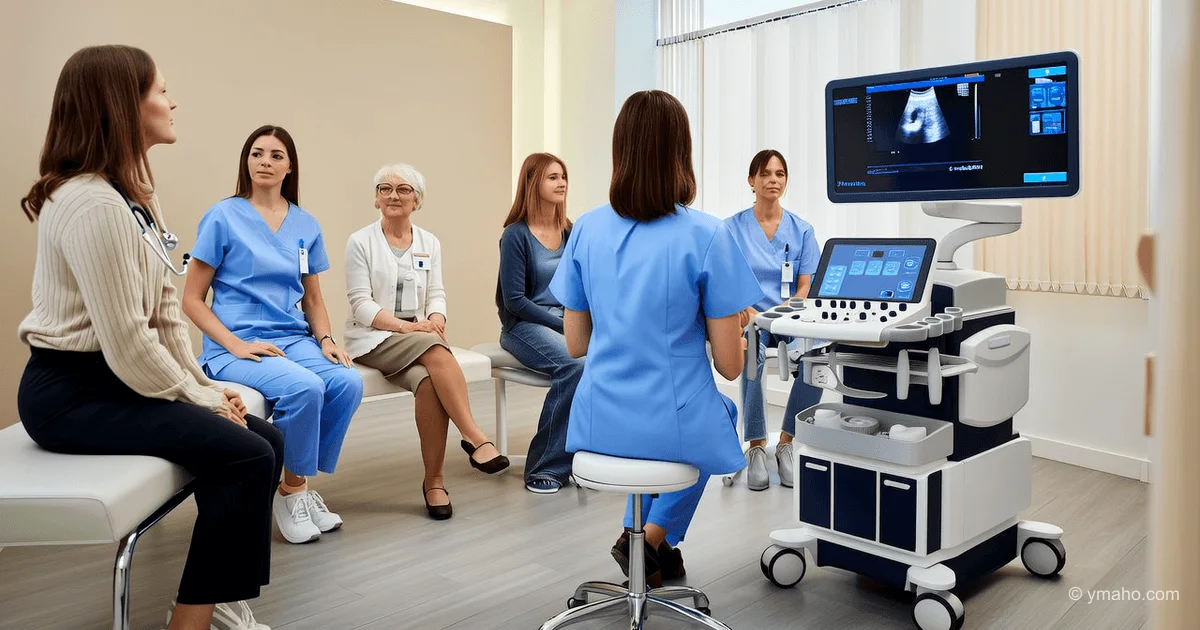
16 women's health centers are already operating, replacing traditional women's health clinics. Each is a full-fledged clinic with a uniform equipment standard: ultrasound, mammography, fetal screening. The staff includes not only obstetricians and gynecologists but also therapists, endocrinologists, and psychologists. The centers are open seven days a week, all data is in the Unified Medical Information and Analytical System (UMIAS), and routing is seamless: center → maternity hospital → gynecological department of a multidisciplinary hospital.
But the main event is the "I'll Be a Mom" project, launched in September 2024. 322,000 women have already taken a free anti-Müllerian hormone (AMH) test. Over 1.3 million have received referrals for examinations. The program includes egg freezing and genetic diagnosis of embryos—procedures that cost $8,000–15,000 per cycle in private clinics in the US and Europe.
Moscow is building a system where women's health is not a set of fragmented services but a continuous cycle from adolescence to postmenopause. And this has implications far beyond the Moscow Ring Road.
Timeline and Context
The story didn't start yesterday. As early as 2020, Moscow was the first in Russia to introduce non-invasive prenatal testing (NIPT) into the compulsory health insurance framework. In 2022, the digitalization of women's health clinics began through UMIAS. In 2024, "I'll Be a Mom" launched. In 2025, 16 women's health centers opened. In 2026, neonatal screening expanded to 38 hereditary diseases.
Concurrently, a process of concentration took place: the women's health clinic is no longer a separate office in a polyclinic but becomes part of a large complex with a maternity hospital and a gynecological inpatient unit. This is classic vertical integration, which private networks like HCA Healthcare in the US build for $50–100 million per cluster. Moscow is doing it at public expense, covering a city of 12 million.
Importantly, the program is not just about fertility. Women's health centers see patients of all ages, including postmenopause, infertility treatment, cervical pathology, and early cancer detection. This is a full-fledged life-course approach—the very approach the WHO has recommended since 2018, but which almost no one in the world has implemented at the megacity level.
Who Wins and Who Loses
Losers:
- Private fertility clinics operating in the IVF segment. When the state offers free egg freezing and genetic diagnosis of embryos, the private sector's price tag of $6,000–10,000 per cycle looks unattractive. Some patients will shift to the public sector. Those who survive will offer premium-level service—but that's a narrow niche.
- Femtech companies focused on paid AMH diagnostics. In the US, an AMH test costs $80–200. In Moscow, it became free for 1.3 million women. The scale of free screening devalues paid diagnostic models.
- Traditional women's health clinics as a format. They are becoming a thing of the past not only in Moscow—but Moscow's case will become a model that other megacities will copy. Investments in the old format lose meaning.
Winners:
- Suppliers of medical equipment for prenatal diagnostics. 16 centers equipped to a uniform standard, plus expansion plans, mean multi-million dollar contracts. Siemens Healthineers, GE Healthcare, Philips are the main beneficiaries.
- Digital women's health platforms that integrate with government systems. Companies that can embed their solutions into UMIAS or offer patients additional digital services on top of the state base.
- The genetic screening market. Expanding neonatal screening to 38 diseases creates a huge data pool and demand for bioinformatics solutions.
What the Media Isn't Saying
Here's an insight completely absent from official releases and reports: the Moscow model is creating Europe's largest women's health database, and this changes the game for pharma.
Imagine: 1.3 million women with measured AMH levels, integrated into electronic medical records along with data on menstrual cycles, pregnancies, outcomes, and gynecological diseases. This is not just a database. It's a registry for clinical trials that in the US or Europe pharma companies build for $200–400 million, recruiting cohorts through CROs.
Moscow created such a registry within a state program. Formally, it is closed and anonymized. But for pharma companies, especially manufacturers of drugs for endometriosis, PCOS, infertility, and menopausal therapy, this is a data source that cannot be ignored. The issue of access to this data will become a subject of negotiations between the state and Big Pharma in the next 2–3 years. The stakes are hundreds of millions of dollars.
The second non-obvious point: women's health centers become an entry point into the healthcare system for women who previously did not engage. Many Muscovites aged 18–39 had not seen a gynecologist for years. Now they come for a free AMH test—and the system gets a chance to detect problems early: from hypertension to diabetes, from endometriosis to cancer. This creates a wave of early diagnosis that, over 5–10 years, will change the disease burden in the region—and the demand structure for medications.
The third overlooked point: psychologists on staff at women's health centers are not just a "nice bonus." It means the state has recognized that women's reproductive health cannot be separated from mental health. Anxiety, depression, stress are as much factors as infections or hormonal imbalance. This paves the way for integrating digital mental health solutions into the state women's health system.
Forecast: Next 30 Days and 90 Days
30 days (by June 15, 2026):
- Private fertility clinics in Moscow will begin publicly commenting on the "I'll Be a Mom" program. Some will criticize "state monopolization." Others will announce partnerships and readiness to accept patients under compulsory health insurance.
- At least two major Russian regions will announce their intention to implement a similar standard. St. Petersburg and Tatarstan are the top candidates.
- Femtech startups will start analyzing how to integrate into the UMIAS infrastructure or offer services on top of state system data.
90 days (by August 15, 2026):
- One global pharma company (Novo Nordisk, Bayer, or Organon) will hold talks on access to anonymized data from the women's health center system for clinical trials. This will be the first such precedent.
- The first M&A deal in Russian femtech will occur: a major player will acquire a startup developing AI solutions for women's health analysis based on government data. The deal size will be in the $15–30 million range.
- The Moscow case will be presented at an international public health conference as a model of vertical integration in women's health. This will spark discussion in the US and Europe: can such an approach be scaled to systems with predominantly private medicine?
The main takeaway: Moscow is not just creating "good clinics for women." It is building an infrastructure platform that combines prevention, diagnostics, treatment, and data—and doing so on a megacity scale. For private medicine, this is a signal: competing with the state on price in the reproductive health segment is impossible. Competition can only be on service quality, speed of access, and additional services. For pharma and femtech, this is a signal: a powerful new data source and a new product distribution channel has emerged. Those who learn to work with this system first will gain access to Europe's largest women's health market.
— Editorial Team









