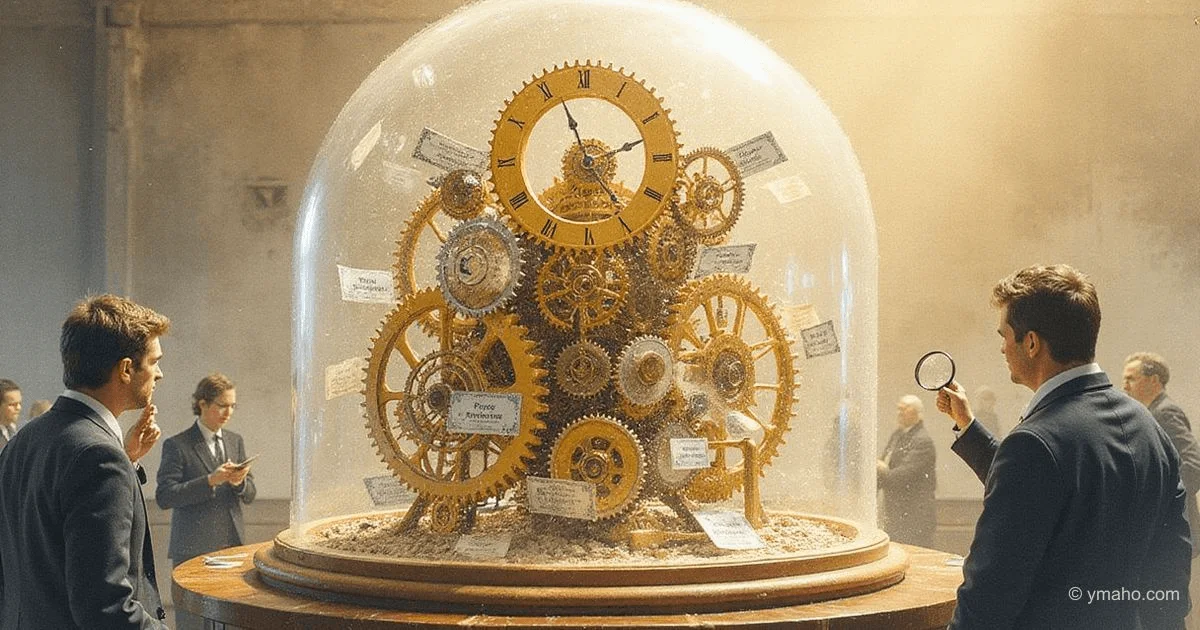
WorldLand Explained: How Blockchain Can Prove Your AI Tasks Actually Ran
Imagine paying someone to bake you a cake—but all they send back is a photo. You have to trust it’s real, freshly made, and not just pulled from their freezer. That’s how most cloud computing works today: you pay for powerful computer time (like for training AI), but you can’t prove the work was actually done. WorldLand aims to change that by using blockchain to verify computation itself—not just record payments.
This matters because as AI gets more expensive and important, we need ways to know results aren’t faked, skipped, or run on underpowered machines. WorldLand doesn’t provide the computers—it proves they were used correctly.
From Trust to Proof: Why Verification Matters
Most cloud services—like those from big tech companies—operate on trust. You submit an AI training job, they say it ran, and you accept the result. But there’s no technical way for you to confirm it actually happened, or that your full GPU hours weren’t cut short.
WorldLand flips this model. Instead of relying on reputation, it uses cryptography and blockchain to generate proofs that specific computations occurred. Think of it like getting a timestamped video of the cake being baked—not just a picture afterward.
This shift—from “trust us” to “here’s proof”—could reduce fraud, lower costs, and make decentralized computing more reliable for serious tasks like medical AI or financial modeling.
How Proof of Compute Actually Works
WorldLand builds on the same basic idea as Bitcoin’s Proof of Work (PoW)—where computers solve puzzles to secure the network—but adds a crucial twist: it ties those puzzles directly to useful computation, like running parts of an AI model.
Here’s the simplified flow:
- A user submits a computational task (e.g., “train this neural net layer”).
- A GPU provider runs the task and generates two things: the result and a cryptographic proof that the work was done.
- Independent validator nodes check that proof using math—not by re-running the whole task (which would be wasteful).
- Once verified, both result and proof are recorded on the blockchain via PoW consensus.
The key innovation is ECCPoW—an energy-efficient version of PoW that embeds error-correcting codes. This makes it harder for specialized hardware to dominate and reduces wasted electricity compared to traditional mining.
Who Does What in the WorldLand Network?
WorldLand relies on four main roles working together:
- Users: Submit computational jobs (often AI-related) and pay in WL tokens.
- Compute providers: Run tasks on their GPUs and submit proofs.
- Validators: Check proofs for accuracy without redoing the work.
- Miners: Secure the blockchain and finalize blocks using PoW.
Unlike platforms that just rent out GPUs (like Render Network), WorldLand focuses solely on verification. It’s less like a marketplace and more like an auditor for distributed computing.
What Does This Mean for Regular People?
You probably won’t use WorldLand directly—but its success could affect you in real ways:
- If you use AI tools (like chatbots or image generators), verifiable compute could make them more trustworthy and less prone to hidden shortcuts.
- Developers building AI apps might get cheaper, fairer access to GPU power without relying on a few big cloud companies.
- In the long run, systems that prove work was done could help prevent scams in everything from scientific research to election software.
Key Takeaways
- WorldLand doesn’t sell computing power—it verifies that computing tasks actually ran.
- Its “Proof of Compute” turns computation into auditable, on-chain evidence.
- The network uses an improved PoW system (ECCPoW) to stay secure and energy-conscious.
- It’s designed for high-stakes uses like AI training where accuracy and transparency matter.
- Unlike GPU marketplaces, WorldLand acts as a verification layer, not a resource broker.
— Editorial Team









