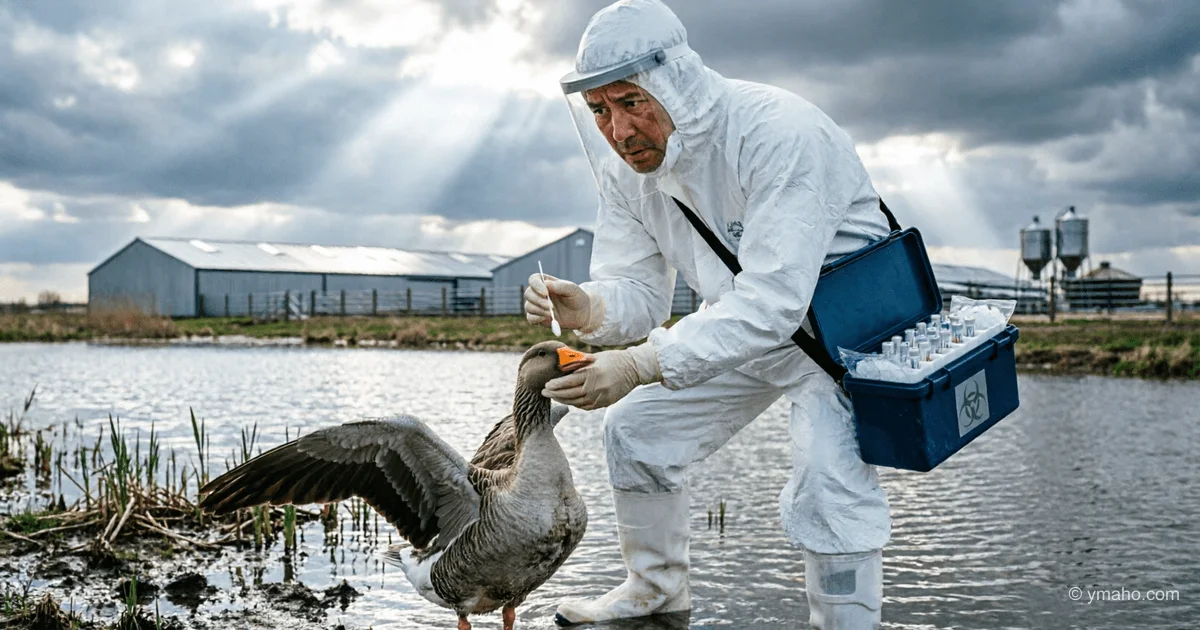
Russian Epidemiologists Raise Alarm: Return of Dangerous Zoonotic Infections Recorded
Rospotrebnadzor has issued a warning about an increase in outbreaks of zoonotic and sapronotic diseases, such as ornithosis, highly pathogenic zoonotic influenza, and listeriosis. The return of these infections is linked to climate change, pathogen mutations, and increased human contact with wildlife.
A Silent Epidemic on the Horizon: Why Zoonotic Infections Are Returning and What It Means for the World
Introduction
Rospotrebnadzor has issued an official warning: Russia is seeing a rise in the incidence of zoonotic and sapronotic infections, which, after a long period of low activity, are re-emerging with outbreaks and spreading to new territories. Behind this dry bureaucratic statement lies a reality that epidemiologists have warned about for decades: the return of ornithosis, highly pathogenic zoonotic influenza, listeriosis, and other diseases is not a coincidence but a predictable outcome of anthropogenic pressure on ecosystems. The event may seem local, but its context extends far beyond Russia—the world as a whole is facing a sustained trend of zoonotic activation that is reshaping the landscape of infectious disease security.
Event Details and Timeline
In the methodological guidelines for the prevention of infectious diseases published by Rospotrebnadzor on May 5, 2026, it is explicitly stated: "IDCH—known zoonotic (sapronotic) infections that, after a period of relatively low activity, are again manifesting as outbreak incidence and/or spreading to new territories." The list of pathogens recognized as epidemiologically significant for Russia is extensive and includes two groups:
Group II pathogenicity includes highly pathogenic zoonotic influenza, ornithosis (a chlamydial infection transmitted from birds to humans), particularly dangerous mycoses, glanders, melioidosis, and foot-and-mouth disease. Group III includes listeriosis, pasteurellosis, cat-scratch disease, and erysipeloid.
The geographic scale of the problem is underscored by a separate statement from the government of Altai Krai, refuting fake news about contaminated meat. It reports that in the first quarter of 2026 alone, two outbreaks of bacterial zoonotic infection were eliminated at enterprises in the region, while local outbreaks of seasonal viral diseases are being contained at the level of subsidiary farms.
The agency cites key reasons for the return of zoonoses: increased anthropogenic impact on the environment, ecological and climatic changes, the development of traditional agriculture, possible import of infected animals and livestock products, increased contact with wildlife due to migration and adaptation of animals to synanthropic environments, as well as mutations of the pathogens themselves.
Impact and Significance
The significance of Rospotrebnadzor's warning unfolds on several levels—from local epidemiological to global existential.
First, it is part of a global trend documented by the scientific community. According to historical data, 60.3% of the 335 recorded outbreaks of infectious diseases between 1940 and 2004 were of zoonotic origin, with 71.8% of those linked to wildlife. In the coming decades, the frequency of zoonotic events will only increase.
Second, the climate driver. Climate warming lengthens transmission seasons and expands the ranges of vectors. A study presented at the World Biodiversity Forum in 2026 shows that tick-borne encephalitis and West Nile fever are shifting northward in Europe, and the transmission season is lengthening. For Russia, this means that infections previously characteristic of southern regions will be recorded in the central belt and Siberia.
Third, man-made factors. Destruction of natural habitats, intensive agriculture, and urbanization increase human contact with wild animals. Bats, which make up about 20% of all mammal species, serve as reservoirs for many viruses with zoonotic potential; by various estimates, between 631,000 and 827,000 virus species in mammals and birds could potentially infect humans.
Fourth, pharmacoeconomic consequences. In the United States, the number of reported cases of vector-borne diseases has increased significantly over the past two decades, with Lyme disease, West Nile fever, and dengue leading the way. Lyme disease, according to expert estimates, costs the U.S. healthcare system between $712 million and $1.3 billion annually—and that is only direct medical costs for a single disease.
Fifth, changes in clinical practice. As noted in a review by the American College of Osteopathic Physicians, "geography is no longer a reliable exclusion criterion" in diagnosing zoonoses. Diseases traditionally considered tropical or southern are now being recorded in the U.S. Midwest and northern states. The parasitic infection Dirofilaria repens, previously confined to Southern Europe, is rapidly expanding its range into Central and Eastern Europe due to climate change and the spread of the invasive mosquito Aedes albopictus.
Reactions of Key Players
Reactions to Rospotrebnadzor's warning are multi-level.
Government agencies are operating within a preventive model. The publication of methodological guidelines is not just an informational signal but a regulatory document mandatory for implementation by Rospotrebnadzor institutions and regional health authorities. Simultaneously, the government of Altai Krai is actively countering information attacks: a coordinated wave of fake news about allegedly contaminated Russian meat products, spread through Ukrainian resources since April 20, 2026, has been recorded.
The scientific community is responding with a conceptual shift toward the One Health approach. This principle, enshrined in WHO and FAO policy documents, recognizes the inextricable link between human, animal, and ecosystem health. A special issue of Science in One Health from April 2026 emphasizes: more than 60% of pathogens causing human diseases originate from animal reservoirs, and at least 70% of new infections have wildlife origins.
International organizations have not yet issued separate statements on the situation in Russia, which is explained by the absence of recorded cases of human-to-human transmission. However, the World Organisation for Animal Health continues to monitor the global situation with highly pathogenic zoonotic influenza, which remains the main threat for transitioning to a pandemic.
Forecast and Conclusions
Rospotrebnadzor's warning of May 5, 2026, is not a one-time action but a symptom of fundamental changes in global epidemiology. Several key forecast trends can be identified.
First, further activation of zoonoses. Anthropogenic pressure on ecosystems is not weakening, climate changes are accelerating, so outbreaks will become more frequent. Bats are of particular concern as universal virus reservoirs—from coronaviruses to filoviruses and henipaviruses.
Second, changes in disease geography. Infections considered endemic to the tropics or southern regions will increasingly be recorded in temperate latitudes and northern territories. For clinicians, this means a need to revise diagnostic protocols: the absence of a "tropical" history no longer rules out a zoonosis.
Third, strengthening the role of the One Health approach. Combating zoonoses is impossible within a single agency or country. Cross-sectoral and international monitoring covering human health, veterinary surveillance, and environmental control is necessary.
Fourth, increasing economic damage. Each new zoonotic outbreak requires costs for containment, compensation for destroyed livestock, treatment of those affected, and restoration of export positions. The COVID-19 pandemic, of zoonotic origin, cost the global economy, by various estimates, between $12 and $28 trillion, and this is not the last bill of such magnitude.
Fifth, information risks. Events in Altai Krai show that the topic of zoonoses is becoming a tool of information warfare, complicating the already difficult work of epidemiological services.
In the final analysis: Rospotrebnadzor's message is an alarm clock that the epidemiological community hears more clearly than the general public. The return of ornithosis, listeriosis, and zoonotic influenza is not a sudden catastrophe but a predictable consequence of our model of interaction with nature. The question is not whether a new major zoonotic outbreak will occur, but where and when it will happen—and how prepared the global health system is for it. The warning from the Russian agency is a valuable reminder that infectious disease security tolerates no complacency, and the boundaries between medicine, veterinary science, and ecology have been definitively erased.
— Editorial Team









