AI Model for Early Diagnosis of Gallbladder Cancer Shows High Accuracy in Multicenter Study
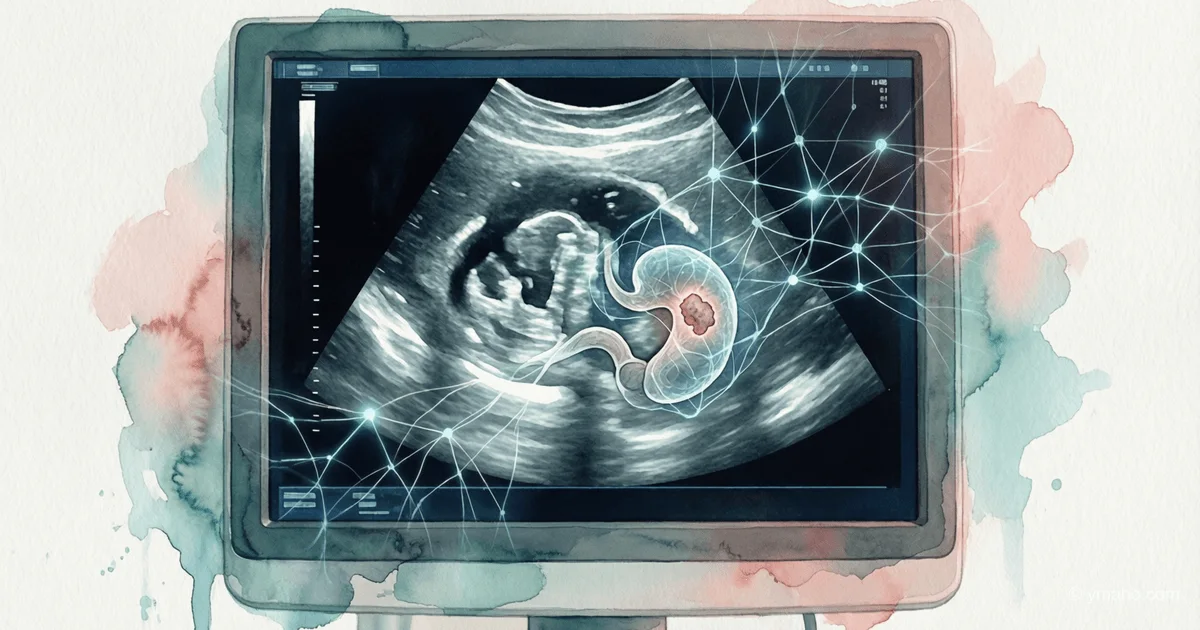
Researchers from PGIMER (India) developed and published in The Lancet Regional Health an artificial intelligence model that analyzes standard ultrasound videos and accurately detects gallbladder cancer at early stages. The model is freely available as an application, which is critical for high-risk regions.
PERIPHERAL PARITY: How Indian AI Outperforms Diagnostics Where Expensive Systems Fail
[The Gist]: What's Really Happening
On May 22, 2026, a study published in The Lancet Regional Health – Southeast Asia upends the notion of what a "proper" medical AI system should look like.
A team led by Dr. Pankaj Gupta from PGIMER (Chandigarh) developed a model based on multiple instance learning technology that analyzes standard ultrasound videos and detects gallbladder cancer. No expensive CT scans. No contrast. No highly specialized expert on site.
The model takes multiple ultrasound images of a single patient (as a radiologist would in real practice) and outputs a single diagnosis — "cancer" or "not cancer" — along with a probability score and highlighting of the image areas that influenced the decision.
And crucially: Karthik Bose, a computer scientist on the team, developed a free desktop application that is already being distributed to hospitals upon request.
Why does this event go beyond "yet another AI publication"?
Because this is the first time an AI system for cancer diagnosis on ultrasound has been designed not to "assist an expert in a center," but to completely replace the absence of an expert on the periphery.
Timeline and Context
2018: Dr. Gupta's team begins work on the project. The problem they are trying to solve has been known for decades: gallbladder cancer in North India kills because it is detected late. Ultrasound machines are available in every district hospital. Radiologists capable of recognizing early signs of malignancy are not.
2022: Latest global GLOBOCAN data: 122,491 new cases of gallbladder cancer worldwide. India ranks second after China with 21,870 cases. But more important than absolute numbers are standardized rates: among Indian women, the ASR is 2.1 per 100,000. In northern states, it is even higher.
April 2026: Publication of the study in The Lancet Regional Health – Southeast Asia. The model is validated on data from four major hospitals in North India.
May 22, 2026: The news hits mainstream media. The application becomes available to national-level hospitals.
What remains behind the scenes of most reports: the model is based on multiple instance learning (MIL). It is not a classifier of individual images, where an artifact could fool the algorithm. It is a system that looks at the entire set of images and learns to identify patterns scattered across different frames — just as the human eye does when viewing a video.
Who Wins and Who Loses
Winners (obvious):
- PGIMER and Dr. Gupta's team. The institute, previously known mainly in Indian academic circles, now enters the global agenda on AI in diagnostics. Dr. Pankaj Gupta becomes the person invited to all major medical AI conferences in 2026–2027.
- Peripheral hospitals and their patients. In rural areas of North India, where there is no specialist capable of distinguishing early gallbladder cancer from chronic cholecystitis with stones, a tool now exists. And it's free.
- Women of North India. Gallbladder cancer is the most common digestive system cancer among women in North India. The incidence is 21 cases per 100,000 women. Gallstone disease, the main risk factor, occurs in 80% of gallbladder cancer patients. This group will benefit most from early diagnosis.
Losers:
- Manufacturers of expensive CT and MRI systems in India. The more accurate ultrasound diagnosis becomes with AI, the fewer referrals for computed tomography. Each prevented referral means lost revenue of $50–200 for a diagnostic center. Across India, that's millions of dollars.
- Western AI startups trying to enter the Indian market. They sell solutions for thousands of dollars per license, often with a subscription. PGIMER gives its application away for free. In the price-sensitive segment of peripheral Indian medicine, this factor decides everything.
- Radiologists in small towns. Not because they will lose their jobs (there are already catastrophically few), but because their business model, built on paid consultations for ultrasound interpretation, will be challenged. An app that diagnoses for free devalues the service.
What the Media Isn't Saying
Non-obvious Insight #1: Free app is a brilliant but high-risk move
The PGIMER team made the app free. It looks like altruism. In reality, it's the only way such a system can be deployed in Indian public hospitals, where the IT procurement budget at the district level often does not exceed $5,000–10,000 per year.
But free has a downside: who will pay for support?
Model updates when new data arrives. Integration with different ultrasound machines (dozens of models from various manufacturers in India). Technical support for doctors who are not IT specialists.
Currently, the PGIMER team does this with grant money. But grants run out. An AI system in medicine cannot be "abandoned" — it requires constant quality control and updates.
Likely scenario in 12–18 months: the free basic version remains, but advanced features (integration with HIS, automatic referral generation, remote audit) will be charged. Or a government contract with the Indian Ministry of Health for scaling will appear.
Non-obvious Insight #2: The choice of gallbladder cancer is not random. It is an ideal model for proving the concept of "AI for the poor"
Dr. Gupta's team did not choose this localization by chance.
Gallbladder cancer has a clear, straightforward, "routine" diagnostic protocol: ultrasound → if suspicion → CT/MRI. The problem is not the lack of technology, but the lack of qualification at the first stage.
This is the perfect niche where AI can replace not a doctor, but the absence of a doctor. And the proof works in any region of the world with a similar problem — from rural areas of Bangladesh (ASR 7.7 in women, almost 4 times higher than in India) to remote areas of Chile (ASR 7.4) and Bolivia (ASR 8.4).
Moreover, from an evidence-based medicine perspective, this is a clean model: binary outcome (cancer/no cancer), gold standard verification (histology after cholecystectomy or biopsy), clear inclusion criteria.
If the model shows high sensitivity and specificity in prospective trials (the next phase the team is already planning), it can be adapted for other cancers diagnosed by ultrasound — ovarian cancer, liver cancer, pancreatic cancer.
Non-obvious Insight #3: Preclinical data show sensitivity is still far from ideal
In an earlier work by the same group (2024, Clinical and Experimental Hepatology), two deep models — GBCNet and MedViT — were compared for classifying gallbladder lesions on non-diagnostic ultrasound.
The numbers were modest: GBCNet sensitivity for cancer detection was 51.1%, specificity 83.3%, AUC 0.709. MedViT showed sensitivity of 92.8%, but specificity of only 50%.
This means one model misses half of cancer cases. The second gives false alarms in half of cases.
The 2026 study in The Lancet Regional Health likely shows better results (otherwise it wouldn't have been published in such a journal), but metric details are not disclosed in available sources. Without publication of the full error matrix, judging the model's real suitability for clinical use is premature.
Forecast: Next 30 Days and 90 Days
30 days (by end of June 2026):
- Wave of requests from hospitals. PGIMER is already receiving requests from "national-level hospitals" for the application. Within a month, the number of requests will grow to dozens. The question is how the team will handle distribution and initial training without a dedicated staff.
- Publication of full metrics. Expect that in the coming weeks, either Gupta himself or independent analysts will reveal the exact sensitivity, specificity, and AUC of the model from the 2026 study. If sensitivity exceeds 85% with specificity above 80%, that's a commercial level. If lower, it remains a niche screening tool.
- Negotiations with the government. The Indian Ministry of Health is likely already aware of the development. The next 30 days will show whether an official pilot implementation program in 5–10 district hospitals emerges. The budget for such a pilot ranges from $500,000 to $1 million for 12 months.
90 days (by end of August 2026):
- Launch of prospective clinical trial. Dr. Gupta's team has stated plans to validate the model in prospective trials. Design: enrollment of patients with suspected gallbladder cancer, parallel ultrasound with AI interpretation and independent verification (CT/MRI + histology). Enrollment period: 6–12 months, results no earlier than 2027.
- Integration into ultrasound workflows. The current version is a desktop application where images must be manually uploaded. The next step is integration directly into ultrasound machines. PGIMER is already exploring this possibility. Technically, it is more complex and expensive, but this format would make the technology "invisible" to the physician.
- Interest from international organizations. WHO, the Bill & Melinda Gates Foundation, the World Bank — all are interested in scalable solutions for cancer diagnosis in low-resource settings. Within 90 days, preliminary contacts about funding the next phase may emerge. Potential grant size: $2 to $5 million over 3 years.
Main forecast:
In 2–3 years, the PGIMER model will become either:
- (a) A national gallbladder cancer screening system in India — if prospective trials confirm efficacy and the government allocates a scaling budget.
- (b) An open-source library for medical AI in low-resource settings — if the model does not achieve required accuracy, but the MIL approach proves reproducible, and other groups begin adapting it for their tasks.
In any case, PGIMER has already done what no Western university or corporation has managed: created an AI tool for cancer diagnosis that is free, works on routine equipment, and does not require high operator skill.
It is in such "ugly," "niche," "peripheral" projects — not in loud claims about all-seeing AI — that the real medical revolution is born for the 4 billion people on the planet who lack access to specialized diagnostics.
PGIMER did not wait for someone else to solve their problems. They took ultrasound, added a bit of machine learning, and gave it away for free to those who need it most. That is medical AI at its best.
— Editorial Team









