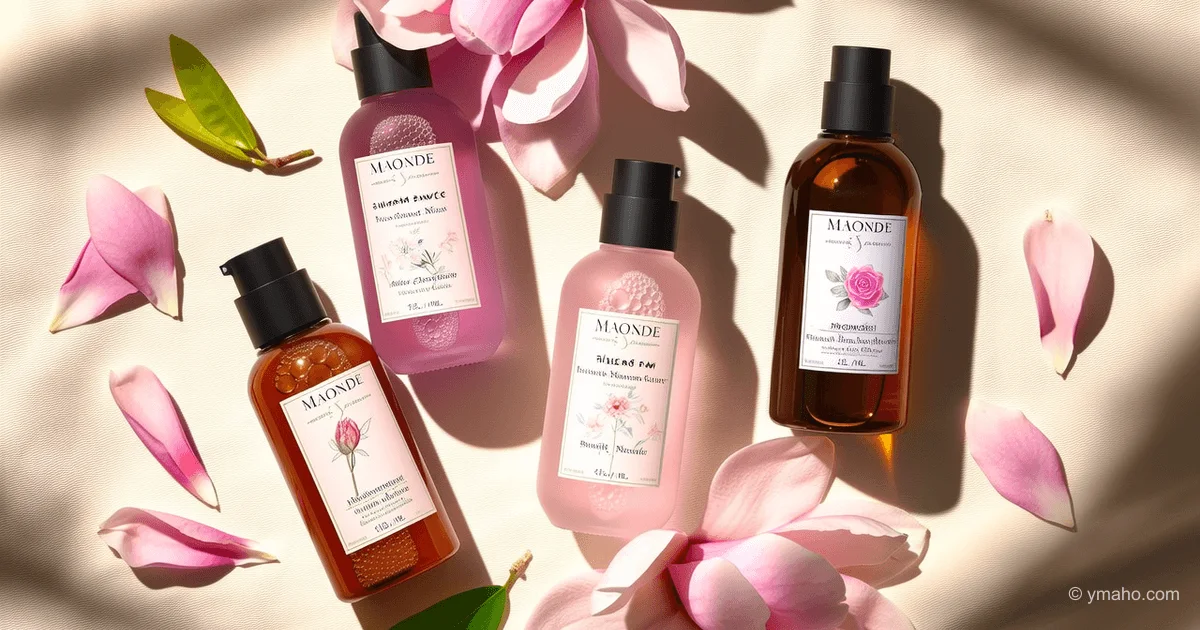
Amorepacific Launches K-Beauty Brand MAMONDE in the US Market via Amazon
South Korean giant Amorepacific has announced the launch of the MAMONDE brand in the US exclusively through Amazon, targeting Gen Z and Gen Alpha with science-backed floral formulas.
Mamonde goes to Amazon: why this is not just another K-beauty launch, but a reshaping of the influence map in the American market
The Gist: What's Really Happening
On May 7, 2026, Amorepacific announced the launch of its floral brand Mamonde in the US market through an exclusive partnership with Amazon Premium Beauty. Prices range from $20 to $27, the target audience is Gen Z and Gen Alpha, the packaging is psychedelic and bright, and the promise is "skin like a freshly cut flower." It sounds like another cute K-beauty story, but beneath the surface, a tectonic shift is underway.
This is the fourth brand Amorepacific has launched in the US in the last 15 months, following Hanyul, Aestura, and Iope. The pace of launches is unprecedented. But more important is how Mamonde is entering. No Sephora. No Ulta. Only Amazon. And this is not a tactical experiment. It is a strategic response to a painful fact: Amorepacific has lost the K-beauty crown in North America.
In Q4 2025, APR Corp (brands Medicube and April Skin) posted North American sales of $255.1 million, up 269.7% year-over-year. Over the same period, Amorepacific managed only $182.6 million. APR has overtaken the veteran for the first time. A humiliating moment for a company whose CEO, Giovanni Valentini, was boasting about 20% revenue growth in the region just last year. Growth exists, but APR is growing several times faster.
Mamonde on Amazon is the counteroffensive.
Timeline and Context
The story of this launch begins not in May 2026, but a year earlier.
In mid-2025, Amorepacific was already testing several brands on Amazon without a formal US launch. Illiyoon sold 40,000 units of its flagship cream during Amazon's spring sale in March 2026 alone. RYO, Mise En Scène, Labo-H — all were already present on the platform in a "test and learn" mode. The company was methodically collecting data on which categories and price points work.
Meanwhile, the war with APR was raging. In Q4 2025, APR's quarterly revenue in North America was 40% higher than Amorepacific's. In response, Amorepacific accelerated the launch of premium brands: Hera, Laneige, Aestura, and Iope strengthened their positions, but it wasn't enough to catch up with the competitor.
Around the same time, Amazon changed the head of its health & beauty division. Since January 2026, Wendy Franks has been at the helm, and she immediately announced a shift in Amazon Beauty's model from replenishment to discovery. Under her leadership, the platform launched a revamped "New in Beauty" storefront, the AI assistant Rufus, virtual try-ons, and integrated shopping within Prime Video content.
The launch of Mamonde fits perfectly into this slot. Amorepacific has found a partner that itself desperately needs to demonstrate its ability to launch premium beauty brands from scratch. This is not just distribution — it's co-marketing between two giants, each with its own stake in the project's success.
Who Wins and Who Loses
Amazon wins. After launching Bobbi Brown, Tarte, Milk Makeup, and Laura Mercier in Premium Beauty, the platform desperately needs a K-beauty flagship to prove that Korean premium can thrive outside Sephora. Mamonde, with its bright packaging, sub-$30 price point, and viral product (a liquid mask selling one bottle per minute globally), is the ideal candidate for a generation that discovers brands on TikTok and buys through Prime.
Amorepacific wins — but not in the way the media portrays. The company is not just expanding its portfolio. It is building an alternative channel to the US market that completely bypasses Sephora and Ulta. If Mamonde works, RYO, Labo-H, Primera, and other brands from the "test" pool will follow. Amorepacific is creating a second front where APR cannot compete — APR lacks 80 years of R&D heritage, 30 years of research on floral extracts, and the patented Hyper Flora technology.
APR loses. The rapid growth of Medicube and April Skin is built on devices and viral products, but the company cannot match Amorepacific's portfolio depth. Amorepacific now has three active tracks: premium brands in Sephora (Sulwhasoo, Laneige), mass market through COSRX and Illiyoon, and now digital premium through Mamonde on Amazon. APR lacks such a brand architecture.
Mid-tier offline retailers lose. Mamonde is deliberately ignoring brick-and-mortar at launch. Julien Bouziat, SVP of the prestige division at Amorepacific North America, states outright: "We want to be digital-first, we activate influencers, creators, TikTok, then TikTok Shop later, and physical retail — maybe later, when demand arises." This is a model reversal: brands used to seek Sephora for legitimacy; now Amazon provides it.
What the Media Isn't Saying
Insight #1: Mamonde is a "child soldier" in Amorepacific's war against APR.
Everyone writes about Gen Zalpha, floral science, and bright packaging. No one mentions that Mamonde was chosen for this role deliberately. In Korea, the brand is #1 at Olive Young, the largest health & beauty retail chain. It has already proven its ability to capture a young audience. But the key is the price point. $20–$27 is even lower than many independent K-beauty brands from the "second wave." Amorepacific is deliberately undercutting prices, leveraging economies of scale: the company can afford margins that startups cannot, because its R&D and production are in-house.
APR with its Medicube is tied to devices — a higher price point and different purchase frequency. Mamonde, with its liquid mask at $24, targets a monthly ritual. This is a war over consumer contact frequency.
Insight #2: Amazon is becoming not a distributor, but a co-creator of brands.
Few noticed that Wendy Franks, in an interview with Business of Fashion, described a radically new model: Amazon is no longer just a shelf. The platform offers brands "immersive product pages," the AI assistant Rufus, integrated shopping in Prime Video content, and access to its advertising division for awareness-stage campaigns. For Mamonde, this means: a consumer can see the product in a TikTok creator's video, click a link to Amazon, get a Rufus recommendation based on skin type, explore premium storytelling on the brand storefront, and order with same-day delivery — all within one ecosystem.
This is not e-commerce. It is a vertically integrated launchpad for brands that want to scale without physical retail. If the model works, in three years, 30% of new premium beauty brands in the US will launch exclusively on Amazon, not Sephora.
Insight #3: Gen Zalpha is not a cute demographic; it's an alibi for capturing the adult market.
All press releases emphasize Gen Z and Gen Alpha, but the $20–$27 price point is not pocket money for teenagers. It's "affordable premium" that appeals equally to a college student and a 35-year-old woman tired of paying $65 for a Drunk Elephant serum. Mamonde is playing the same game as The Ordinary did a few years ago: "science-backed formulas at fair prices." Only The Ordinary didn't have 30 years of R&D on floral extracts and patented technologies.
Moreover, Mamonde's liquid mask creates an entirely new category: "sheet mask in a bottle." It's not a cream or a serum. It's a new gesture, a new ritual. And a new ritual means a new reason to buy that doesn't conflict with existing routines. The consumer doesn't replace their moisturizer — they add another step. Average order value increases, loyalty increases, purchase frequency increases. A classic market-creation strategy, not a share-grab in an existing market.
Forecast: Next 30 Days and 90 Days
30 days (by June 13, 2026):
Mamonde has launched its seeding campaign. Creators who participated in focus groups and pilot shoots before the launch have started posting content. In the next month, we'll see a surge on TikTok: short videos demonstrating the liquid mask's texture, instant "glass skin" effect, and a 9°F skin temperature reduction from the Azulene serum. This is viral content crafted specifically for the platform's algorithms.
Sales will be driven by three products: Flora Glow Rose Liquid Mask, Calming Shot Azulene Ampoule, and Rose Water Toner. The first because it's a unique format and bestseller. The second because the blue formula and cooling effect create a wow moment. The third because K-beauty toners are already familiar to US consumers and serve as a safe entry point.
Amazon's Rufus algorithm will start learning from queries like "glass skin," "Korean skincare routine," and "soothing serum for redness," and will recommend Mamonde. Conversion from search to purchase will be above category average thanks to the sub-$30 price.
90 days (by mid-August 2026):
By then, Amorepacific will have its first full data on retention and repeat purchase. If metrics exceed category benchmarks (which they likely will — affordable pricing encourages repurchase), the company will announce the launch of the next brand from the "test" pool on Amazon. The most likely candidate is Primera, also with a botanical positioning but at a slightly higher price point.
Simultaneously, Mamonde will launch on TikTok Shop — Bouziat mentioned this as "the second phase after the Amazon exclusivity period." This will be a key moment: can the brand operate on two platforms simultaneously without cannibalizing sales? If yes, the "Amazon + TikTok Shop" model will become the new standard for digital-first K-beauty launches.
APR will react. Likely through price pressure or launching its own line in the "affordable premium" category without devices. But R&D resources are incomparable: Amorepacific has its own research centers and patented extracts; APR has strong marketing and viral mechanics. This will be a classic "product vs. marketing" battle, and 2027 will show who wins.
Conclusion. The launch of Mamonde on Amazon is not just Amorepacific's fourth US brand in 15 months. It is a response to losing the K-beauty crown in the region, a response to APR, and a response to a new reality where brand legitimacy comes not from a Sephora shelf but from the ability to scale digitally. If the experiment succeeds, Amorepacific will build a second front that APR cannot replicate. And Amazon will become the launchpad partner for premium beauty — a role the retailer has dreamed of for the last five years. Mamonde is the umbrella. Behind it comes an army.
— Editorial Team









