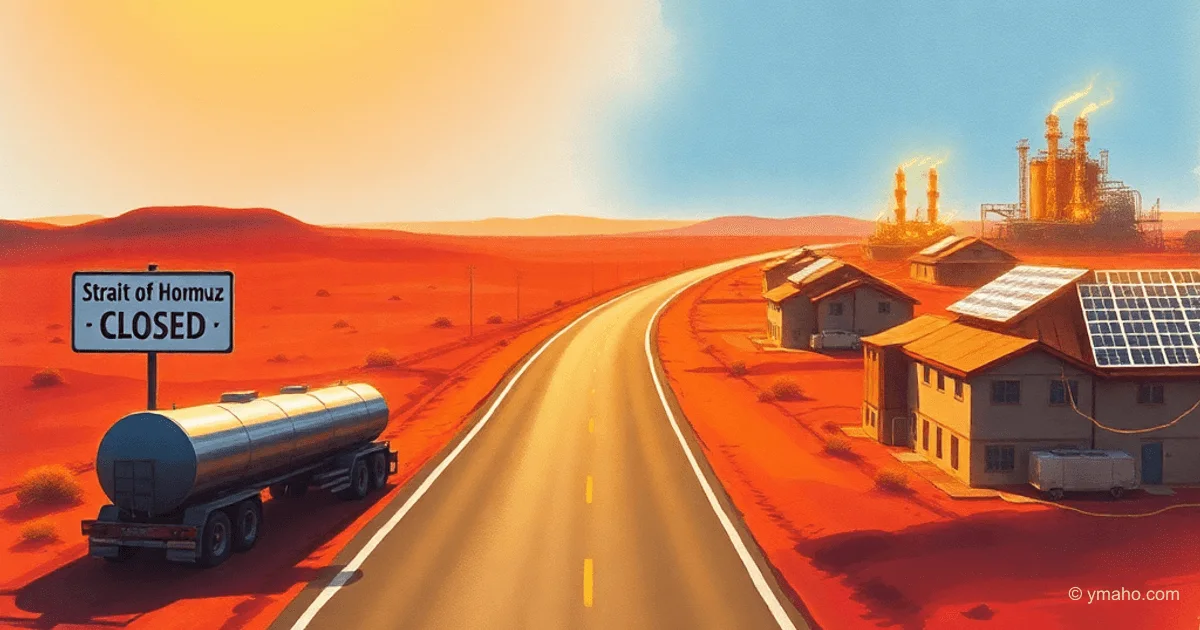
Australia’s Fuel Crisis: How a War Far Away Is Hitting Local Pumps
A war in the Middle East is making it harder—and more expensive—for Australians to fill up their cars, power trucks, and even grow food. Though Australia isn’t directly involved in the conflict, its heavy reliance on imported fuel means disruptions halfway across the world are now hitting home.
Why a Strait Matters More Than You Think
Imagine the global oil supply as a giant highway system. One of its busiest on-ramps is the Strait of Hormuz—a narrow waterway between Iran and Oman. Normally, about one-fifth of the world’s oil and liquefied natural gas (LNG) flows through it. But since early March, that “on-ramp” has been nearly shut down due to military conflict, cutting shipping traffic by 95%.
Australia doesn’t import much crude oil directly from the Middle East. Instead, it gets most of its petrol and diesel from refineries in Singapore, South Korea, and Malaysia—countries that do depend on Middle Eastern crude. So when the Strait closes, the ripple hits Australia’s fuel supply chain like a delayed domino effect.
The Government’s Quick Fixes—and Their Limits
To soften the blow, the Australian government has rolled out two main responses:
- Fuel tax cuts: The federal fuel excise was halved to lower pump prices temporarily.
- “Fuel diplomacy”: Prime Minister Anthony Albanese visited Southeast Asian nations to secure emergency supplies of fuel and fertiliser.
But experts warn these are short-term patches. “It’s a sugar hit,” says energy analyst Ketan Joshi. Cutting taxes might ease pain at the pump today, but it doesn’t fix Australia’s deeper problem: relying on fragile, overseas supply chains for 80% of its refined fuel.
Worse, subsidising fossil fuels during a crisis can backfire—by encouraging more driving and delaying the shift to alternatives like electric vehicles (EVs), which still make up only about 10% of new car sales in Australia.
Old Refineries, New Vulnerabilities
Australia has just two oil refineries left—both over 50 years old. The larger one, in Geelong, Victoria, produces 120,000 barrels of fuel per day. When it caught fire recently, it underscored how thin the country’s domestic safety net really is.
Compare that to countries like China or France, which are aggressively electrifying transport and industry. France just pledged €10 billion a year to go electric. Meanwhile, Australia’s big climate envoy skipped an international climate summit to deal with the home-front energy crunch.
Solar Power: Australia’s Hidden Advantage
Here’s the twist: Australia has something few other nations can count on during global chaos—the sun. Unlike oil tankers, sunlight doesn’t need to pass through war zones. As Energy Minister Chris Bowen put it: “The Australian sun cannot be interrupted by a war.”
Already, one in three Australian homes has rooftop solar panels. Four states are now offering residents three free hours of electricity daily, powered by that sunshine. Paired with home batteries, this is quietly reducing the country’s need for gas—a fuel whose price spiked during the Ukraine war.
This grassroots solar boom isn’t just saving money—it’s building resilience against the next crisis.
What Does This Mean for Regular People?
For everyday Australians, higher fuel prices mean more expensive groceries (since trucks move food), costlier commutes, and pressure on household budgets. But the bigger story is about long-term security: the more the country leans on local, renewable energy like solar, the less vulnerable it becomes to distant wars and shipping bottlenecks. Switching to an EV or using public transport isn’t just “green”—it’s a practical shield against future shocks.
Key Takeaways
- Australia imports 80% of its refined fuel, mostly from Asia, which depends on Middle Eastern oil passing through the Strait of Hormuz.
- The near-closure of the Strait due to war has disrupted global supply chains, pushing up local fuel and fertiliser prices.
- Government responses like tax cuts offer temporary relief but don’t solve structural dependence on imported fossil fuels.
- Rooftop solar—installed on one-third of homes—is already reducing reliance on volatile gas markets.
- Investing in EVs, public transit, and renewables is not just environmental policy; it’s national risk management.
— Editorial Team









