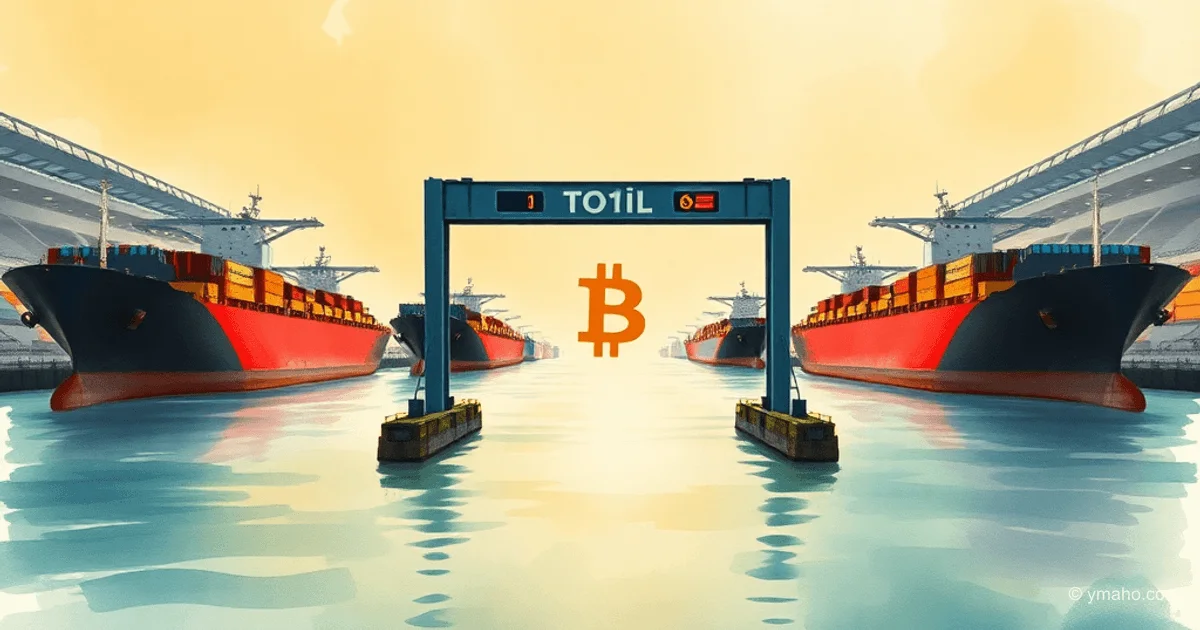
The Bitcoin Oil Route: A New Toll on the World's Most Important Waterway?
You've probably never heard of the Strait of Hormuz, but it's the world's oil lifeline — a narrow waterway between Iran and Oman where one out of every five barrels of oil travels. When a temporary ceasefire collapsed there this week, oil prices jumped and a wild idea started spreading: what if Iran starts charging oil tankers a Bitcoin toll to pass through? This isn't just about oil; it could test whether Bitcoin can become real-world money for global trade.
Think of the Strait of Hormuz like a single-lane mountain pass that 20% of the world's oil trucks must use. If that pass gets blocked, gas prices everywhere go up. Now, Iran — under heavy international sanctions — is reportedly considering a new rule: pay your toll in Bitcoin instead of dollars. Why? Because traditional banking systems like SWIFT are off-limits for them, and Bitcoin offers a way to get paid without going through banks (which is like sending cash through the mail instead of a traceable wire transfer). This would be a major shift — turning Bitcoin from a digital investment into actual "road money" for oil shipments.
Why This Matters for Bitcoin
If Iran actually starts collecting Bitcoin for oil shipments, it could create real-world demand for the cryptocurrency. For example, if they charge $1 per barrel on 18 million barrels a day, that's about $18 million daily — or roughly 250 Bitcoin at today's prices. But here's the catch: this isn't confirmed to be happening yet. It's still just a proposal being discussed.
Even if it happens, experts warn it might not be the Bitcoin game-changer some hope for. Here's why:
- Regulatory red flags: If Bitcoin becomes a tool to bypass sanctions, governments might crack down harder, making it harder for regular people to use.
- Practical problems: Collecting fees from ships requires more than just sending crypto — it needs identity checks and legal agreements, which Bitcoin wasn't designed for.
- Short-lived hype: Past events like this have caused quick price spikes followed by drops when reality sets in, leaving some investors hurt.
Key Takeaways
- The Strait of Hormuz handles 20% of the world's oil shipments, so any disruption affects global gas prices and inflation.
- Iran is reportedly considering Bitcoin tolls for oil tankers to bypass sanctions, but this is unconfirmed and faces major hurdles.
- Even if implemented, the impact on Bitcoin would likely be short-term volatility, not a fundamental shift in its value.
What Does This Mean for Regular People?
This story shows how global events can unexpectedly shake up cryptocurrencies. But for you, it means:
- Gas prices might rise if the oil route stays blocked, affecting your wallet at the pump.
- Bitcoin's price could swing wildly on headlines, but that doesn't make it a good investment bet — especially since most people don't need crypto for daily life.
- Remember: one country's experiment won't rewrite Bitcoin's future — real adoption takes time and trust, just like how credit cards took decades to become universal.
The bottom line? Keep an eye on oil news because it affects everyday costs, but don't let Bitcoin toll rumors drive your financial decisions. Real change happens slowly, not through single headlines. For now, this is more of a fascinating "what if" than a signal to buy or sell.
— Editorial Team









