Experts Declare 'Boyfriend Blush' the Top Anti-Trend in Makeup for 2026
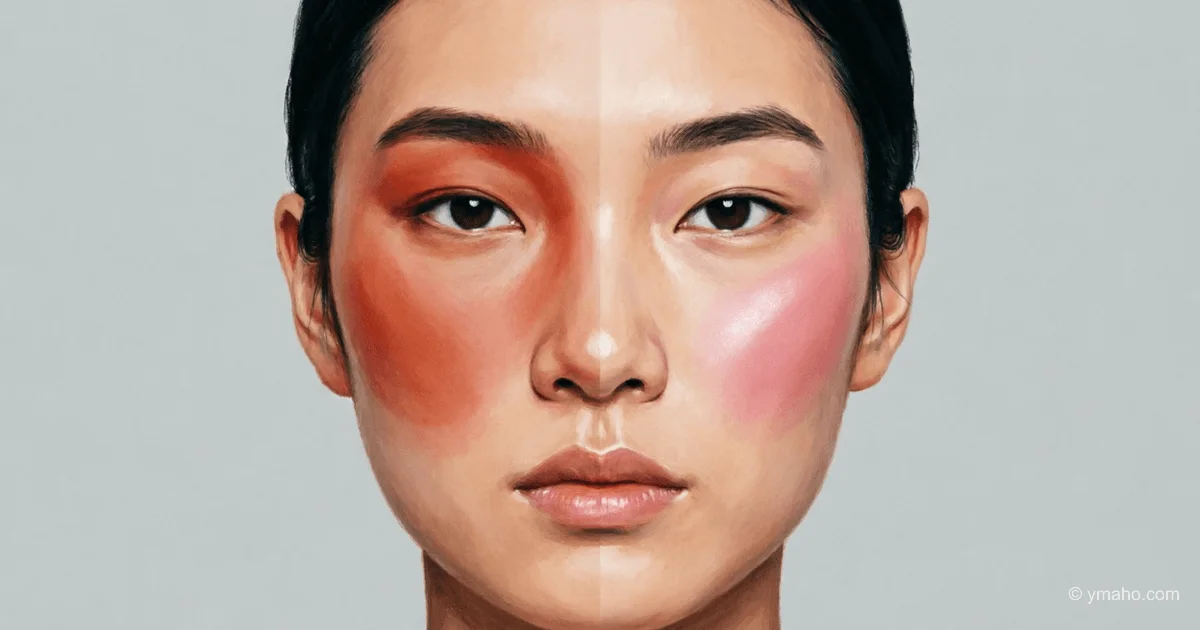
Makeup artists recommend abandoning wide stripes of blush from the mid-cheek to the jawline, as this technique visually ages the face. It is being replaced by a lighter, more precise method of applying cream textures exclusively to the 'apples' of the cheeks.
As a product and visual merchandising consultant for several major beauty retailers, I see the declaration of 'boyfriend blush' as an anti-trend not as a stylistic debate, but as a classic marketing pivot designed to reset your makeup bag and launch a new consumption cycle. What glossy magazines present as 'care for facial youth' is actually a surgically precise operation to eliminate an entire generation of beauty products created for the 'boyfriend blush' technique that has dominated the last two years. We are witnessing not a change in taste, but a planned obsolescence of application technique as a sales driver for summer 2026.
The Essence: What's Really Happening
The true goal of the attack on 'boyfriend blush' is to dismantle the monopoly of liquid and cream tints and clear shelf space for the return of dry pressed textures and luxury finishes. The 'wide stripes from cheek to jawline' technique, now declared 'aging,' was an ideal commercial engine for the mass market: it required a lot of product, encouraged frequent shade updates, and forgave imprecise application.
Now that engine has stalled. The market has hit saturation with liquid blushes in the $12–25 price segment. Major houses urgently needed to create scarcity in a new category. The sharp shift to 'neat apples of the cheeks' is a return to a technique that is objectively best performed with expensive brushes (e.g., goat hair brushes costing $40–85) and finely milled luxury powders (€35–60 per compact), whose margins are several times higher than mass market. If you apply blush precisely and blend upward, you need a long-lasting pigment with micronized milling—that's lab development from Dior, Chanel, and Gucci, not a cheap stick. We are being forced to buy a new product under the pretext that the old one supposedly ages us.
Timeline and Context
The historical turnaround occurred over four months. In February 2026, the authoritative publication The Times of India noted the peak of 'boyfriend blush,' acknowledging its effectiveness for oval and square faces—it softened angles and added 'sporty youth.' During the same period, makeup artist Mallory Osses, who created the trend, demonstrated using Princes William and Harry how lowering the blush creates a 'blood rushing to the cheeks' effect, which was called 'youthful and fresh.'
However, by May 2026, the rhetoric had shifted 180 degrees. Now we are assured that 'wide stripes visually age and weigh down the face,' and the only correct method is application exclusively on the 'apples' of the cheeks. The key date for this reversal is March–April 2026, when leading European and American labs finished shipping 'second skin' formulas (ultra-thin dry pigments that don't dust and last 12 hours). The ideological justification for their purchase had to be created by this time. The 'anti-boyfriend' campaign was planned precisely for when these formulas were ready for shelf placement.
Who Wins and Who Loses
The main beneficiary is the segment of professional brushes and luxury powder blushes. Brands like Yves Saint Laurent Beauty with their powder blurring blushes at €48 and Charlotte Tilbury with Beauty Light Wand, which require jewel-like precision on the cheekbones, gain a strong influx of customers.
High-fashion makeup artists also win: the 'apples' technique requires anatomical correction, bringing clients back to professional chairs and masterclasses. Manufacturers of LED makeup cases with zoom mirrors also report sales growth, as precise work without proper magnification and light leads to a 'clown' effect.
Losers include mass-market giants e.l.f. Cosmetics and Catrice, whose giant liquid and cream sticks were created precisely for broad 'smearing.' Their formulas are now perceived as outdated and 'messy.' Women with elongated and square faces also lose: the 'apples' technique can restore unwanted verticality and harshness that the 'boyfriend' method successfully softened.
What the Media Isn't Saying
The main secret known to technologists but hidden from consumers: the anti-trend is not the technique itself, but its incorrect execution without considering the type of aging. The 'aging effect' problem arises not from low placement per se, but from the absence of a 'lifting anchor' at the upper point of the cheekbone. A proper 'boyfriend blush' according to Mallory Osses' method involved downward shift only for the center of the face, with a mandatory micro-grip at the temple periphery, which created that very 'tension effect.' The media is now lumping together 'sunburn blush' (a horizontal stripe across the nose and cheeks) and 'boyfriend blush' (a low triangle with a pull toward the temple) to discredit the entire category of low application.
The second insight is luxury's fear of the 'Margot Robbie effect.' At premieres, Robbie introduced the so-called Brontë Blush, which is a direct descendant of 'boyfriend blush': it is applied directly on the apples and below, mimicking a wind-induced flush. But such a look requires perfectly clean skin without wrinkles. If a woman with expression lines or loss of firmness starts applying pigment downward, emphasizing tissue ptosis, the reputational damage to the brand would be colossal. It's easier to declare the technique 'outlawed' than to explain who it suits and who it doesn't.
Forecast: Next 30 Days and 90 Days
First 30 days. In June 2026, the era of 'sculptural lines' begins. Brands will release products with ultra-slanted brushes and sticks with diamond-cut applicators, promising 'automatic bullseye on the apples.' Tutorials on 'anatomical application' will flood TikTok. Simultaneously, we will see an aggressive advertising attack on cream sticks: they will be declared bacteria carriers and a cause of acne in the summer season.
90 days. By September 2026, the 'apples' technique will reach dogma level, and the entire 'clean skin' aesthetic will be rebuilt around it. Wearing blush low will become a faux pas, comparable to lacking contouring in 2016. However, we will see an underground return of low blending in autumn 'limited edition' collections under names like 'Boyfriend Revival' or 'Heritage Flush' from niche brands. The market will come full circle so that those who bought sticks in 2025 will pay again for a 'new take on a classic' in 2027. In the beauty industry, nothing dies forever—it just waits for investments in new equipment to pay off.
— Editorial Team









