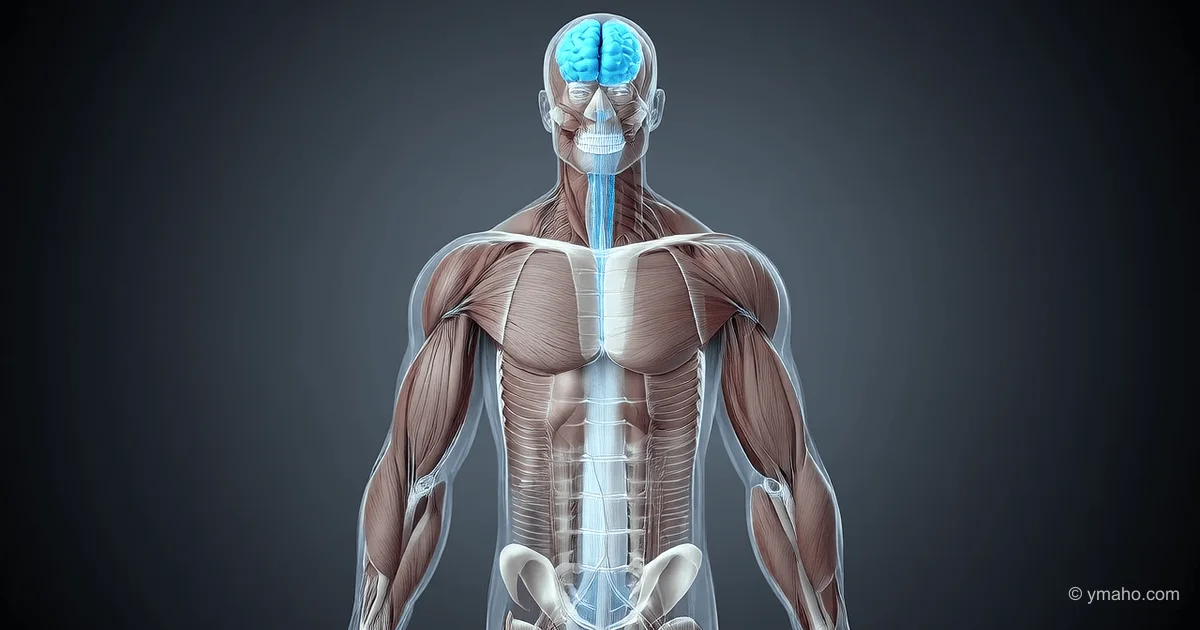
Mechanism of Brain Cleansing Through Abdominal Muscle Contractions Discovered
Scientists have found that physical activity and tension of the abdominal muscles create mechanical impulses that promote the movement of cerebrospinal fluid and the removal of metabolic waste from the brain. The study was published in Nature Neuroscience.
An insider analysis of this discovery — not a news recap, only an analysis of the implications.
From Glymphatics to the "Muscle Pump": How Abdominal Biomechanics Rewrites the Rules of Dementia Prevention
The Essence: What Is Really Happening
What was published on April 27, 2026, in Nature Neuroscience under the leadership of Professor Patrick Drew from Penn State University is not just an elegant neurobiological finding. It is the moment when the abdominal muscles cease to be a tool for nice selfies and turn into a documented pump for clearing the brain of neurotoxic waste.
The true essence of the work lies in refuting the monopoly of sleep on brain clearance. Until now, the dogma of the glymphatic system was: the brain cleanses only during deep sleep, when neurons shrink in volume and cerebrospinal fluid floods into the parenchyma. This created the "sleep or die" narrative and spawned a billion-dollar industry of sleeping pills and sleep trackers. Drew's work breaks this paradigm by showing that there is a second — active, waking — clearance circuit, and it is mechanical, not metabolic.
Key signal from the data: brain motion begins fractions of a second before the mouse's first step, strictly synchronous with the EMG signal from the rectus abdominis muscles, and does not correlate with either respiration or heart rate. This means we are dealing with an autonomous "wakefulness pump" triggered by voluntary motor activity. The openings in the lumbar vertebrae, through which abdominal veins directly connect to the spinal canal, are the anatomical substrate that evolution hid in plain sight.
Timeline and Context
The discovery is neither accidental nor instantaneous. It has been maturing within the Penn State Center for Neural Engineering for the past three years. Patrick Drew — co-director of the Huck Institutes of the Life Sciences — has long been known for work on neurovascular coupling, but it was the assembly of an interdisciplinary team (mechanical engineers, micro-CT specialists, and computational modelers) that allowed them to see what pure neurobiologists had missed.
Timeline of events:
- October 2025: A paper in Alzheimer's and Dementia shows a correlation between impaired cerebrospinal fluid movement and dementia risk. This creates an "incoming request": where to look for the pump?
- January 2026: Drew's team completes a series of experiments with a pneumatic corset on anesthetized mice — pressure less than 40 mmHg on the abdominal area causes brain motion identical to that during running.
- April 27, 2026: Publication in Nature Neuroscience. The article title — "Brain motion is driven by mechanical coupling with the abdomen" — is deliberately dry and mechanistic, reflecting the authors' confidence in the irrefutability of the data.
- April 29, 2026: Official Penn State press release with Drew's comment: "This study explains how simple movement can serve as an important physiological mechanism for strengthening brain health."
Who Wins and Who Loses
Winners:
- Wearable technology and fitness trackers. Apple, Garmin, and Whoop gain a new metric to measure: the correlation between abdominal contraction events (recorded via abdominal sensors) and cognitive performance. Expect a patent race for "neuroprotective fitness tracking." The market value of this segment could reach $500 million by 2028.
- Neurorehabilitation. Patients with spinal cord injuries who are wheelchair-bound are the most vulnerable group for glymphatic stagnation. Electrical stimulation of abdominal muscles (already used for respiratory support) gains a second indication — "neuroclearance." Companies like Restorative Therapies get a new market.
- Dementia prevention strategies. Public health gains a simple, scalable, and free tool. If every time you stand up from a chair is a micro-session of neurocleaning, then physical activity recommendations gain a specific biological mechanism, not just an epidemiological correlation.
Losers:
- Pharma companies betting on beta-amyloid clearance (Biogen, Eisai). Anti-amyloid antibodies like lecanemab fight already accumulated waste at a cost of $26,500 per year and with the risk of ARIA. Now every patient has a reasonable question: "What if my brain can clean itself if I move more?" This won't kill the anti-amyloid therapy market, but it will create a powerful counterargument in price negotiations.
- The "sleep optimization" industry. If waking glymphatics is as important as sleep glymphatics, then extreme biohacks involving multi-day fasting and absolute stillness for "pure sleep" lose their scientific basis. Lying meditations take a hit — they don't engage the abdominal pump.
- Sedentary lifestyle gets a new status. From now on, "sitting for 8 hours" is not just a risk factor for obesity and cardiovascular disease. It is a direct blow to the brain's drainage system. Corporate wellness programs gain an irrefutable argument for implementing standing desks and movement breaks.
An implicit loser — neurosurgery. Implantation of ventriculoperitoneal shunts for hydrocephalus is currently considered a purely CSF-dynamic procedure. But if abdominal pressure is part of brain hydraulics, then every shunt that drains CSF into the abdominal cavity interferes with this system. A revision of postoperative management protocols will be required.
What the Media Is Not Saying
Mainstream media focuses on pictures of mice on treadmills. But they miss the main metaphor proposed by co-author Francesco Costanzo: the brain is a dirty sponge. You cannot clean a sponge just by pouring water over it (sleep). You need to squeeze it (abdominal pressure) and then rinse it. This means that sleep and movement are not alternatives but sequential stages of a single cycle: movement squeezes waste fluid out of the parenchyma into the subarachnoid space, and sleep pours in fresh fluid.
Non-obvious insight number one: the direction of flows is opposite. During wakefulness, the abdominal pump creates a net flow of fluid out of the brain — evacuation. During sleep, the glymphatic system pumps fluid inward — flushing. If a person sleeps a lot but is immobile, they flood the brain with clean fluid but do not squeeze out the dirty fluid. Stagnation occurs with dilution of toxins, not their removal. This questions the effectiveness of long sleep without preceding physical activity.
Non-obvious insight number two: portal hypertension as a risk factor for dementia. If abdominal pressure is a key driver of neuroclearance, then any condition that impairs venous outflow from the abdominal cavity automatically becomes neurotoxic. Liver cirrhosis, ascites, chronic constipation — all increase intra-abdominal pressure and, theoretically, should disrupt the transmission of the hydraulic impulse to the vertebral venous plexus. This explains why patients with chronic liver diseases have an increased risk of cognitive impairment, previously attributed solely to hepatic encephalopathy and ammonia.
Third point — feedback loop with spinal cord injury. Patients with high spinal cord injuries lose not only mobility but also abdominal control. Their brain is completely deprived of the "wakefulness pump." This creates a double hit: neurodegeneration from the injury plus accumulation of metabolic waste due to lack of mechanical clearance. Rehabilitation protocols for spinal cord injury patients should include external abdominal stimulation as a standard, but this is not even discussed in clinical guidelines yet.
Forecast: Next 30 Days and 90 Days
30 days (by June 13, 2026):
A frenzy will begin in the scientific press and social media. Headlines like "Work your abs — save your brain" will flood fitness blogs. But the real battle will unfold in peer-reviewed journals. Three to four independent laboratories working on the glymphatic system (primarily Maiken Nedergaard's group in Rochester) will either confirm or challenge Drew's findings. Expect an editorial in Nature Neuroscience with cautious optimism and a direct statement: "data obtained in mice, extrapolation to humans is premature."
The tech sector will react faster than science. Startups developing wearable abdominal sensors (e.g., based on capacitive sensing) will start sending pitch decks to investors with a graph of "abdominal contraction frequency vs. cognitive status." Expect at least three pre-seed rounds in Silicon Valley totaling $15-20 million.
90 days (by August 13, 2026):
The first fMRI studies in humans attempting to replicate the effect will appear. Key question: does VVP hydraulics work in bipeds the same way as in quadrupeds? The gravitational gradient in humans is different, and venous outflow from the vertebral plexus may have different dynamics. If the data are confirmed even partially, this will become the loudest neurobiological confirmation of the benefits of physical activity since the discovery of BDNF.
Pharma companies will begin to adapt. Expect a new endpoint in clinical trials of dementia drugs: "efficacy depending on the patient's level of physical activity." Stratification by abdominal fitness will become a standard element of study design.
Most importantly, a revision of dementia prevention recommendations will begin. The WHO and the Alzheimer's Association will be forced to update guidelines, including specific recommendations for "abdominally-activated physical activity" — simply put, any movement that engages the core. Sitting on a stability ball, standing workstations, intermittent walking — all will gain the status of neuroprotective interventions.
And finally: someone will inevitably launch a startup "Ab-rain pump" — a biohacking device for electrical stimulation of abdominal muscles with the marketing slogan "Clean your brain without getting off the couch." And then the real regulatory battle will begin.
— Editorial Team









