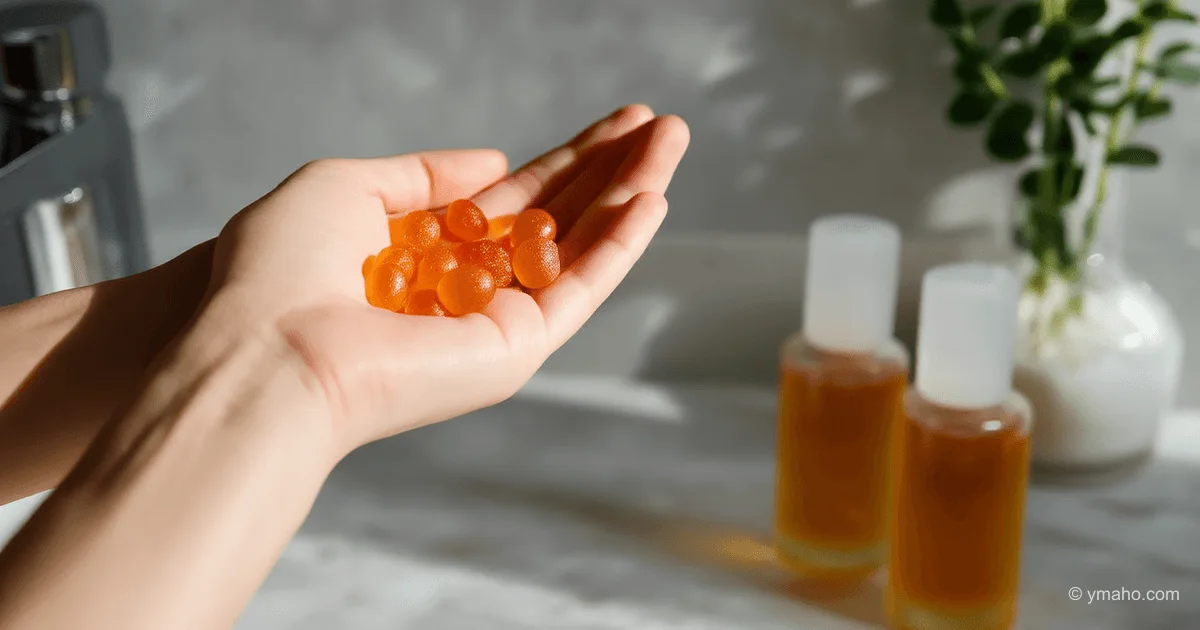
Carrot Tan and Beta-Carotene Boosters Are Making a Comeback on Instagram
Instead of aggressive self-tanners, beauty bloggers are mass-switching to oil concentrates with astaxanthin and beta-carotene, which, when taken in a course, give the skin a light golden hue without harm.
We are witnessing a curious turn in the beauty industry: after a decade of aggressive marketing of self-tanners, DHA lotions, and sprays that deliver an "instant bronze tan," the pendulum has swung the other way. Beauty bloggers and their audiences are mass-switching to carotenoid boosters — oil concentrates and gummy supplements with beta-carotene and astaxanthin. At first glance, this looks like a return to the 2000s, when carrot juice was the main secret to golden skin. But the reality is more complex: we are dealing not with a retro trend, but with a fundamental reassembly of the very concept of tanning.
The Essence: What Is Really Happening
The essence of the current moment is not that "natural is better than chemical." The point is that the definition of a tan as a status marker is changing. Self-tanner always imitated the result of a beach vacation — that is, it demonstrated free time and access to the sun. Carotenoid tanning imitates something else: a lifestyle rich in fresh vegetables, green smoothies, and conscious consumption. It's not "I was in the Maldives," but "I am investing in my health."
Technically, the mechanism works through the accumulation of fat-soluble pigments in the subcutaneous fat and the stratum corneum of the epidermis. Beta-carotene, lycopene, and astaxanthin, coming from food or supplements, are deposited in the skin and give it a yellowish-golden hue. This is not coloring, but accumulation — a slow process that takes 3 to 10 weeks of regular intake. The resulting shade is not brown, but a warm golden — that very "carrot tan" that, in good lighting, looks like a healthy glow.
The key difference from DHA self-tanners: carotenoids are antioxidants. Astaxanthin surpasses vitamin C in its ability to quench singlet oxygen by 6000 times. That is, the product does not mask damage but potentially prevents it. This changes the entire marketing narrative: instead of "cover up paleness," it's "enhance your skin's natural protection."
Timeline and Context
The market for carotenoids for personal care and cosmetics is experiencing steady growth. According to Fortune Business Insights, the global natural carotenoids market was valued at $478 million in 2025 and is expected to reach $496 million in 2026. These are modest figures compared to giants like retinoids, but the growth rates are indicative: the dietary supplements and personal care segment is growing faster than the feed and food segments.
The turning point occurred in late 2024 — early 2025, when several startups launched "tanning pills" in gummy format. Andie Glow Gummies, Bronze Bites, Asuno, Lumichew — all hit the market with a formula based on beta-carotene and astaxanthin, while avoiding canthaxanthin — a synthetic dye that the FDA has never approved for tanning pills. This is an important point: the industry learned from past mistakes and consciously stays within GRAS status and food, not cosmetic, regulations.
By May 2026, the trend reached critical mass on social media. Bloggers, tired of unnatural shades and the smell of self-tanners, switched to "internal tanning." Importantly, the product is not sold as a replacement for sunscreen — manufacturers carefully emphasize that carotenoids do not replace SPF. This protects them from lawsuits and simultaneously builds trust: a brand that says "we won't protect you from the sun" looks more honest than one promising "safe tanning."
Who Wins and Who Loses
Direct beneficiaries are producers of microalgae astaxanthin. This is a narrow, high-tech biotech segment. Companies cultivating Haematococcus pluvialis are seeing growing demand not only from nutraceuticals but also from the beauty industry, which sees astaxanthin as both an "internal SPF" and an anti-aging component.
Private label supplement manufacturers are winning. The market for private label "tanning pills" is growing explosively: any blogger with an audience of 50,000 followers can order their own line of gummies under their brand. The entry threshold is around $15,000–$25,000 for the first batch. Margins at a retail price of $30–$60 per monthly course reach 60–70%. This is a goldmine for micro-brands.
Losing are manufacturers of classic self-tanners. DHA lotions and sprays face a double blow: first, consumers are increasingly aware of potential irritation from DHA; second, "internal tanning" captures an audience willing to wait weeks for results but unwilling to deal with smell, streaks, and unnatural shades. The self-tanning segment won't disappear, but its growth will slow.
Tanning salons are also losing. If consumers get a golden hue from within, the need for UV tanning decreases. This doesn't mean the death of tanning salons, but another argument against them emerges.
What the Media Isn't Saying
The first inconvenient fact: carotenemia. With excessive intake of carotenoids, the skin does turn yellow — and the line between "golden glow" and "carrot shade" is very thin. Medical sources describe carotenemia as a benign but noticeable yellowing of the skin that can be mistaken for jaundice. Supplement manufacturers list beta-carotene dosages around 7.5–8 mg per serving, which is close to the upper limit of what the body can metabolize without accumulation in the skin. But a consumer who decides to "speed up the effect" and takes a double dose risks getting not a tan, but a diagnostic problem.
The second fact: synthetic beta-carotene and risks for smokers. Studies have shown that taking isolated synthetic beta-carotene may increase the risk of lung cancer in smokers. This is a well-known fact in nutrition science, but it is completely absent from beauty marketing. Manufacturers of "tanning pills" rarely indicate the source of carotenoids on the front of the package — and this is fundamentally important for safety.
The third, most non-obvious insider point: the "empty tan" effect. Carotenoid hue visually improves skin color but does not mask skin texture. Unlike DHA, which slightly fills pores and creates an illusion of smoothness, carotenoids simply add tone. This means that a consumer who switches from self-tanner to carotenoid boosters may notice after 3–4 weeks that color has improved, but texture has become more noticeable. Paradoxically, "natural tanning" raises the bar for skin quality and may prompt additional spending on skincare — from peels to laser resurfacing.
Forecast: Next 30 Days and 90 Days
In the next 30 days, we will see 8–12 new brands of carotenoid gummies enter the market. Major players — Nature's Bounty, Garden of Life — will almost certainly announce their versions of "glow gummies." The summer season will boost demand, and by mid-June, Amazon and iHerb shelves will be overflowing with similar products. A price war will begin: the cost of a monthly course will drop from $30–$60 to $20–$35.
In the next 90 days, by August 2026, market segmentation will occur. Three categories will emerge: cheap multivitamin gummies with symbolic beta-carotene content (3–5 mg), mid-price products with clinically validated dosages (8 mg beta-carotene + 4 mg astaxanthin), and a premium segment with added adaptogens, collagen, and cofactors for absorption. Prices in the premium segment will rise to $55–$75 per course.
The most important forecast: in 90 days, the first hybrid systems will appear — a combination of oral carotenoids with topical DHA products at ultra-low concentrations. The idea is simple: carotenoids create a base tone, and the DHA component adds a light bronze hue without the typical drawbacks of high-concentration self-tanners. One major brand (likely Tan-Luxe or Isle of Paradise) is already preparing such a line. This will be the first time that "internal" and "external" tanning are consciously combined in one product, creating a new category — hybrid tanning.
The tanning industry is experiencing a moment similar to what the skincare industry went through with the advent of probiotics: the boundary between "edible" and "applicable" is blurring. In a year, the absence of a carotenoid booster in a beauty brand's lineup will look as archaic as the absence of SPF in a day cream. The question is not whether carotenoids will become the standard — the question is who will first build a bridge between them and classic cosmetics, creating a truly seamless product.
— Editorial Team









