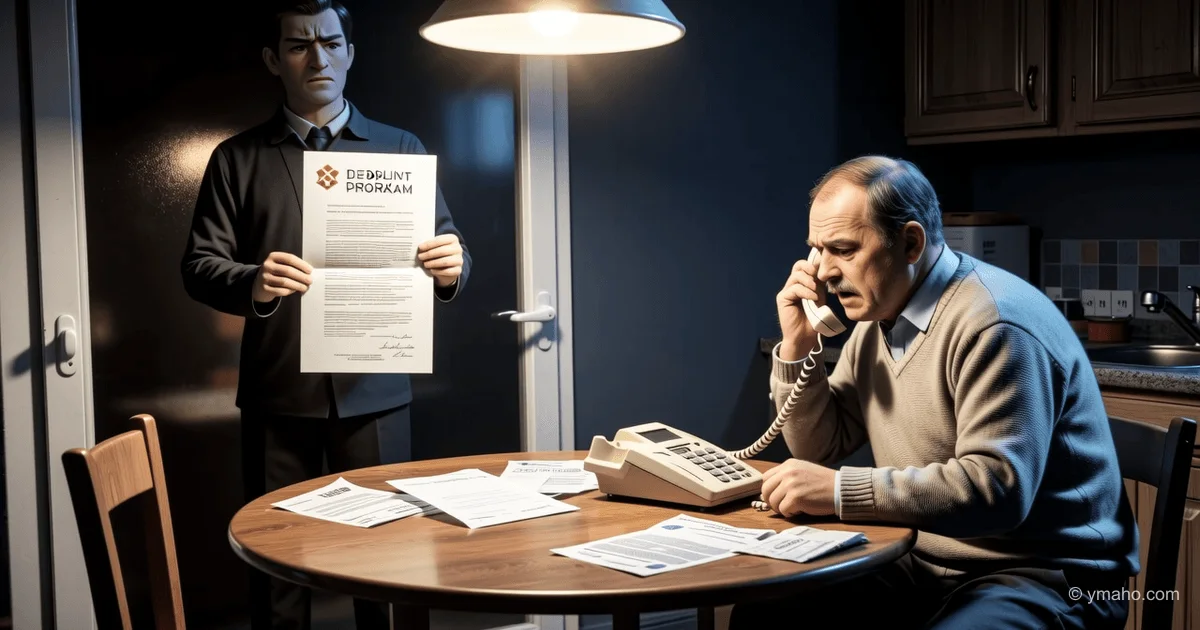
Central Bank of Russia Reports Surge in Complaints Against Microfinance Organizations and "Debt Relief" Firms
Complaints against MFOs jumped over 47% — mainly due to issues with refunds for additional services and the activities of unscrupulous companies promising debt write-offs with no consequences.
The microfinance market in Russia currently resembles a powder keg with a lit match. Formally, statistics show a 47% increase in complaints — and the average person's first reaction is: "another scandal with predatory lenders." But as someone observing this sector from the inside, I see a fundamentally different picture. This is not just a spike in dissatisfaction, but a cascading collapse of an entire market niche, triggered by the regulator tightening the screws and leaving over-indebted borrowers alone with the gray market.
The Essence: What's Really Happening
The nearly 50% rise in complaints against MFOs is not because companies have become worse or greedier. On the contrary, since April 1, legislative norms have come into force that severely tighten the market: the maximum overpayment on a loan has been reduced to 100% of the principal. This means the classic MFO model — issuing hundreds of expensive payday loans at astronomical interest rates — is legally broken. Companies, trying to maintain profitability, are massively imposing legally dubious additional services on clients: insurance, information certificates, consultations. This is precisely what has generated a wave of claims for refunds for such services.
But the main tectonic shift has occurred on the consumer side. The contraction of the legal payday loan market has pushed the most desperate borrowers straight into the hands of so-called "debt relief" firms — shadow lawyers promising complete debt write-offs with no consequences. Mikhail Mamuta, head of the relevant Central Bank department, directly speaks about the abuses of these companies, which "disappear immediately after receiving payment." The volume of this pseudo-market in 2025 has already exceeded 70 billion rubles, with an average ticket of about 200,000 rubles. For comparison, this is comparable to the quarterly revenue of a number of large legal MFOs.
Timeline and Context
What we are observing is a classic example of how the regulator's good intentions trigger a chain reaction in the shadow sector. Let me recall the timeline: at the end of 2025, a law was passed on the gradual contraction of the MFO market, and from January 1, 2026, amendments banning advertising that guarantees debt write-offs came into force. Legal lenders began to exit the high-risk segment, refusing more than 80% of applicants.
And here a vacuum formed. A borrower with a damaged credit history and overdue payments can no longer get short-term money from a legal MFO. They go online and encounter aggressive advertising from "debt relief" firms promising an easy solution to their problems. The scheme is primitive: they take money for "filing a lawsuit," then either disappear or impose a fictitious bankruptcy. As a result, according to Fedresurs, the number of personal bankruptcies in 2025 jumped to 568,000 — up 31.5% year-on-year.
Who Wins and Who Loses
Winners:
Paradoxically, the winners are large banking groups that own microfinance subsidiaries. While small players lose customers and are overwhelmed by complaints, bank-owned MFOs have increased their market share to 70%. They have enough capital to comply with the new regulations and enough administrative resources to be independent of "debt relief" firms.
Also winners are the "debt relief" firms themselves — the margins in their shadow business are huge, and a real mechanism for criminal prosecution has not yet been properly established. Although the law has already banned advertising with guarantees of write-offs, it does not prevent them from operating in the gray area.
Losers:
The main loser is the borrower. On one hand, legal lenders refuse them money; on the other, the state has not yet managed to clear the market of "debt relief" firms, while the honest bankruptcy procedure remains expensive and complicated. The person is left alone with debts and fraudsters.
The second loser is small and medium-sized microfinance companies. Squeezed by new restrictions on interest rates and the number of loans (from 2027 — "one loan per borrower"), they lose the competition to banks. Their business model will die not from the Central Bank's actions, but because clients will either flee to state bank subsidiaries or to the shadow sector.
What the Media Aren't Saying
And here's where it gets interesting. Everyone is discussing the 47% increase in complaints against MFOs, but few have noticed a parallel trend: the number of complaints against banks regarding the imposition of additional services has remained virtually unchanged, and the total number of complaints against credit institutions has even decreased slightly. This means that the public flogging of MFOs alone is partly a distraction from the systemic problem of the financial market.
Moreover, there is an inside story that business media headlines are silent about: the Central Bank is deliberately accelerating the bankruptcy of small MFOs. According to the regulator's forecasts, the microfinance portfolio will fall by 40% in 2026 and by another 55% in 2027. This is not a bug, it's a feature. The payday loan market is being transferred under state control (via Pochta Bank, payment systems, and government services) and large banks. "Debt relief" firms are a "side effect" of this transition period.
The second non-obvious point: the attack on "debt relief" firms is only the first stage. The Central Bank has already openly stated that it is preparing standards for regulating the activities of debt consultants. This means that soon a legal market for paid debt counseling will be created in Russia, and the very concept of "debt relief" will be replaced by "certified consultant" with a license and contributions to the budget.
Forecast: Next 30 Days and 90 Days
Next 30 days (until June 10, 2026):
We will see a flurry of high-profile criminal cases against specific networks of "debt relief" firms. The Central Bank and the Prosecutor General's Office are ready to demonstratively punish several large shadow companies to dampen the wave of negativity and show citizens that the system works. The media will get several "arrests," which will temporarily calm the market. Meanwhile, the number of complaints against MFOs will seasonally decrease — in summer, business activity in the payday loan segment traditionally falls.
Horizon of 90 days (until August 2026):
The key turning point will be the launch of a register of legal debt consultants. If the Central Bank manages to agree on standards and announce the first licenses, the "debt relief" market will begin to shrink rapidly — fraudsters' revenues will drop by 30-40%, as it will become easier for clients to distinguish between a certified consultant and a scammer.
On the other hand, from October 1, 2026, the rule of "no more than two expensive loans per borrower" comes into force. This will cause a new wave of tension in MFOs: the riskiest clients will lose their last chance to get money even at high interest. A second wave of "debt relief" firms is possible precisely in the fall, against the backdrop of growing social discontent among citizens deprived of access to familiar microcredit methods. I estimate the probability of such a harsh scenario at 65%.
— Editorial Team









