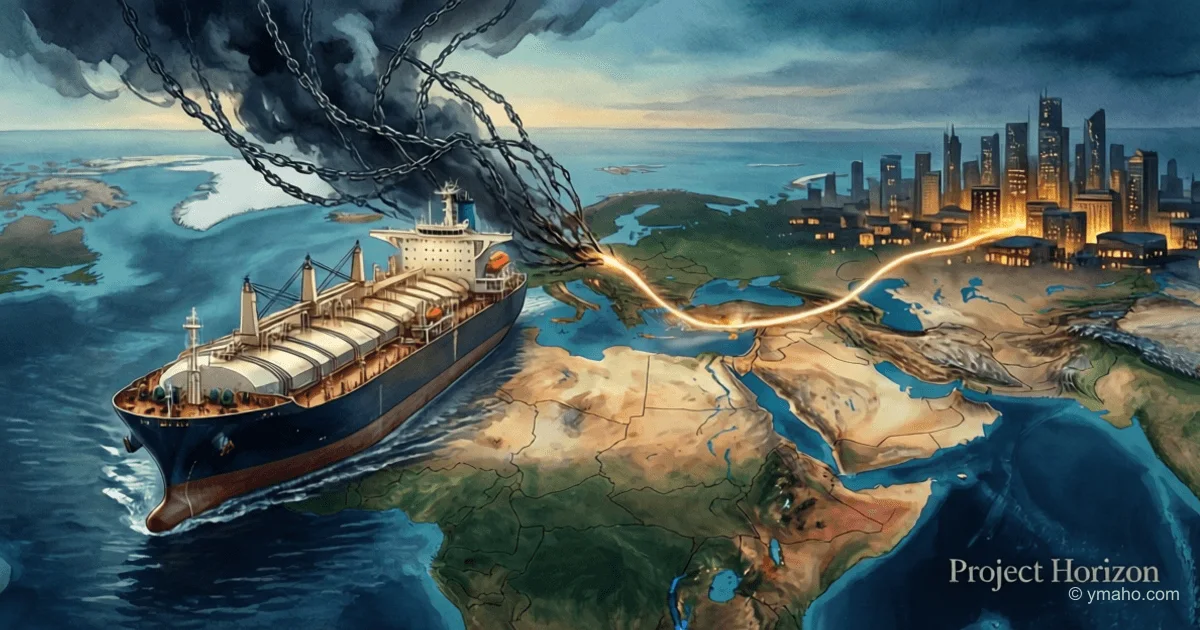
Global Energy Supply Chain: How Conflict in the Persian Gulf Triggered a Crisis in Pakistan and Threatens World Trade
A conflict in the Persian Gulf, once seen as a distant event, has directly cut off power to millions of households in Pakistan, revealing just how fragile and interconnected the global energy supply system has become. This is a clear example of how a disruption in one link of the global supply chain can trigger chaos in another country and affect commodity prices worldwide.
Why Pakistan Was Left in the Dark
Pakistan heavily relies on imported gas for electricity generation. Liquefied natural gas (LNG) is cooled into liquid form for easier transport via specialized tankers. Qatar, one of the world’s largest LNG exporters, is Pakistan’s main supplier.
For several weeks, tankers from Qatar were unable to pass through the Strait of Hormuz—the critical maritime route in the Persian Gulf—due to military activity and attacks on infrastructure. Imagine the main highway between two cities suddenly blocked. All cargo meant to travel that route simply stops. The same happened with gas deliveries to Pakistan.
Domino Effect: From Tanker to Household
Without gas deliveries, power plants in Pakistan cannot operate at full capacity. The situation was worsened by heat ahead of the monsoon season: people began using air conditioners more intensively, sharply increasing electricity demand. The government announced evening blackouts lasting 2–3 hours, but in reality, some areas went without power for over 12 hours per day.
- Industrial enterprises, especially export-oriented ones, faced 8-hour outages and were forced to halt production at night.
- Mobile network towers went offline due to power shortages.
- Citizens rushed to buy diesel generators and batteries.
- People began illegally tapping into gas pipelines for personal use.
This is not merely a local crisis. Pakistan is a major economy, and halting its factories affects global supplies of textiles, sports goods, and other products, potentially driving up their prices in other countries.
Global Context: Why the World Has Become So Vulnerable
Pakistan began shifting aggressively toward imported LNG about ten years ago, as domestic gas production declined. This was followed by a post-pandemic surge in energy consumption. At the same time, the war in Ukraine triggered a spike in gas prices across Europe. Gas suppliers started backing out of contracts with Pakistan, redirecting supplies to wealthier customers such as European nations.
The crisis shows that many countries have built their energy security on long and fragile supply chains. When a key route is blocked due to conflict or sanctions, the impact is felt thousands of kilometers away from the actual events.
Key Takeaways
The main factors that turned a regional conflict into a global energy crisis:
- Global dependence on critical routes: The Strait of Hormuz is a vital passage for global oil and gas shipments. Its blockage affects numerous countries.
- Interconnected energy markets: Events in one part of the world (the war in Ukraine, rising prices in Europe) directly impact resource availability elsewhere (Pakistan).
- Climate factor: Extreme heat increased energy demand, making the system even more strained and vulnerable to supply disruptions.
- Economic vulnerability: Countries with fewer financial resources, like Pakistan, end up at the back of the line when suppliers reallocate resources toward more solvent customers.
- Impact on global trade: Disruptions in industrial production in major exporters like Pakistan create product shortages in global markets and may push prices upward.
What This Means for Ordinary People Elsewhere
This situation is not just news from a faraway country. It illustrates how deeply interconnected our world has become. A breakdown in the supply of a critical resource in one region can lead to higher prices for goods in your local store, simply because production has halted. It also shows that energy security has become a global issue: conflicts and political decisions in one part of the world now have direct and immediate consequences for people living in another. Understanding these connections helps reveal the true cost of global events.
— Editorial Team









